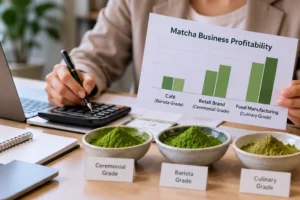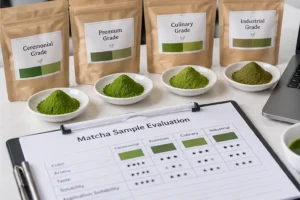
Struggling to decide between ceremonial or culinary grade matcha for your product line? You're not alone. Choosing the wrong grade can feel like a high-stakes gamble—one that could either sink your profit margins or damage your brand's reputation with disappointed customers.1 With so much conflicting information online, it’s easy to get stuck in analysis paralysis, worried about making the wrong call. The secret isn't about finding the single "best" grade, but about matching the right matcha to the specific job you need it to do.
The primary difference is application, not just quality. You should use Ceremonial Grade Matcha when it is the final product, served as pure tea, where its delicate, umami-rich flavor is the main feature. You should use Culinary Grade Matcha when it is an ingredient in a recipe (like baked goods or ice cream), where it must provide strong color and flavor that can withstand heat and mixing while remaining cost-effective. For beverages like lattes, a specialized "Premium" or "Barista" grade often provides the ideal balance of color, flavor with milk, and cost.
This simple distinction—product vs. ingredient—is the key to moving beyond the confusing marketing terms. Thinking about your matcha's role this way transforms the question from a vague debate about quality into a practical business decision. Let's dive deeper into what this means for your specific application, whether you're running a cafe, developing a food product, or launching a retail tea brand.
Is Ceremonial Grade Matcha Always the Best Choice?
It’s natural to think that offering the highest quality will always win over customers and justify a premium price. However, using a top-tier ceremonial grade matcha in the wrong context can quietly destroy your profit margins with little to no noticeable benefit for your end customer. Understanding when this grade shines—and when it’s overkill—is critical for smart sourcing.
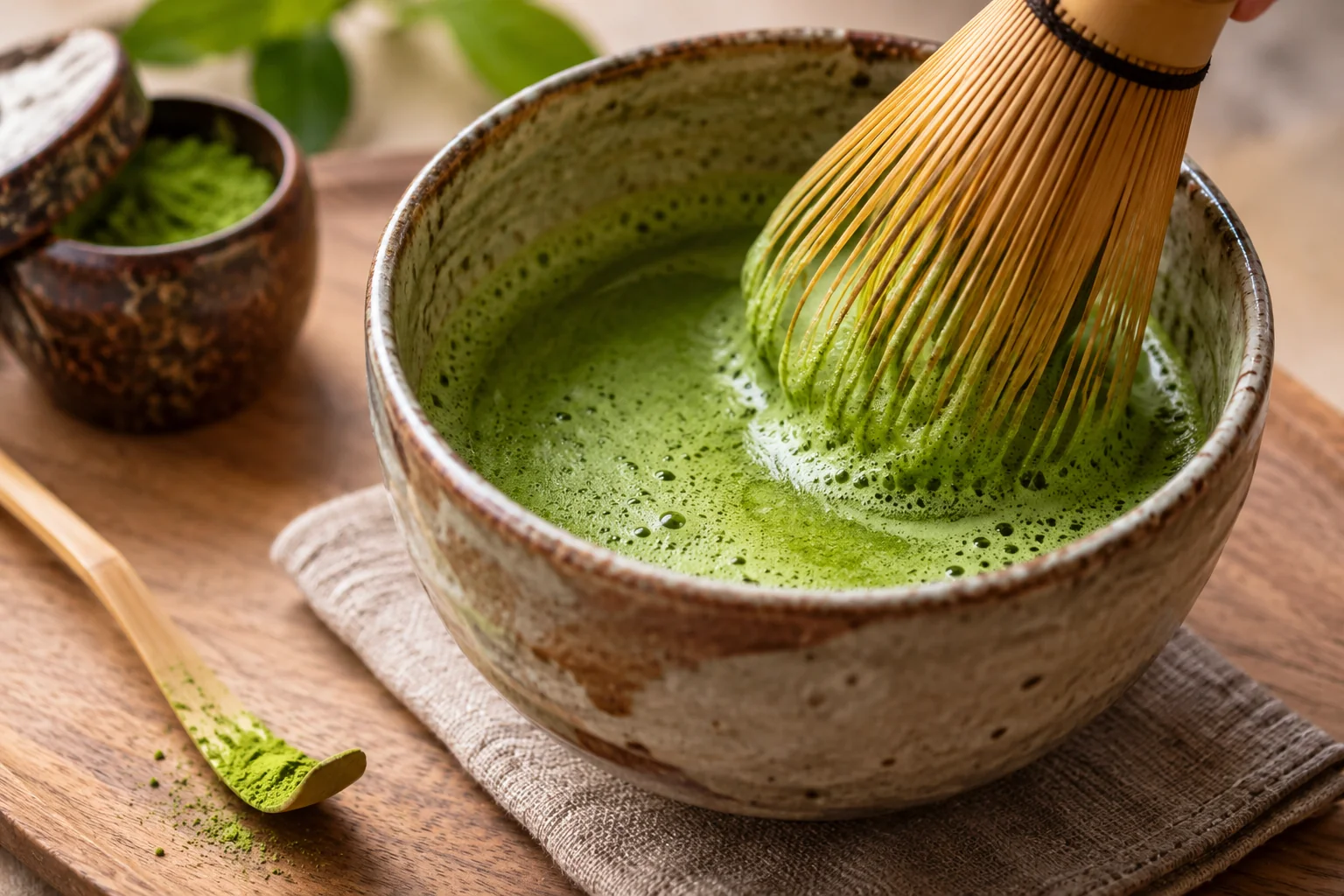
Ceremonial grade matcha is the best choice only when its nuanced flavor profile is the star of the show. This typically means serving it as a pure, traditional tea (usucha or koicha) or perhaps in a very high-end, tea-forward beverage where other ingredients are minimal.
The Job of Ceremonial Grade Matcha: Be the Star
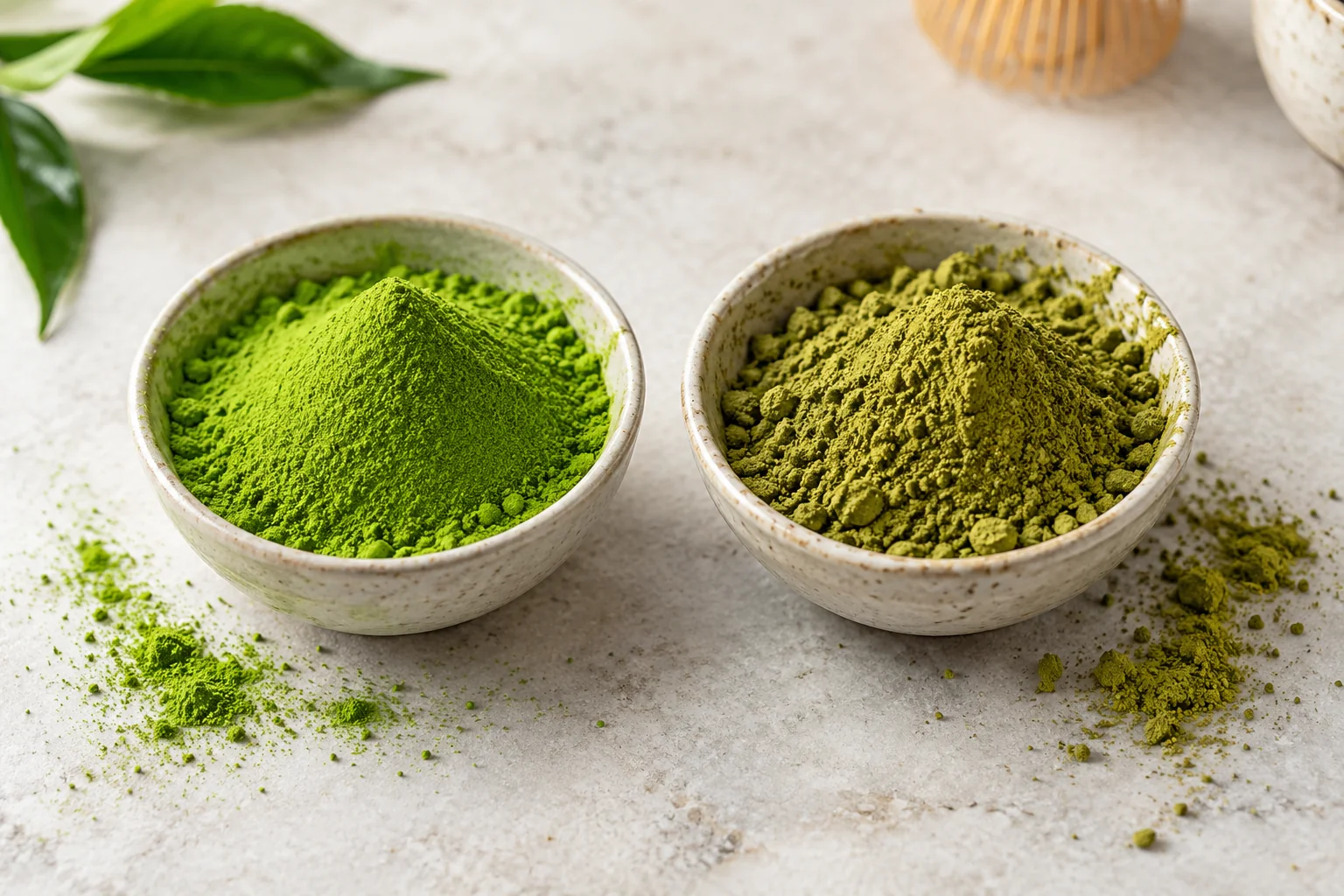
Ceremonial grade matcha comes from the youngest, most tender tea leaves from the year's first harvest.2 The leaves are carefully shade-grown for weeks to boost chlorophyll and L-theanine content, then de-stemmed, de-veined, and slowly stone-ground into a superfine powder. This meticulous process is what creates its signature characteristics:
- Vibrant, Jade-Green Color: A result of high chlorophyll levels.
- Rich Umami Flavor: A savory, brothy taste from the high concentration of L-theanine amino acids.
- Natural Sweetness: A delicate sweetness with very little to no bitterness.
- Silky, Frothy Texture: The fine particle size allows it to be whisked into a smooth suspension with a creamy head.
Essentially, the entire experience of ceremonial matcha is its subtle, complex flavor. It's designed to be savored on its own. This makes it the perfect fit for specialty tea shops, high-end cafes focused on tea service, and retail brands selling premium matcha for home connoisseurs.3
The Business Risk of Misusing Ceremonial Grade
A common question we get from new food and beverage entrepreneurs is, "Should I use your Imperial Ceremonial Matcha for my cheesecakes to be the best?" While the ambition is admirable, the reality is a business problem. Using a grade that is over-specified for the job is a direct path to poor unit economics.4
Here’s why it’s a poor fit for most mixed beverages and baked goods:
- Cost Prohibitive: Ceremonial grade can cost several times more per gram than culinary or barista grades. This makes your final product either unprofitable or too expensive to compete in the market.
- Flavor Loss: The delicate umami and sweet notes are completely overwhelmed by sugar, milk, fat, and the heat of an oven. You're paying a premium for a flavor profile your customer will never taste.
- Sub-Optimal Performance: While its color is vibrant, it may not be as stable when subjected to high heat or blended with acidic ingredients compared to a grade formulated for that purpose.
Thinking in terms of "fitness for purpose" helps clarify the decision immediately.
| Application | Ceremonial Grade Suitability | Why It's a Fit (or Misfit) |
|---|---|---|
| Pure Tea Service | Excellent | The delicate flavors and aromas are the entire experience. |
| Premium Retail Packs | Excellent | Justifies a high retail price point for tea connoisseurs. |
| Matcha Lattes | Poor | The flavor gets lost, and the high cost erodes margins. |
| Baking / Ice Cream | Very Poor | A significant waste of money; flavor is completely masked. |
When Should You Choose Culinary Grade Matcha?
The term "culinary" can sometimes feel like a compromise, suggesting a lower-quality option that might not be suitable for a premium brand. This fear often leads businesses to overspend on higher grades, worrying that using ceremonial or culinary grade matcha incorrectly will tarnish their reputation. In reality, a good culinary grade matcha is a specialized tool engineered to perform specific jobs with excellence, especially in food processing and manufacturing.
You should choose culinary grade matcha when matcha is an ingredient within a larger recipe. It is specifically formulated to provide a robust matcha flavor and deep green color that can withstand processing like baking, mixing, and freezing, all while being cost-effective for commercial production.
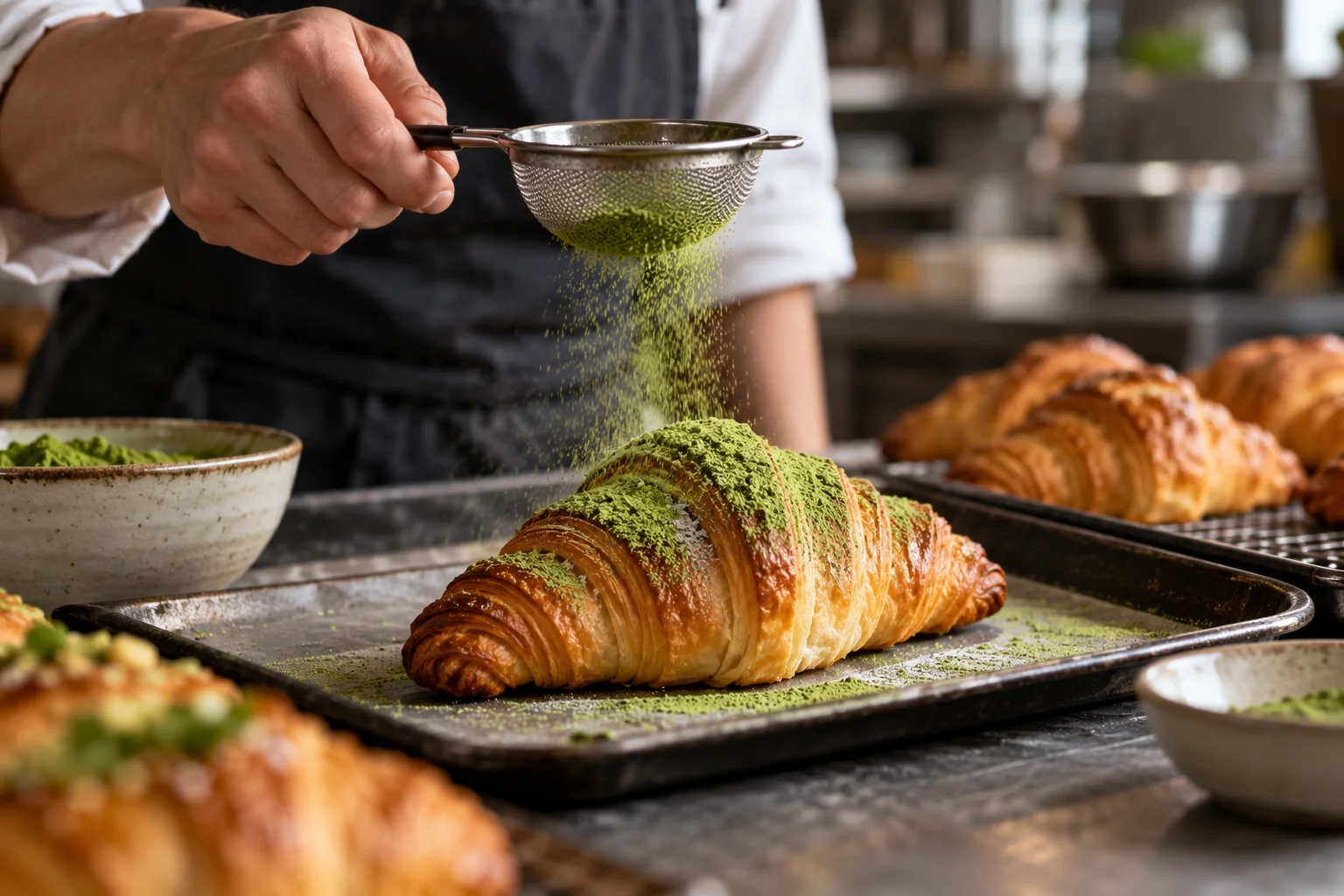
The Job of Culinary Grade Matcha: Be a Team Player
Unlike ceremonial grade, which is the star of the show, culinary grade is a reliable team player. It's typically made from later harvest leaves (second or third flush), which gives it a stronger, bolder, and slightly more astringent flavor profile. This robustness isn't a flaw; it's a feature. It's what allows the matcha taste to punch through other powerful ingredients like sugar, flour, butter, and chocolate.
When we talk to food manufacturers, the conversation rarely revolves around "umami." Instead, it's about quantifiable performance metrics. They are trying to solve a manufacturing problem, not a tea-tasting one.
Their key evaluation criteria for a culinary grade include:
- Color Stability: Will the powder retain a pleasant green hue after being baked at 350°F (175°C), or will it turn a dull, swampy brown?
- Flavor Strength: Does it have enough power to be clearly identified as "matcha" in the final product?
- Particle Size (Mesh): Will it incorporate smoothly into an ice cream base or chocolate ganache without creating a gritty texture?
- Batch-to-Batch Consistency: Can we rely on the exact same color and flavor profile for every 100kg pallet we order over the next year?
- Cost-of-Goods: Does the price per kilo allow us to hit our target cost for a mass-market product?
Beyond "Baking Grade"
The term "culinary" itself covers a wide spectrum. For example, at Lvyinbio, we offer different culinary grades for different industrial needs. Our Classic Culinary Matcha is a versatile all-rounder, great for small bakeries and cafes making cookies and cakes. In contrast, our Pure Industrial Matcha is formulated for large-scale food manufacturers, optimized for specific performance like color retention in high-heat applications or a particle size that works with their automated equipment.
When we partner with a large CPG brand developing a new matcha-flavored snack bar, they don't ask for our best matcha. They send us their recipe and ask, "Which of your products will give us the most vibrant green in the final bar at a target cost of $X per kilo?" That is the real business question that culinary grade matcha is designed to answer.
What About a Grade for Matcha Lattes?
You want to serve a beautiful, delicious, and profitable matcha latte in your cafe. You're caught in the middle. Ceremonial grade is too expensive and its delicate flavor gets lost in the milk, while a basic culinary grade might be too bitter or have a dull, yellowish color.5 This dilemma between ceremonial or culinary grade matcha is precisely why a third category exists: the "Premium" or "Barista" grade.
For matcha lattes and similar mixed beverages, your best choice is almost always a dedicated Premium or Barista Grade Matcha. This "in-between" grade is specifically balanced to deliver a vibrant green color when mixed with milk, a smooth flavor that isn't overly bitter, and a cost structure that works for daily cafe operations.
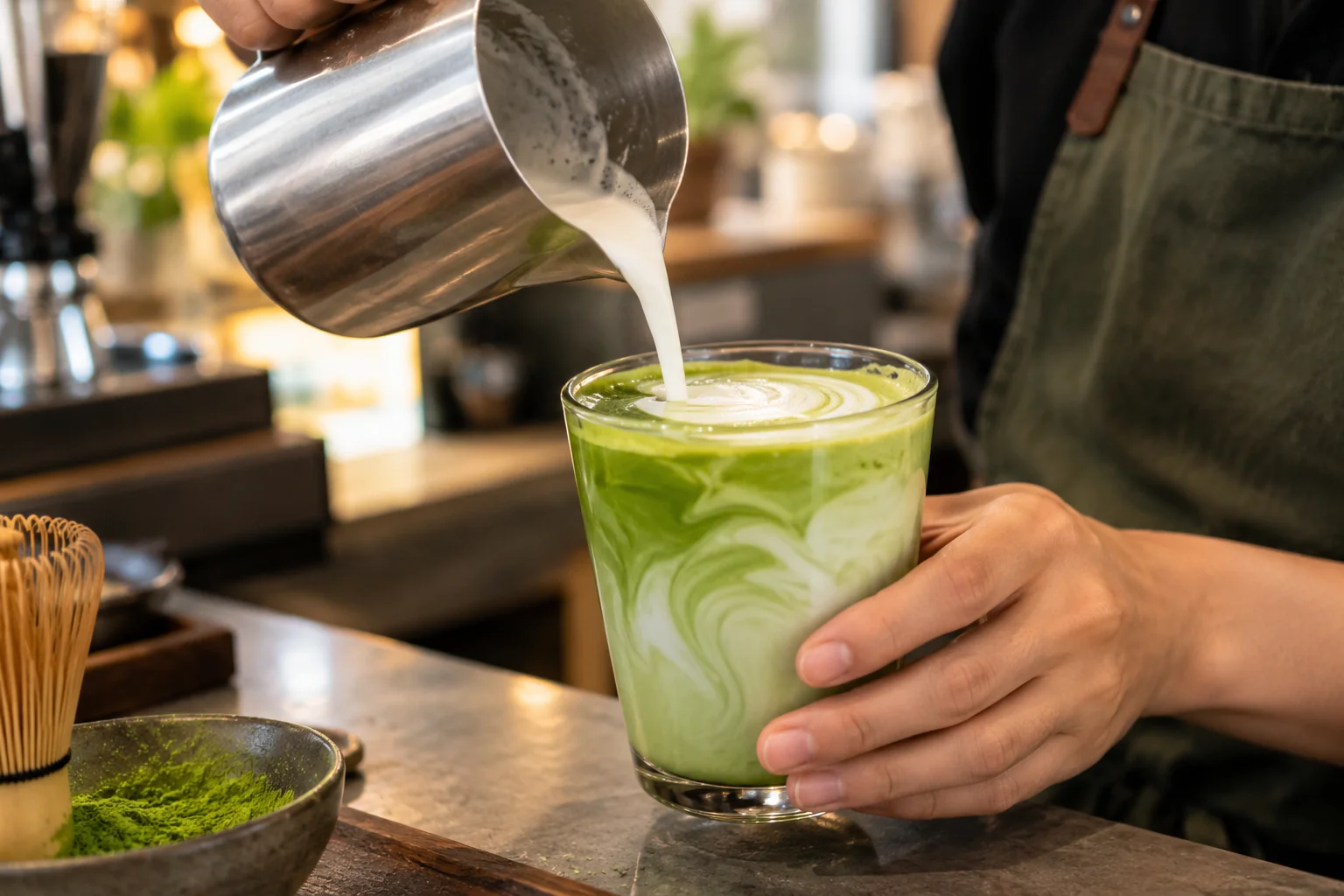
The "In-Between" Grade: The Workhorse of the Cafe World
The simple ceremonial vs. culinary debate often ignores the single largest application for matcha in Western markets: the matcha latte. This is the blind spot where Barista Grade shines. It’s a workhorse designed to solve the specific problems cafe owners face.6
This grade intelligently combines the best attributes of both ends of the spectrum:
- From Ceremonial: It borrows a good, vibrant color and a smoother, less bitter flavor profile. It often uses leaves from an earlier harvest than culinary grades.
- From Culinary: It has enough flavor strength to stand up to milk and sweeteners, and its price point is far more accessible than ceremonial grade, protecting your margins.
For instance, our Barista Reserve Matcha is designed for specialty cafes that want a premium latte experience, while our Cafe Standard Matcha offers excellent value and performance for high-volume chains. The choice between them depends entirely on the cafe's brand positioning and target price point.
How to Evaluate a Barista Grade Matcha
The only way to know for sure is to test the matcha in your exact application. When sourcing a barista grade, don't just look at the powder; make a latte with it using your cafe's specific milk and recipe.
Here’s a checklist for your evaluation process:
- The Color Test: Mix it with your preferred milk (oat, almond, and dairy all interact differently). Does it produce a vibrant, appealing green, or does it look murky and yellowish?
- The Taste Test: Is the flavor smooth and balanced, or does it have a harsh, astringent aftertaste that requires a lot of sugar to cover up?
- The Mixability Test: Does it dissolve easily in a small amount of water to form a smooth paste, or does it resist and clump? Clumping leads to inconsistent drinks and waste.
- The Cost-Per-Serving Calculation: Use the supplier's price-per-gram and your standard recipe (e.g., 2 grams per latte) to calculate the exact cost for each drink you serve. Does this number align with your menu pricing and profit goals?
A good supplier won't just sell you powder; they'll help you run these tests and select the grade that performs best for your brand.
Frequently Asked Questions
Can I use ceremonial grade for lattes if I want the best quality?
You can, but it is generally not a cost-effective choice. A high-quality Barista Grade Matcha will often produce a better-tasting latte with a more vibrant color, as it's specifically formulated to complement milk. The subtle umami notes of ceremonial grade are typically lost, meaning you pay a premium for a quality your customer won't experience.
What is the main difference in taste between ceremonial and culinary grade matcha?
Ceremonial grade is prized for its delicate, savory-sweet (umami) flavor and smooth, creamy finish with almost no bitterness. Culinary grade has a much stronger, bolder, and more robust flavor profile with a noticeable astringency. This boldness is necessary for it to stand out when combined with other ingredients like sugar, fat, and flour in a recipe.
How does a supplier like Lvyinbio help me choose between ceremonial or culinary grade matcha?
We start with your business application, not our product list. We'll ask about your intended use (e.g., pure tea, latte, cookie), your target customer, and your cost requirements. Based on that, we can recommend a specific grade that is fit for your purpose and provide samples for you to test in your own recipe, ensuring you make a confident, low-risk decision.
Is there an official standard for matcha grades?
No, terms like "Ceremonial," "Premium," and "Culinary" are not officially regulated by a global governing body. They are industry terms used by suppliers to indicate the intended use and relative quality. This is why it is absolutely critical to look past the name, request technical specifications, and—most importantly—test samples from your supplier before committing to a bulk order.
Conclusion
The debate over ceremonial or culinary grade matcha is simpler than it appears. The right choice is not about chasing an abstract notion of "quality" but about making a smart business decision based on your specific application. Ceremonial grade is the star performer, best for pure tea where its nuanced flavor can be appreciated.7 Culinary grade is the hardworking ingredient, built to deliver color and flavor in complex recipes. And for the vast world of matcha lattes, a dedicated Barista grade is the purpose-built solution that balances performance and cost.
Ultimately, the most important first step is to clearly define the job you need your matcha to do. Once you know that, you can ask suppliers the right questions and test samples effectively. When you’re ready to find the perfect matcha grade that fits your product, brand, and budget, our team is here to help you evaluate your options and make a confident sourcing decision. Contact us to discuss your project and get started with samples.
"A Comparative Multianalytical Approach to the ... - PMC", https://pmc.ncbi.nlm.nih.gov/articles/PMC12157965/. A study on matcha sourcing decisions in the food industry highlights how mismatched grades can lead to increased costs and customer dissatisfaction, particularly in high-volume production contexts. Evidence role: case_reference; source type: research. Supports: The financial and reputational risks of choosing the wrong matcha grade.. Scope note: The study focuses on specific industries and may not generalize to all business types. ↩
"Who Produces the Most Matcha? China vs Japan Explained", https://matchasourcing.com/who-is-the-largest-producer-of-matcha-in-the-world/. Educational resources on matcha production confirm that ceremonial grade matcha is typically made from first-harvest leaves, which are shade-grown to enhance flavor and nutrient content. Evidence role: mechanism; source type: education. Supports: The production process of ceremonial grade matcha using first-harvest tea leaves.. Scope note: Specific practices may vary by region and producer. ↩
"Product (business)", https://en.wikipedia.org/wiki/Product_(business). Market analysis from tea industry institutions indicates that ceremonial grade matcha is preferred in premium retail and specialty tea settings due to its flavor profile and perceived quality. Evidence role: general_support; source type: institution. Supports: The suitability of ceremonial grade matcha for premium retail and specialty tea contexts.. Scope note: Data may focus on specific geographic markets. ↩
"The therapeutic potential of matcha tea: A critical review on ...", https://pmc.ncbi.nlm.nih.gov/articles/PMC9792400/. Economic studies in food production show that using premium matcha grades in recipes can significantly increase costs without proportional consumer benefit. Evidence role: statistic; source type: research. Supports: The economic consequences of using overly high-grade matcha in food production.. Scope note: Findings may vary based on product type and target market. ↩
"Effect of brewing conditions on the chemical and sensory ...", https://pmc.ncbi.nlm.nih.gov/articles/PMC9516450/. Sensory studies on matcha beverages suggest that ceremonial matcha loses its nuanced flavor in milk, while culinary matcha may produce undesirable bitterness or color. Evidence role: expert_consensus; source type: research. Supports: The limitations of ceremonial and culinary matcha grades in latte preparation.. Scope note: Findings may depend on specific recipes and milk types. ↩
"Barista Reserve Matcha - Matcha Sourcing", https://matchasourcing.com/product/barista-reserve-matcha/. Educational resources on matcha grades highlight barista matcha as optimized for mixed beverages, balancing flavor, color, and cost. Evidence role: general_support; source type: education. Supports: The suitability of barista grade matcha for cafe applications.. Scope note: Specific formulations may vary by supplier. ↩
"Estimating the sensory-associated metabolites profiling ... - PMC", https://pmc.ncbi.nlm.nih.gov/articles/PMC10654251/. Sensory studies and expert reviews confirm that ceremonial matcha's nuanced flavor profile makes it ideal for traditional tea preparation. Evidence role: expert_consensus; source type: research. Supports: The suitability of ceremonial grade matcha for pure tea applications.. Scope note: Preferences may vary based on cultural and individual taste. ↩