Struggling to find the right matcha for your cafe menu? You're likely overwhelmed by confusing grades, inconsistent quality, and a sea of potential suppliers. Choosing the wrong product can lead to bitter-tasting lattes, unhappy customers, and wasted money. The secret isn't finding one magic source, but learning how successful coffee shops get their matcha by building a smart sourcing strategy.
Coffee shops get their matcha from a variety of sources, including large foodservice distributors, specialized tea importers, and direct from manufacturers or wholesalers.1 The best source depends on the coffee shop's volume, desired quality, operational needs, and the level of supplier partnership they require.
Now that you know there's no single answer, it's time to dig deeper. Understanding the different supplier channels and how to evaluate matcha for a cafe setting is the key to making a confident, profitable decision for your business. Let's explore the strategic choices you need to make.
What type of supplier should you source your coffee shop matcha from?
You're faced with a spectrum of options, from the massive distributor that already delivers your cups and syrups to a specialized manufacturer across the globe. Do you prioritize the convenience of a single invoice or the deep product knowledge of a specialist? This decision directly impacts your product quality, costs, and operational workflow.
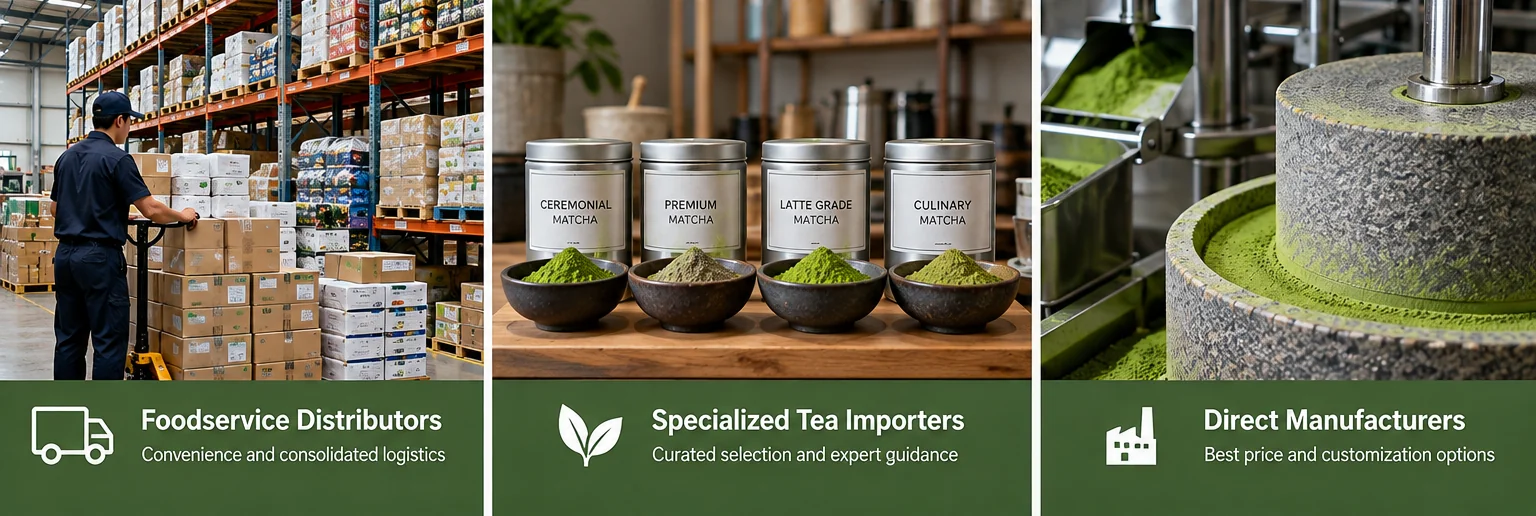
Coffee shops should choose a supplier based on their business priorities. Large foodservice distributors offer convenience and consolidated logistics, while specialized importers provide curated selections. Sourcing directly from a manufacturer like us offers the best price and customization but often requires higher volume commitments.
Dive Deeper: The Pros and Cons of Each Supplier Channel
Choosing a supplier is a strategic decision that balances convenience, expertise, and cost. When cafe owners ask us for guidance, we help them analyze these trade-offs to find the perfect fit for their business model.
H3: Large Foodservice Distributors
These are the giants of the industry, like Sysco or US Foods. You are likely already their customer.
- Pros: The primary advantage is convenience. You can add matcha to your existing order, receive it on the same truck as your other supplies, and pay on a single invoice. This simplifies your operations and accounting significantly.
- Cons: The drawbacks are a lack of specialization and limited selection. For a distributor, matcha is just another SKU among thousands. The sales representatives rarely have deep product knowledge to help you choose the right grade or troubleshoot a recipe. The quality is often generic and designed for mass appeal, not for crafting a standout latte that defines your brand.
H3: Specialized Tea Importers & Wholesalers
These businesses focus specifically on tea and, often, matcha. They act as expert curators, sourcing products from various producers and offering them to local markets.
- Pros: Their main strength is expertise and a vetted selection. They have done the legwork of sourcing and quality control, presenting you with a range of high-quality options they stand behind. They can speak knowledgeably about flavor profiles and help you find a product that suits your needs.
- Cons: This curation comes at a higher price point. As a middleman, their costs are higher than sourcing direct. You are also one step removed from the origin, which can limit transparency and the potential for customization.
H3: Direct from a Manufacturer2
This involves partnering directly with the company that produces the matcha, like Lvyinbio.
- Pros: This channel offers the best pricing, total transparency, and the highest potential for partnership. You gain access to the full range of grades, from culinary to the highest ceremonial. It opens the door for custom blending and private label opportunities, allowing you to create a unique product for your cafe. You build a direct relationship with the source, ensuring consistency and clear communication.
- Cons: The primary barrier is typically a higher Minimum Order Quantity (MOQ). Manufacturers are set up for bulk production, so this option is best for multi-location cafes or those with significant matcha sales. It may also require you to handle international logistics and importation, though many manufacturers have established streamlined processes for this.
Supplier Comparison Table
| Supplier Type | Best For | Pros | Cons |
|---|---|---|---|
| Foodservice Distributor | Maximum Convenience | One-stop-shop, simple logistics | Generic quality, no expertise, limited selection |
| Specialized Importer | Curated Quality & Guidance | Vetted products, expert advice | Higher cost, less control over the source |
| Direct Manufacturer | Volume, Price & Customization | Best price, full transparency, partnership potential | Higher MOQs, may involve more logistics |
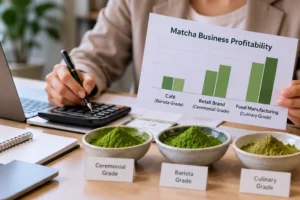
What grade of matcha is best for a coffee shop?
You've seen the words "Ceremonial," "Premium," and "Culinary" everywhere, but what do they actually mean for your latte menu? Many coffee shop owners mistakenly believe they need the most expensive "ceremonial" grade. This can be a costly error that results in a bland, underwhelming drink for your customers.
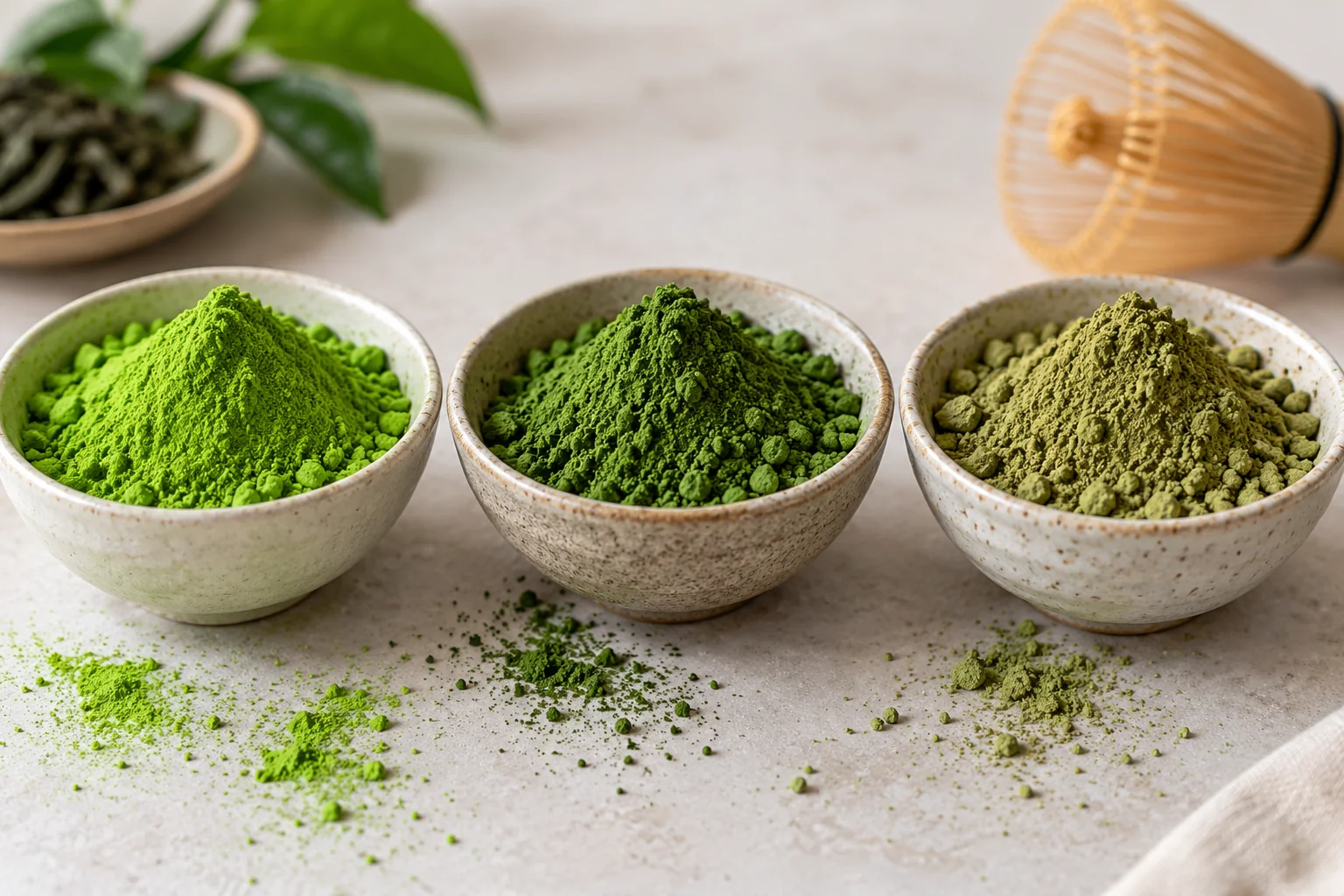
The best grade of matcha for most coffee shops is a high-quality "Barista" or "Premium" grade. This type is not a formal industry standard but is a term used by suppliers for matcha specifically balanced to have a vibrant green color, a strong flavor that stands up to milk, and an affordable cost-per-serving.
Dive Deeper: Moving Beyond Grade to Performance
A common misconception we address daily with new cafe clients is the focus on grade names. These terms are not regulated, meaning one supplier's "ceremonial" might be lower quality than another's "premium." Instead of getting caught up in labels, successful coffee shops evaluate matcha based on its performance in their actual recipes.
H3: The Key Performance Metrics for a Matcha Latte
For a coffee shop, the goal isn't to replicate a traditional Japanese tea ceremony; it's to create a delicious, visually appealing, and profitable beverage. Here’s what truly matters:
- Color: Customers see their latte before they taste it. A vibrant, rich green color signals quality and looks fantastic in photos for your social media.3 This bright color comes from high-quality, shade-grown tea leaves that are rich in chlorophyll. A yellowish or brownish hue indicates a lower-quality product made from older leaves or improper processing.
- Flavor Profile: When mixed with several ounces of milk and often a sweetener, a delicate, nuanced ceremonial matcha gets lost. Its subtle umami and sweet notes are completely overpowered. A great coffee shop matcha needs a more robust, bold flavor profile with a pleasant, slightly astringent finish that can cut through the richness of dairy or plant-based milks.
- Texture and Suspension: The matcha powder must be exceptionally fine (typically under 10 microns).4 This ensures it dissolves easily into a smooth, creamy liquid without a gritty or sandy mouthfeel. It should also stay suspended in the drink rather than quickly settling at the bottom of the cup as a layer of sludge.
- Cost-Per-Serving: This is perhaps the most critical business metric. A pure ceremonial grade can cost upwards of $1.50 per serving.5 A well-designed barista grade, on the other hand, can deliver superior color and flavor in a latte for just $0.40–$0.70 per serving. This massive difference directly impacts your menu pricing, margins, and overall profitability.
Choosing a dedicated Barista Reserve or Cafe Standard Matcha is often the smartest business decision. It is specifically designed to excel in these four areas, delivering the best possible customer experience at a sustainable cost for your operation.
How do successful coffee shops evaluate and test their matcha?
You've found a few potential suppliers and you're reviewing their product spec sheets. The problem is, they all claim to have "vibrant color" and a "smooth finish." How can you make a final decision without committing to a 10kg case and hoping for the best? Buying blind is a recipe for expensive, unusable inventory.
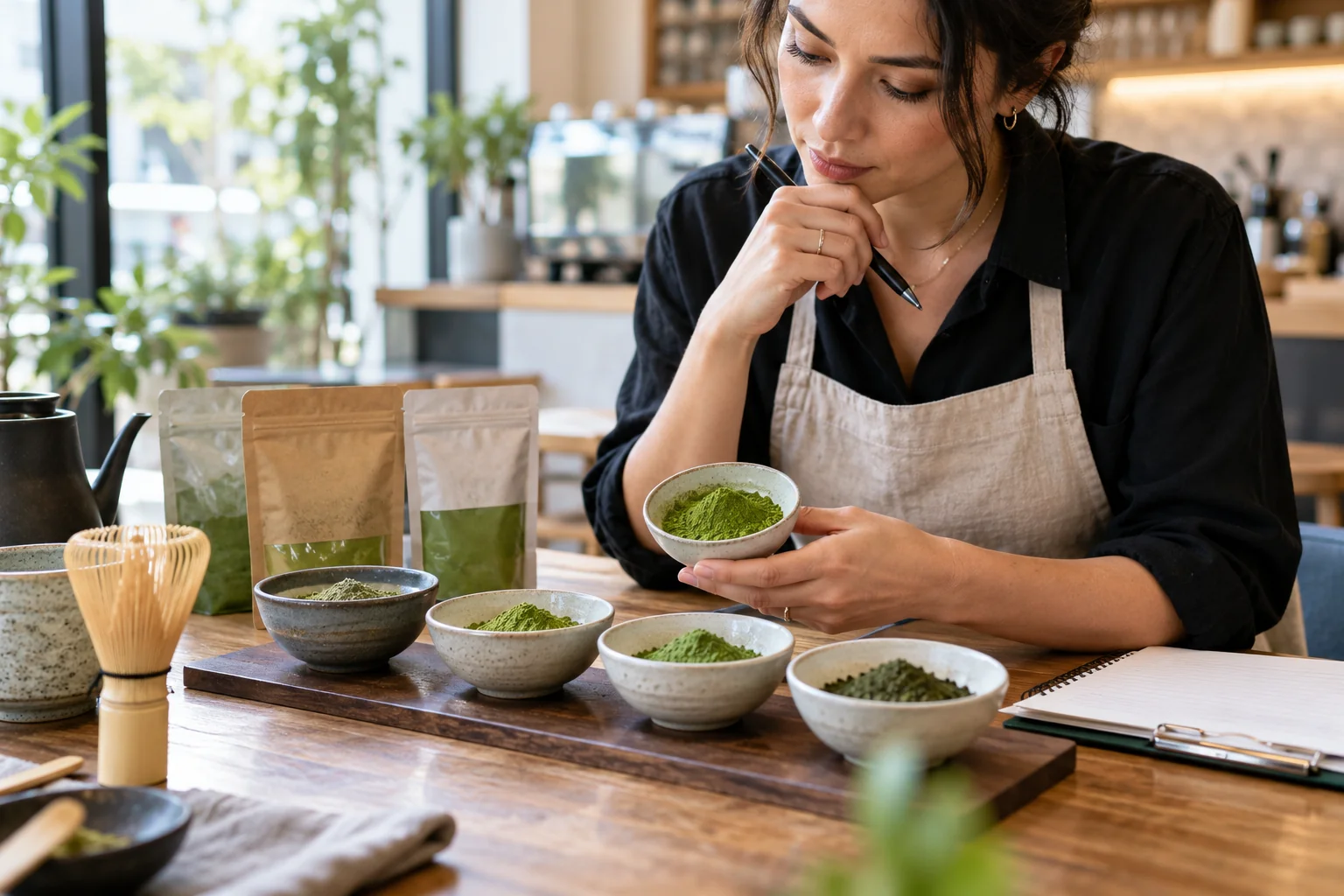
Successful coffee shops de-risk their purchasing decision by implementing a structured evaluation process.6 They always request samples from potential suppliers and test them head-to-head in their own cafe, using their own recipes, equipment, and standard milk.
Dive Deeper: Building Your In-House Testing Protocol
From our experience working with hundreds of beverage brands and cafes, the businesses that thrive are the ones that test rigorously. A professional matcha supplier should be eager to support this process. When we begin a conversation with a coffee shop, sending samples of our most relevant grades—like our Barista Reserve Matcha and Cafe Standard Matcha—is the essential first step.
H3: The Power of a Sample Program
Never commit to a bulk purchase without tasting the product first.7 Any reputable supplier will understand and facilitate this. Testing samples is the only way to know how a specific matcha will perform with your milk, your water, and your unique recipe. It turns a guessing game into a data-driven decision.
H3: Your In-House Matcha Evaluation Checklist
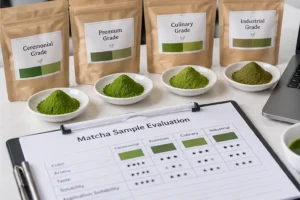
Create a simple scoresheet and test samples from different suppliers side-by-side. Prepare each one exactly as you would for a customer.
-
Dry Powder Analysis:
- Color: Open the sample packets. Is the powder a bright, electric green, or is it a dull, swampy olive-green?
- Aroma: Does it smell fresh, grassy, and slightly sweet, or does it smell dusty and stale?
- Texture: Rub a small amount between your fingers. It should feel silky and fine, like eyeshadow.
-
Prepared Latte Analysis:
- Visuals: Once prepared, what is the final color of the latte? Does it maintain that appealing green hue?
- Taste: How is the flavor balance? Does the matcha taste come through clearly, or is it weak? Is it pleasantly bold, or is it unpleasantly bitter and astringent?
- Mouthfeel: Is the drink perfectly smooth and creamy, or can you detect any sediment or grit? Let it sit for two minutes. Has the matcha already settled into a thick layer at the bottom?
-
Supplier Consistency Check:
- Ask the supplier about their quality control.8 How do they ensure the matcha you order in six months will be the same as the sample you approved today? Look for partners who can speak about their batch testing and production standards.
H3: Calculating the True Cost-Per-Serving
Don't be swayed by a low price per kilogram. The "cheapest" matcha is often the most expensive to use.
- Formula: (Price per gram) x (Grams needed per serving) = Cost per serving
- Example Scenario:
- Supplier A: Sells matcha for $70/kg ($0.07/gram). It's so flavorful that you only need 3 grams per latte.
- Your cost per serving: $0.07 x 3 = $0.21
- Supplier B: Sells matcha for $55/kg ($0.055/gram). The powder is weaker, so you need 5 grams to achieve a similar taste.
- Your cost per serving: $0.055 x 5 = $0.275
- Supplier A: Sells matcha for $70/kg ($0.07/gram). It's so flavorful that you only need 3 grams per latte.
In this real-world example, the matcha that was 27% more expensive per kilo is actually over 23% cheaper to use in every single drink you sell.
Frequently Asked Questions
What’s the difference between ceremonial and barista grade matcha?
Ceremonial grade is made from the youngest, most tender tea leaves and is intended for traditional preparation with just water. It has a delicate, sweet, umami-rich flavor. Barista grade is specifically blended for use in lattes, with a bolder flavor profile that won't get lost in milk, a consistently vibrant color, and a more accessible price point for cafe operations.
How much matcha should I use per latte?
This depends on the matcha's quality and your desired flavor strength, but a good starting point for a 12oz (350ml) latte is between 2 and 4 grams. We always recommend starting with a supplier's recommendation and then adjusting the dosage after tasting it with your specific milk and sweetener combination.
Why is my matcha latte turning brown or yellow?
A latte that turns brown, olive, or yellowish is almost always a sign of low-quality or old matcha. The vibrant green color comes from chlorophyll, which degrades quickly when exposed to oxygen, heat, and light. Sourcing fresh, high-quality powder from a reliable supplier with good inventory turnover is the best way to prevent this.
Can I get a private label for my coffee shop's matcha?
Yes, absolutely. Many direct manufacturers and some larger wholesalers offer private label services. This allows you to create retail-sized bags or tins of matcha featuring your own coffee shop's branding. It's an excellent way to build brand loyalty, increase customer lifetime value, and add a profitable new revenue stream to your business.
Conclusion
Ultimately, the most important question is not where other coffee shops get their matcha, but how you can develop a smart, repeatable sourcing strategy for your own business. The key to success is a strategic shift in perspective: from ambiguous grade names to measurable performance in a latte, from a simple price-per-kilo to the true cost-per-serving, and from a one-time transaction to a long-term supplier partnership. By rigorously testing samples in your own environment and evaluating suppliers on their consistency, expertise, and reliability, you can confidently choose the perfect matcha for your coffee shop—one that delights your customers and strengthens your bottom line.
If you are ready to find a consistent, high-quality matcha supplier that understands the needs of a modern coffee shop, our team is here to help. We specialize in providing barista-focused matcha grades designed for exceptional lattes. Contact us today to discuss your menu goals and request samples for testing.
"Where Do Coffee Shops Get Their Matcha From?", https://matchasourcing.com/where-do-coffee-shops-get-their-matcha-from/. Educational resources on foodservice supply chains confirm that coffee shops often source matcha through distributors, importers, or direct manufacturers, depending on their operational needs and volume requirements. Evidence role: general_support; source type: education. Supports: Coffee shops source matcha from distributors, importers, and manufacturers.. Scope note: Specific examples of coffee shops using these channels may vary by region and business model. ↩
"How Do I Find Real Matcha Suppliers in China?", https://matchasourcing.com/how-do-i-find-real-matcha-suppliers-in-china/. Research on direct sourcing in the food industry highlights cost savings and customization benefits when working directly with manufacturers. Evidence role: general_support; source type: research. Supports: Direct sourcing from matcha manufacturers provides cost benefits and customization opportunities.. Scope note: The advantages may depend on the manufacturer's capacity and willingness to collaborate. ↩
"Why is Matcha Color Important? Matcha Green Color is the ...", https://matchadirect.kyoto/blogs/matcha-101/why-is-matcha-color-important-matcha-green-color-is-the-key-to-determining-quality?srsltid=AU7gw4VnLMFH46XyDFeLDoAWphJsZ5HiFSJ5kwoGBjdN_m0GdQAR-pRe. Research on matcha production confirms that vibrant green color results from shade-grown leaves rich in chlorophyll, which is often linked to higher quality. Evidence role: mechanism; source type: research. Supports: Bright green matcha is associated with high-quality processing and visual appeal.. Scope note: Color alone may not fully determine matcha quality without additional factors like flavor and texture. ↩
"Effect of Different Ball Milling Times on Matcha Quality", https://www.sciopen.com/article/10.15905/j.zgcyjg.2095-0306.2024.04.10. Studies on matcha processing indicate that powders under 10 microns dissolve more effectively, creating smoother beverages without sediment. Evidence role: mechanism; source type: research. Supports: Finely ground matcha improves texture and suspension in beverages.. Scope note: Other factors like preparation methods can also affect texture. ↩
"Price vs flavour on matcha. : r/tea", https://www.reddit.com/r/tea/comments/1lb6uvl/price_vs_flavour_on_matcha/. Market research on matcha pricing shows that ceremonial grades are among the most expensive, often exceeding $1.50 per serving due to their premium quality. Evidence role: statistic; source type: research. Supports: Ceremonial grade matcha often costs over $1.50 per serving.. Scope note: Prices may vary based on supplier and region. ↩
"How to Check Matcha Quality Before Bulk Ordering?", https://matchasourcing.com/how-to-check-matcha-quality-before-bulk-ordering/. Educational guides on food sourcing recommend sample testing as a critical step for evaluating product quality and supplier reliability. Evidence role: general_support; source type: education. Supports: Sample testing helps coffee shops evaluate matcha quality and suitability.. Scope note: The effectiveness of testing depends on the rigor of the evaluation process. ↩
"Importance of events per independent variable in ...", https://pubmed.ncbi.nlm.nih.gov/8543964/. Educational resources on foodservice procurement emphasize sample tasting as a key step to avoid costly inventory mistakes. Evidence role: general_support; source type: education. Supports: Tasting samples ensures product suitability before bulk purchasing.. Scope note: The effectiveness of tasting depends on the sample's representativeness of bulk quality. ↩
"How to Check Matcha Quality Before Bulk Ordering?", https://matchasourcing.com/how-to-check-matcha-quality-before-bulk-ordering/. Research on food supply chains highlights the role of quality control in maintaining product consistency and reliability. Evidence role: mechanism; source type: research. Supports: Supplier quality control ensures consistent matcha quality over time.. Scope note: Quality control practices may vary significantly among suppliers. ↩