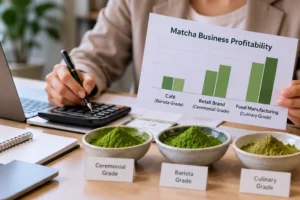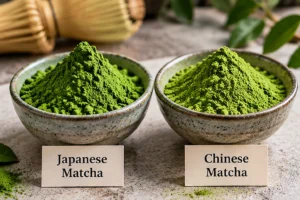
As a B2B buyer sourcing matcha for your brand, your top priority is finding a reliable, high-quality source. It's tempting to think that finding the biggest supplier is the safest path. However, this focus on sheer size can lead you to a partner whose product is entirely wrong for your lattes, baked goods, or retail line, resulting in wasted time, money, and customer disappointment. The key isn't finding the largest matcha producer in the world1, but learning how to identify the right supplier for your specific business needs.
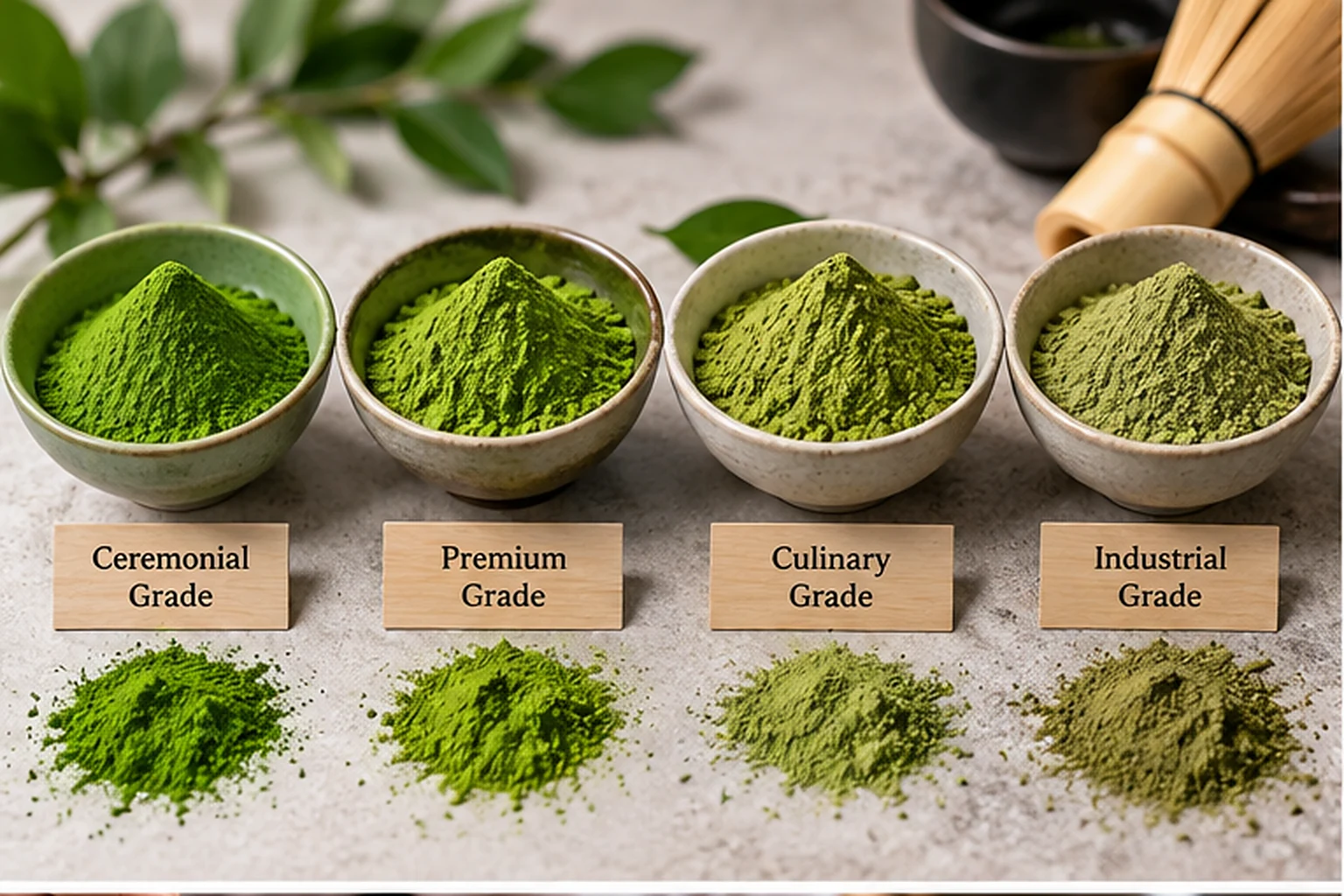
There is no single, universally recognized "largest matcha producer in the world" that is relevant for all buyers. The largest producer by sheer volume might specialize in low-grade, industrial matcha intended for food coloring, making it completely unsuitable for a premium beverage brand. B2B buyers should instead focus on a supplier's production capacity for the specific grade (Ceremonial, Premium, or Culinary) that matches their commercial application.
Now that we've reframed the central question, let's unpack the criteria you should be using to evaluate a potential partner. This guide will walk you through a professional procurement framework to de-risk your sourcing process and find a supplier who truly fits your business.
Why Is "Size" a Misleading Metric for the Largest Matcha Producer in the World?
You need a significant volume of matcha for your growing cafe chain, and it seems logical to find the biggest producer to ensure supply. But what if their specialty is culinary-grade matcha for industrial bakeries, not the vibrant green powder your baristas need for beautiful lattes?
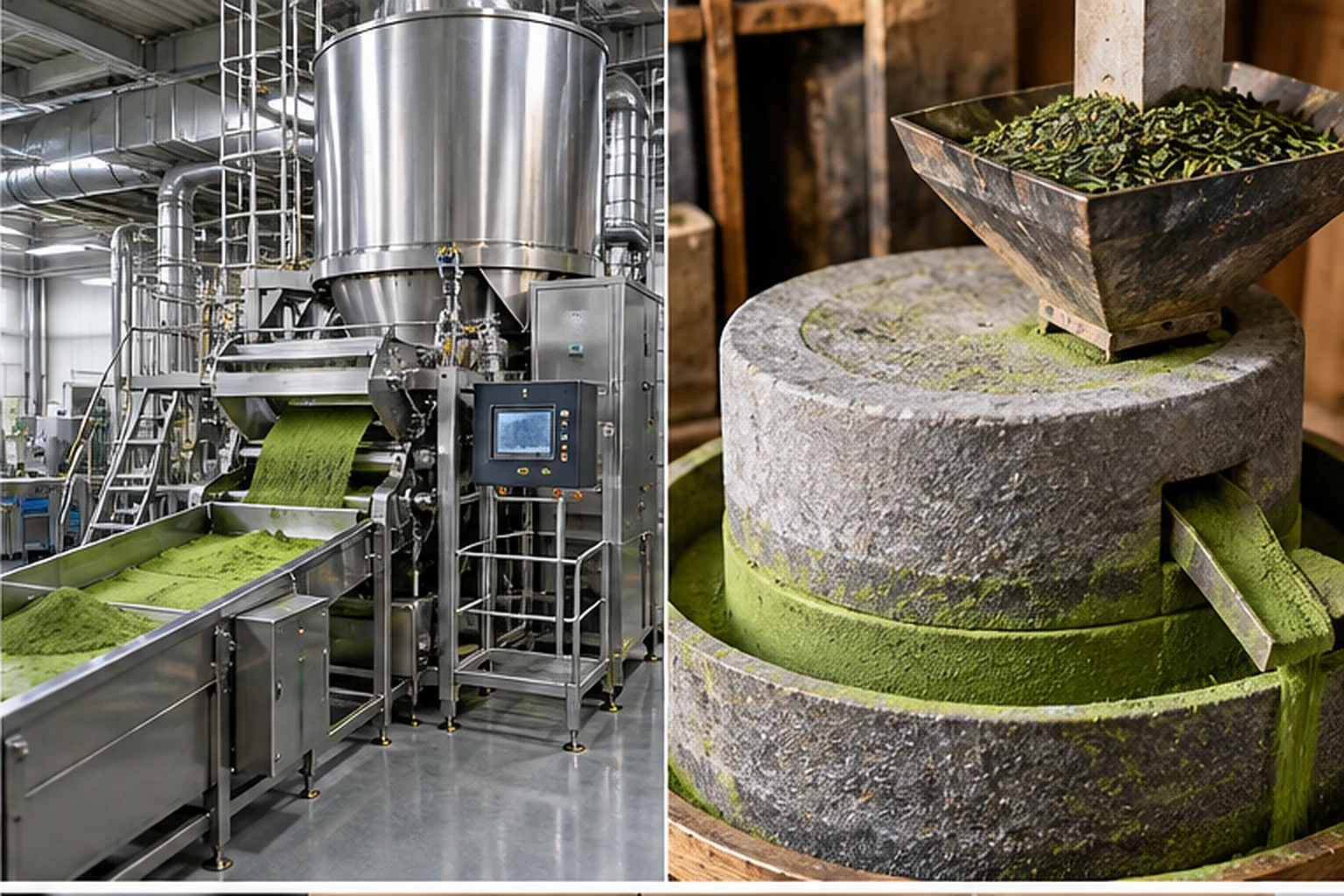
"Size" is a misleading metric because matcha production isn't monolithic2. A producer's total annual tonnage says nothing about their quality standards, the specific grades they excel at, or their experience with your target market's packaging and compliance requirements.
Dive Deeper: The Dangers of Focusing on Volume
In my experience advising brands, one of the most common early mistakes is asking "How big are you?" instead of "Can you do this specific thing for me?". This focus on scale overlooks the nuances that define a successful matcha program.
Production Volume vs. Grade Specialization
The matcha market is highly segmented. A producer making thousands of metric tons of low-grade powder for food coloring is technically "larger" than a specialized supplier who carefully cultivates and mills a few hundred kilograms of exquisite Imperial Ceremonial Grade matcha.
Think of it like winemaking. The world's largest wine producer by volume probably makes bulk table wine sold in cartons. A boutique vineyard in a premium region produces far less, but its product serves a completely different market and purpose. The same is true for matcha. The largest matcha producer in the world by volume is almost certainly not the one you want for a premium tea brand.
The Application Mismatch Risk
This brings us to the most critical risk: an application mismatch3. Using the wrong grade of matcha can ruin your product and brand reputation.
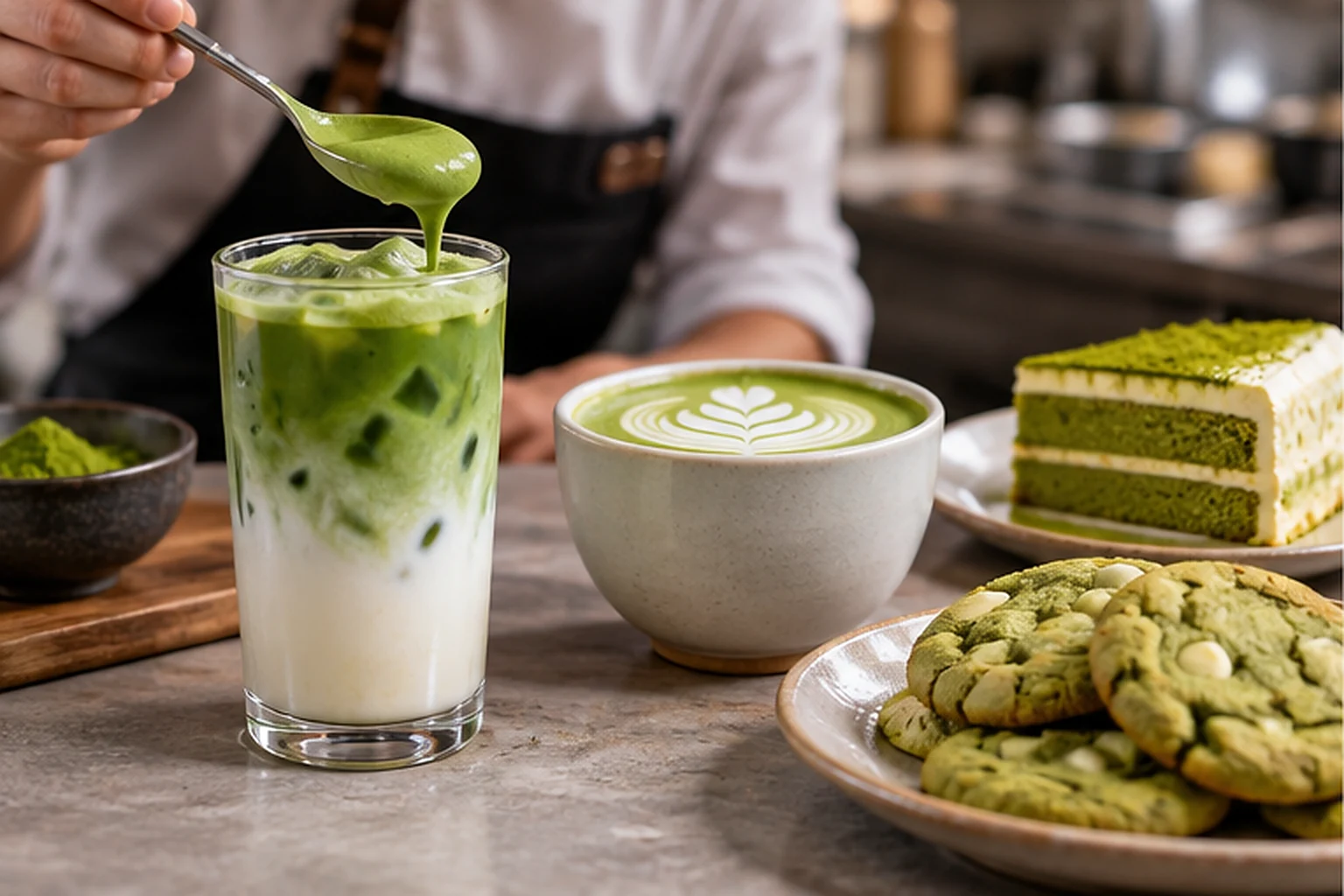
- A cafe using cheap culinary matcha for lattes will serve dull, brownish-green drinks with a harsh, bitter flavor. Customers will be disappointed, and your brand will look low-quality.
- A bakery using expensive ceremonial matcha for cookies is wasting money. The delicate, sweet umami notes and vibrant green color4 of ceremonial grade are lost during baking. A more robust, cost-effective culinary matcha is designed for this purpose.
A good supplier doesn't just sell you what you ask for; they ask what you're making with it to prevent these costly errors.
Regional Ecosystems, Not Single Giants
Finally, it's important to understand that many of the best suppliers are not single, vertically integrated giants. They are often expert processors and blenders who are part of a larger regional production ecosystem5, like those in Guizhou, China or regions in Japan. They source high-quality raw tea (tencha) from a network of trusted farms and then use their expertise in milling, grading, and quality control to create a consistent final product.
Your focus should be on the supplier's specific capabilities—their quality control systems, their milling technology, and their ability to create consistent batches—not the size of one single corporate entity.
How Should Buyers Define Their Matcha Needs Instead?
You've sent out inquiries for "bulk matcha," but the samples you receive are all over the place in color, taste, and price. You're frustrated because suppliers don't seem to understand what you need. The problem often lies in how the need is defined in the first place.
Instead of asking suppliers about their size, successful buyers start by clearly defining their own needs based on three pillars: Matcha Grade, Commercial Application, and Supply Chain Model.
Dive Deeper: Building a Clear Sourcing Brief
A detailed brief not only helps you get accurate quotes but also signals to suppliers that you are a serious, professional buyer.
Pillar 1: Specifying the Matcha Grade
"Matcha" is not one thing. The first step is to identify the grade that aligns with your product's quality and price point. At Lvyinbio, we categorize our products to help clients make this choice, and this framework is common across the industry.
| Grade Category | Primary Use Case | Key Quality Metrics | Typical Buyer |
|---|---|---|---|
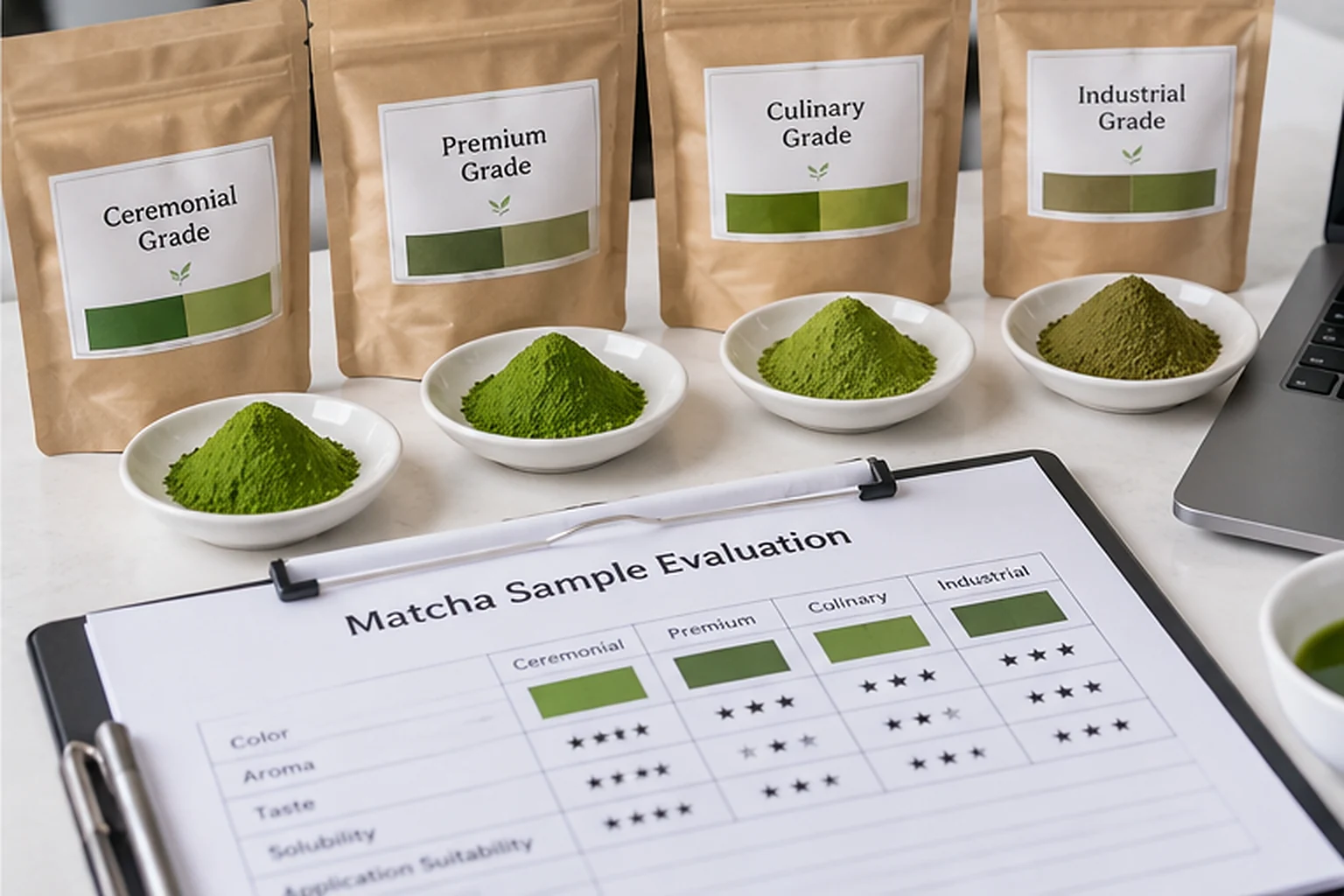
| Ceremonial Grade | Pure tea (usucha/koicha), high-end beverages | Vibrant green color, fine texture, high umami, low bitterness | Premium tea brands, tea shops, direct-to-consumer retail |
| Premium / Beverage Grade | Lattes, smoothies, blended drinks | Good green color, balanced flavor, performs well with milk | Cafes, coffee chains, beverage manufacturers, smoothie bars |
| Culinary Grade | Baking, confections, ice cream, industrial recipes | Robust flavor, heat-stable color, cost-effective | Bakeries, chocolatiers, food manufacturers, industrial kitchens |
Pillar 2: Detailing the Commercial Application
Getting more specific than just the grade is crucial. "I need matcha for a latte" is a much better starting point than "I need premium matcha." Why? Because a good supplier knows that a latte application has unique requirements.
- For Beverages: When matcha is mixed with milk (dairy or plant-based), its flavor profile changes. A certain level of astringency can actually be desirable to cut through the richness of the milk. Most importantly for social media-driven cafe culture, the color must be a vibrant green that doesn't look murky or brown. This is why we offer specific "Barista" and "Cafe" grade products.
- For Baking: When matcha is heated, its delicate flavors can dissipate and its color can degrade. A good culinary matcha is formulated to have a more robust "green tea" flavor and a color that holds up better to processing, all at a cost that makes sense for a food ingredient.
When we consult with a new client, our first question is often about their menu or recipe. This helps us recommend a matcha that is not just "high quality," but right for the job.
Pillar 3: Outlining the Supply Chain Model
How you plan to get the matcha to your final customer dramatically impacts your supplier choice.
- Bulk Wholesale: If you're a distributor or large manufacturer, your priority is consistency in large batches (e.g., 20kg bags or totes), reliable lead times, and documentation for import.
- Private Label: If you're launching your own brand, you need a supplier with proven experience in retail packaging. Can they source tins or stand-up pouches? Do they understand labeling requirements for your market (e.g., FDA nutritional facts panels)?
- OEM/ODM: If you're creating a unique product, like a custom matcha blend or a ready-to-drink formula, you need a partner with R&D capabilities who can collaborate on development and testing.
What Questions Should You Ask a Potential Matcha Supplier?
You're on a discovery call with a potential supplier, but the conversation feels vague. You aren't getting the information you need to make a confident decision, and you're worried about locking into a partnership that can't deliver.
To avoid this, you must move beyond generic questions. Asking sharp, specific questions forces a supplier to demonstrate their true capability and reveals whether they are the right partner for your business.
Dive Deeper: The Buyer's Interrogation Checklist
Here are the questions that will help you separate the true partners from the simple traders. I always recommend framing questions in a "Instead of X, ask Y" format to get to the heart of the matter.
-
Instead of: "How big are you?"
- Ask: "What is your monthly production capacity for Premium Grade Barista Matcha?" or "What are your typical batch sizes for Classic Culinary Grade?"
- Why it's better: This question is specific. It forces the supplier to talk about their capacity for the exact product you need, which is the only capacity that matters to you. It also tests whether they even think in these terms.
-
Instead of: "Is your matcha good quality?"
- Ask: "Can you provide a sample of the grade you recommend for an iced oat milk latte? We are targeting a vibrant green color and a smooth flavor profile with minimal bitterness. Please also include its specification sheet."
- Why it's better: This anchors the subjective term "quality" to your specific commercial application. It sets a clear benchmark for evaluation and provides objective data (the spec sheet) to compare against the subjective experience (tasting the sample).
-
Instead of: "Do you offer private label?"
- Ask: "What is your experience with private label projects shipping to the US market? Can you walk me through the process and share examples of packaging formats you've handled, such as metal tins or printed stand-up pouches?"
- Why it's better: The first question is a simple "yes/no". The second question probes for demonstrable experience and process maturity. A supplier who has done this before will have a clear answer about sourcing, lead times, and regulatory considerations.
-
Instead of: "What's your best price?"
- Ask: "Could you provide a tiered price list for your Cafe Standard Matcha at order volumes of 100kg, 500kg, and 1,000kg? What are the associated lead times for each of these quantities?"
- Why it's better: This shows you are thinking about scaling and allows you to understand the supplier's business logic. It turns a simple price query into a strategic conversation about long-term partnership and supply chain planning.
-
Instead of: "Do you have quality control?"
- Ask: "How do you ensure consistency between different production batches shipped months apart? Can you provide a Certificate of Analysis (CoA) with every shipment, and what parameters does it typically include?"
- Why it's better: Every supplier will say they have "quality control." This question asks for the proof. Batch consistency is a major challenge in natural products, and a professional supplier will have a clear process and documentation to manage it.
Frequently Asked Questions
Who is the biggest producer of matcha in Japan vs. China?
This is a common question, but as this article argues, it's not the most helpful one for a B2B buyer. Both countries have vast production regions with many suppliers specializing in different grades and qualities. A buyer's focus should always be on finding a supplier whose product fits their specific application, quality standards, and budget, regardless of their nationality of origin.
Does a higher price always mean better matcha?
Generally, price correlates with quality6, but only if "better" is defined correctly for your application. An expensive ceremonial grade matcha7 is "better" for drinking as pure tea but is a poor value choice for baking. The "best" matcha is the one that has the right quality attributes for the job at a commercially viable price point.
How much matcha do I need to order for a private label run?
This varies significantly between suppliers. Minimum Order Quantities (MOQs) depend on the matcha grade, the complexity of the custom packaging, and printing requirements. It is crucial to discuss this early in your evaluation process. Be prepared for MOQs ranging from a few hundred to several thousand units for a fully custom-packaged product.
What are the most important certifications to ask for?
This depends entirely on your target market and claims. Common documents buyers request include organic certifications8 (e.g., USDA, EU Organic), food safety management system certifications (e.g., ISO 22000, HACCP, BRC), and third-party lab test reports for contaminants like heavy metals, pesticides, and microbial content. Always request and verify documents that are relevant to your country's import regulations.
Conclusion
The search for a matcha supplier shouldn't be a quest to find the single largest matcha producer in the world. That path is often a distraction that leads to poor sourcing decisions. Instead, the goal is to find the right partner for your business. This is achieved by first looking inward to clearly define your needs based on grade, application, and supply chain model. Only then can you look outward, armed with specific, insightful questions that allow you to properly vet potential suppliers and uncover their true capabilities. By shifting your focus from a supplier's size to their suitability, you de-risk the procurement process and build a foundation for a successful, long-term partnership.
If you are a food and beverage brand, distributor, or cafe chain looking to source the right matcha for your specific commercial goals, our team is here to help. We specialize in matching our Ceremonial, Premium, and Culinary grade matcha to your application needs. Contact us to discuss your project and request a targeted sample for evaluation.
"Matcha", https://en.wikipedia.org/wiki/Matcha. According to industry overviews, matcha production is highly segmented, with no single producer dominating all quality grades or applications. This segmentation reflects the diverse needs of global markets. Evidence role: general_support; source type: encyclopedia. Supports: The absence of a universally recognized largest matcha producer relevant to all buyers.. Scope note: The source may focus on general tea production rather than matcha-specific data. ↩
"Focus on Matcha, Sencha, and Gyokuro - PMC", https://pmc.ncbi.nlm.nih.gov/articles/PMC13515311/. Research on matcha production highlights the segmentation of producers by grade and application, emphasizing that volume does not equate to quality or specialization. Evidence role: expert_consensus; source type: research. Supports: The diversity in matcha production and the lack of correlation between production volume and quality standards.. Scope note: The study may focus on specific regions rather than global production. ↩
"Matcha Color Grading Standards: How Visual Quality ...", https://first-agri.jp/matcha/columns/092. Case studies in food and beverage industries show that mismatched ingredient grades, including matcha, can lead to poor product performance and customer dissatisfaction. Evidence role: case_reference; source type: research. Supports: The negative effects of using mismatched matcha grades in commercial applications.. Scope note: The examples may focus on broader ingredient mismatches rather than matcha-specific cases. ↩
"Health Benefits and Chemical Composition of Matcha Green ...", https://pmc.ncbi.nlm.nih.gov/articles/PMC7796401/. Studies on food presentation and consumer behavior emphasize the importance of vibrant colors, including matcha green, in enhancing product appeal. Evidence role: general_support; source type: research. Supports: The significance of vibrant green matcha color in consumer appeal and branding.. Scope note: The research may focus on general food presentation rather than matcha-specific cases. ↩
"Effect of Geographic Regions on the Flavor Quality and Non ...", https://pmc.ncbi.nlm.nih.gov/articles/PMC11720590/. Educational resources on Japanese and Chinese tea production describe regional ecosystems where farms and processors collaborate to produce high-quality matcha. Evidence role: mechanism; source type: education. Supports: The role of regional ecosystems in matcha production and supplier networks.. Scope note: The focus may be limited to specific regions rather than a global perspective. ↩
"Which Country Has the Best Matcha? Japan vs China ...", https://matchasourcing.com/which-country-has-the-best-matcha/. Studies on matcha pricing indicate that higher costs often reflect better quality, but only when aligned with the intended application. Evidence role: statistic; source type: research. Supports: The correlation between price and quality in matcha sourcing.. Scope note: The studies may focus on specific matcha grades rather than general pricing trends. ↩
"Elevate Your Tea Brand with Ceremonial Grade Matcha", https://matchasourcing.com/ceremonial-grade-matcha/. Educational resources on matcha grades describe ceremonial matcha as vibrant green, finely milled, and characterized by high umami and low bitterness. Evidence role: definition; source type: education. Supports: The defining characteristics of ceremonial grade matcha.. Scope note: The description may vary slightly depending on the source's regional focus. ↩
"Certifications - Matcha Powder Supplier & Manufacturer", https://matchasourcing.com/certifications/. Government and industry guidelines list USDA Organic, EU Organic, ISO 22000, and HACCP as common certifications for tea and matcha products. Evidence role: definition; source type: government. Supports: The standard certifications relevant to matcha production and export.. Scope note: The guidelines may not cover all certifications relevant to specific markets. ↩