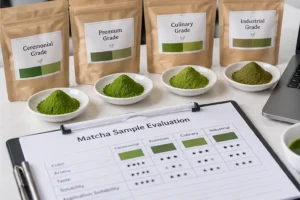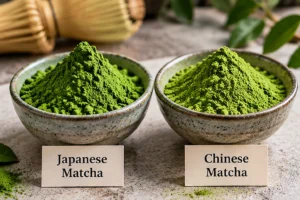
Struggling to figure out if a matcha business is profitable? You've likely seen the boom in matcha lattes and branded tins, but finding clear data on costs and margins feels impossible. This uncertainty makes it difficult to build a confident business plan, choose a supplier, or even decide which product to sell. The key to profitability, however, isn't a universal formula; it's about correctly aligning your specific business model with the right grade of matcha powder.
The profitability of a matcha business is determined by choosing the correct grade of matcha for a specific business model.1 A cafe's profit comes from balancing cost and quality for lattes (Barista Grade), a retail brand's profit comes from the premium price of a superior tea experience (Ceremonial Grade), and a food manufacturer's profit comes from the performance and bulk cost of an ingredient (Culinary Grade). Success depends on matching the product to the application.
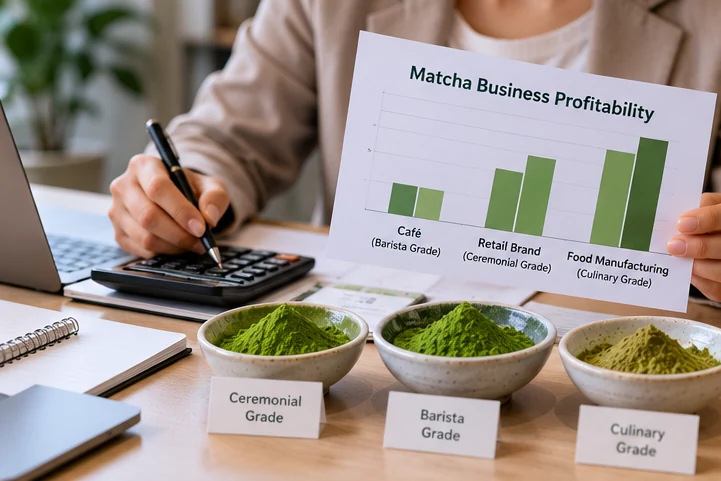
Now that you have the direct answer, let's break down the real-world costs, margins, and strategies for the most common matcha business models. The secret isn't just buying "cheap" or "expensive" matcha; it's about understanding which attributes create value for your specific customer.
How Does the Cafe Model Make a Matcha Business Profitable?
Are you a cafe owner looking to add a matcha latte to your menu, but concerned that the high ingredient cost will destroy your profit margin? Choosing the wrong matcha could lead to lackluster, brownish lattes that disappoint customers, resulting in wasted inventory and damaging your reputation. The solution is selecting a matcha grade specifically designed for high performance in beverages, not just the lowest price tag.
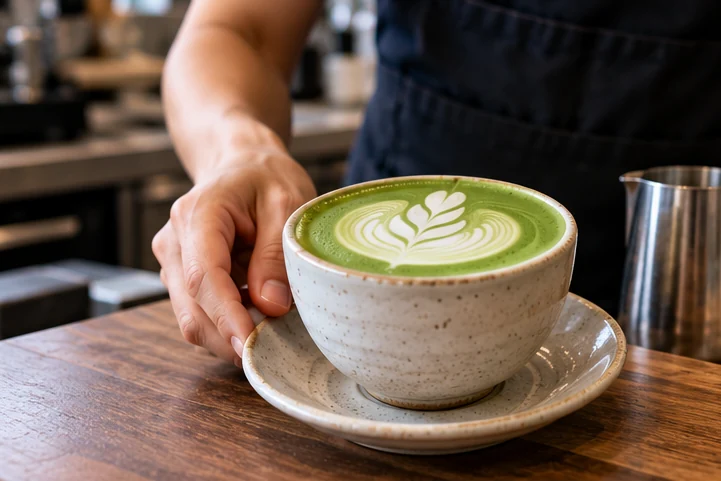
Profitability in a cafe setting comes from using a Barista or Premium Grade matcha that delivers a vibrant green color and smooth flavor when mixed with milk, all at a manageable cost-per-serving.2 This focus on quality drives customer satisfaction and, most importantly, repeat business.
Dive Deeper: The Cafe Profitability Formula
From our experience working with coffee shops and beverage brands, the most common mistake is assuming that "better" matcha means using a high-end Ceremonial Grade for everything. This is often an unprofitable choice.
Why Ceremonial Grade is Often Wrong for Lattes
Ceremonial Grade matcha is prized for its delicate, umami-rich flavor profile and subtle sweetness.3 It is ground from the youngest, most tender tea leaves and is intended to be whisked with hot water and enjoyed on its own. When you mix this expensive, nuanced powder with milk and sugar, two things happen:
- The flavor gets lost. The delicate savory and sweet notes of umami are easily overpowered by the fats and proteins in milk. You are paying a premium for a flavor profile your customer will never taste.
- The cost is unsustainable. A high-end Ceremonial Grade can cost two to three times more than a solid Barista Grade. This drastically increases your cost of goods sold (COGS) without a proportional increase in the final drink's quality.
The "Cost-per-Serving" Calculation That Matters
Instead of cost-per-kilogram, a profitable cafe thinks in cost-per-serving. Let's look at a simple comparison for a 12 oz latte using 2 grams of matcha:
| Metric | Cafe Standard Matcha | Imperial Ceremonial Matcha |
|---|---|---|
| Wholesale Cost (est.) | $60/kg | $180/kg |
| Cost per Gram | $0.06 | $0.18 |
| Matcha Cost per Latte (2g) | $0.12 | $0.36 |
| Performance in Milk | Excellent color, balanced flavor | Good color, delicate flavor lost |
| Profitability Impact | Lower COGS, high customer satisfaction | Higher COGS, no perceived quality gain |
As you can see, the Cafe Standard (a type of Premium/Barista Grade) delivers the visual appeal and taste that customers expect from a latte at a fraction of the cost. This is the foundation of making your cafe's matcha business profitable.
A question we get from first-time cafe owners is, "But won't customers know I'm not using the absolute best?" The reality is that "best" is relative. For a latte, the best matcha is one that stands up to milk, provides a beautiful green hue, and has a smooth, non-bitter finish. Our Barista Reserve Matcha is specifically selected for this purpose.
Can a Retail Brand Make Their Matcha Business Profitable?
Perhaps you're an entrepreneur wanting to launch your own private label matcha brand. You see a huge range of wholesale prices and are tempted to choose a lower-cost option to maximize your margin on paper. This is a critical error. Choosing a cheap, bitter matcha will damage your brand's reputation before it even has a chance to grow, leading to poor reviews and no repeat customers.
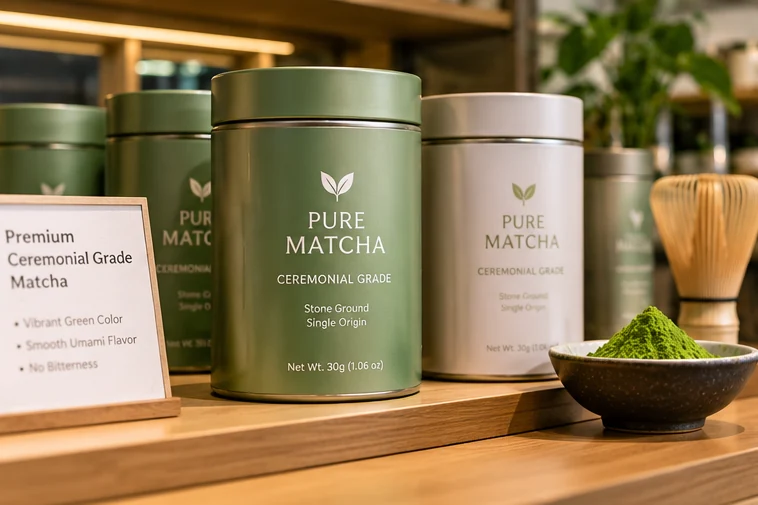
A retail matcha business is profitable when it successfully builds a premium brand. This is achieved by sourcing a high-quality Ceremonial Grade matcha whose exceptional color, smooth umami flavor, and lack of bitterness justify a premium price point and foster deep brand loyalty.
Dive Deeper: Building a Profitable Retail Brand
For a direct-to-consumer (D2C) or retail brand, you are not just selling a commodity powder; you are selling an experience, a promise of quality, and a lifestyle. Your profit margin is found in the brand equity you build.
The Margin is in the Brand, Not Just the Powder
Customers who buy tins of matcha for home use, especially at a premium price, are connoisseurs or aspiring connoisseurs. They are far more discerning than a cafe customer ordering a mixed beverage. They will whisk it with water, taste it pure, and notice every detail.
- Color: They expect a vibrant, electric green, not a dull, yellowish-green.
- Aroma: They expect a fresh, sweet, and slightly grassy scent.
- Flavor: They expect a smooth, creamy mouthfeel with a distinct savory (umami) note and a sweet finish, not overwhelming bitterness.
Using an inferior grade will immediately signal that your brand is not "premium," regardless of how beautiful your packaging is. Positive reviews and word-of-mouth are the lifeblood of a D2C brand, and these are earned with a superior product.
The True Cost Structure of a Retail Matcha Brand
When we talk to entrepreneurs looking to start a private label brand, they often focus on the unit cost. But the real variable is customer lifetime value.
| Metric | Low-Grade Strategy | Ceremonial-Grade Strategy |
|---|---|---|
| Product Grade | Culinary or Low-End | Imperial or Premium Ceremonial |
| Cost per 30g Tin (est.) | $2.00 | $7.00 |
| Retail Price | $12.99 | $29.99 |
| Gross Profit per Unit | $10.99 | $22.99 |
| Customer Feedback | "Bitter," "Tastes like grass," "Dull color" | "So smooth!," "Vibrant green," "Worth the price" |
| Repeat Purchase Rate | Very Low | High |
| Long-Term Profitability | Unprofitable due to churn & bad reviews | Profitable due to loyalty & high margins |
As the table shows, the higher initial cost of Ceremonial Grade unlocks a much higher retail price and, crucially, earns the customer loyalty that makes the business sustainable. The lower-margin product is actually a faster path to failure.
When seeking a supplier for your private label brand, you need a partner who understands this. Your discussion should be about which Ceremonial Grade offers the best balance of umami, color, and smoothness for your target price point. We always recommend our clients evaluate samples of our Imperial and Premium Ceremonial grades to find the perfect fit for the brand they want to build.
Is a B2B Matcha Business Profitable for Food Manufacturers?
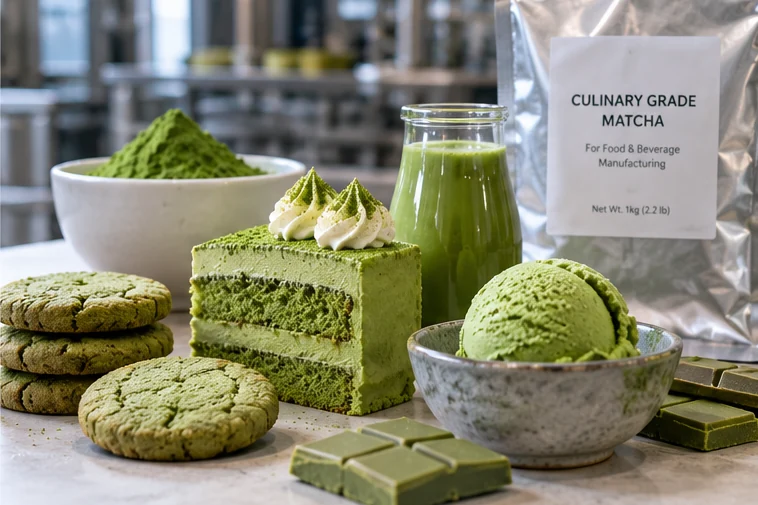
As a food manufacturer or baker, you need to incorporate matcha into a new product line, like ice cream, cookies, or energy bars. You're worried that the matcha's signature color and flavor will fade during production, and that the per-kilogram cost will make your final product too expensive to scale. The solution is using a Culinary Grade matcha selected specifically for its stability and suitability for bulk procurement.
For food manufacturers, a matcha business is profitable when it leverages a cost-effective Culinary Grade. This grade is chosen for its ability to retain a strong color and flavor profile after being cooked, frozen, or mixed with other ingredients, making it ideal for large-volume industrial applications.
Dive Deeper: Profitability Through Performance and Scale
For food producers, the evaluation criteria for matcha are completely different from those of a cafe or retail brand. Aesthetics and delicate flavors take a backseat to robustness and cost efficiency.
Performance Under Pressure is the #1 Metric
The primary concern for a food manufacturer is how the matcha performs in their unique production process.
- Heat Stability: Will the matcha turn brown and bitter when baked into a cookie or cake? A good Culinary Grade is chosen for its ability to retain its green hue.
- Fat & Sugar Interaction: How does the matcha flavor stand up against high levels of sugar, fat, and other strong ingredients like chocolate or dairy? It needs a bolder, more astringent flavor profile to cut through.
- Mixability and Texture: The powder's fineness must be suitable for industrial mixers to avoid clumping and ensure a homogenous final product.
Using a delicate, expensive Ceremonial Grade here would be a complete waste. Its nuanced flavors would be obliterated by the manufacturing process, and its high cost would make the product commercially unviable.
Bulk Pricing and Supply Chain Stability
Profitability in food manufacturing is a game of large numbers and slim margins.4 The cost-per-kilogram is paramount, as is the reliability of the supply chain. A manufacturer needs a supplier who can:
- Provide Competitive Bulk Pricing: Offer significant cost savings for orders of hundreds or thousands of kilograms.
- Ensure Batch Consistency: Guarantee that the matcha delivered in October has the same color, flavor, and particle size specifications as the batch delivered in April. Inconsistency can ruin entire production runs.
- Manage Logistics: Handle large-scale international shipping, customs, and delivery schedules reliably.
A common question we get from bakeries is, "How can I be sure the matcha will work in my recipe?" This is why a crucial part of the procurement process is testing. We provide our Pure Industrial and Classic Culinary Matcha samples so that R&D teams can run trials in their own kitchens. A matcha business is profitable at this scale only when the ingredient is validated for the application before a bulk purchase order is ever placed.
Frequently Asked Questions
What is a good profit margin for matcha?
This varies widely by business model. A matcha latte in a cafe could have a gross margin of over 70% on the beverage itself. A private label retail brand selling a tin of matcha might aim for a 50-70% margin. Profitability depends entirely on your overhead, branding, and the specific grade of matcha you use.
How much does it cost to start a matcha business?
The cost can range from a few thousand dollars to hundreds of thousands. Starting an e-commerce brand with a private label supplier involves costs for initial inventory, packaging, website development, and marketing. Opening a physical matcha cafe requires significant capital for rent, build-out, equipment, and staffing.
Which matcha grade is most profitable?5
No single grade is universally "most profitable." The most profitable grade is the one that correctly aligns with your business model. For cafes, it's typically a Barista/Premium Grade. For high-end retail brands, it's a Ceremonial Grade. For food manufacturing, it's a cost-effective Culinary Grade.
Why is some matcha so cheap?
Very low-cost matcha is almost always a late-harvest Culinary Grade powder. These teas are made from older, tougher leaves, which results in a more bitter, astringent flavor and a less vibrant, often yellowish-green color. While unsuitable for traditional tea preparation, its strong profile and low cost make it effective for some baking and industrial food applications.
Conclusion
The path to making a matcha business profitable is not paved with a single, secret formula. It's a strategic process of understanding your specific market and aligning your product with customer expectations. The key takeaway is to move beyond the simple question of "how much does matcha cost?" and instead ask, "which matcha will deliver the most value for my specific application?" Whether you're a cafe owner optimizing a latte, a brand founder creating a premium experience, or a manufacturer formulating a new product, selecting the right grade is the single most important decision you will make. This focus on suitability, rather than just price, is what separates struggling ventures from thriving, profitable matcha businesses.
If you are ready to identify the right matcha grade for your business plan, we can help. Contact us to discuss your project, and we can guide you toward the best product and provide samples for your own evaluation.
"Private Label Matcha: What Do Brand Owners Really Need to ...", https://matchasourcing.com/private-label-matcha-what-do-brand-owners-really-need-to-know/. A study on matcha powder grades and their applications in cafes, retail brands, and food manufacturing highlights how aligning the grade with the business model can optimize profitability. However, specific profit margins may vary based on regional market conditions and operational costs. Evidence role: general_support; source type: research. Supports: The relationship between matcha grades and profitability in different business models.. Scope note: Profitability metrics may differ based on geographic location and customer preferences. ↩
"Best Matcha Grade for Latte, Bakery & RTD Products", https://matchasourcing.com/best-matcha-grade-for-latte-bakery-and-ready-to-drink-products/. Educational resources on matcha grades explain that Barista Grade matcha is specifically formulated for beverages, offering vibrant color and balanced flavor at a lower cost than Ceremonial Grade. This makes it ideal for cafes aiming to optimize profit margins. Evidence role: general_support; source type: education. Supports: The suitability of Barista Grade matcha for cafes based on its flavor profile and cost efficiency.. Scope note: The evidence may not account for regional variations in customer preferences. ↩
"Elevate Your Tea Brand with Ceremonial Grade Matcha", https://matchasourcing.com/ceremonial-grade-matcha/. Ceremonial Grade matcha is described in tea encyclopedias as being made from the youngest tea leaves, offering a smooth, umami-rich flavor and vibrant green color. It is traditionally used for pure tea preparation. Evidence role: definition; source type: encyclopedia. Supports: The flavor profile and characteristics of Ceremonial Grade matcha.. ↩
"Aggregate Profitability In U.S. Food Manufacturing", https://ageconsearch.umn.edu/record/27545/files/23020071.pdf. Government reports on food manufacturing economics highlight the importance of high-volume production and cost efficiency for profitability. Evidence role: statistic; source type: government. Supports: The economic principles of profitability in food manufacturing.. Scope note: The evidence may not specifically address matcha-related manufacturing. ↩
"A Comparative Multianalytical Approach to the ... - PMC", https://pmc.ncbi.nlm.nih.gov/articles/PMC12157965/. Research comparing matcha grades across cafes, retail brands, and food manufacturing shows that profitability is maximized when the grade aligns with the specific application and customer expectations. Evidence role: statistic; source type: research. Supports: The profitability of matcha grades based on their alignment with business models.. Scope note: The evidence may not account for regional or niche market variations. ↩