
Color in the Finished Drink
Assess the powder after mixing with dairy milk and your preferred plant milks—not only when dry. Compare green color immediately after preparation and after a short holding period.
Bring a consistent matcha latte experience to your menu. Lvyinbio supplies Guizhou matcha powder for coffee shops, specialty cafés and growing beverage chains, with grade matching, application samples and bulk supply support.
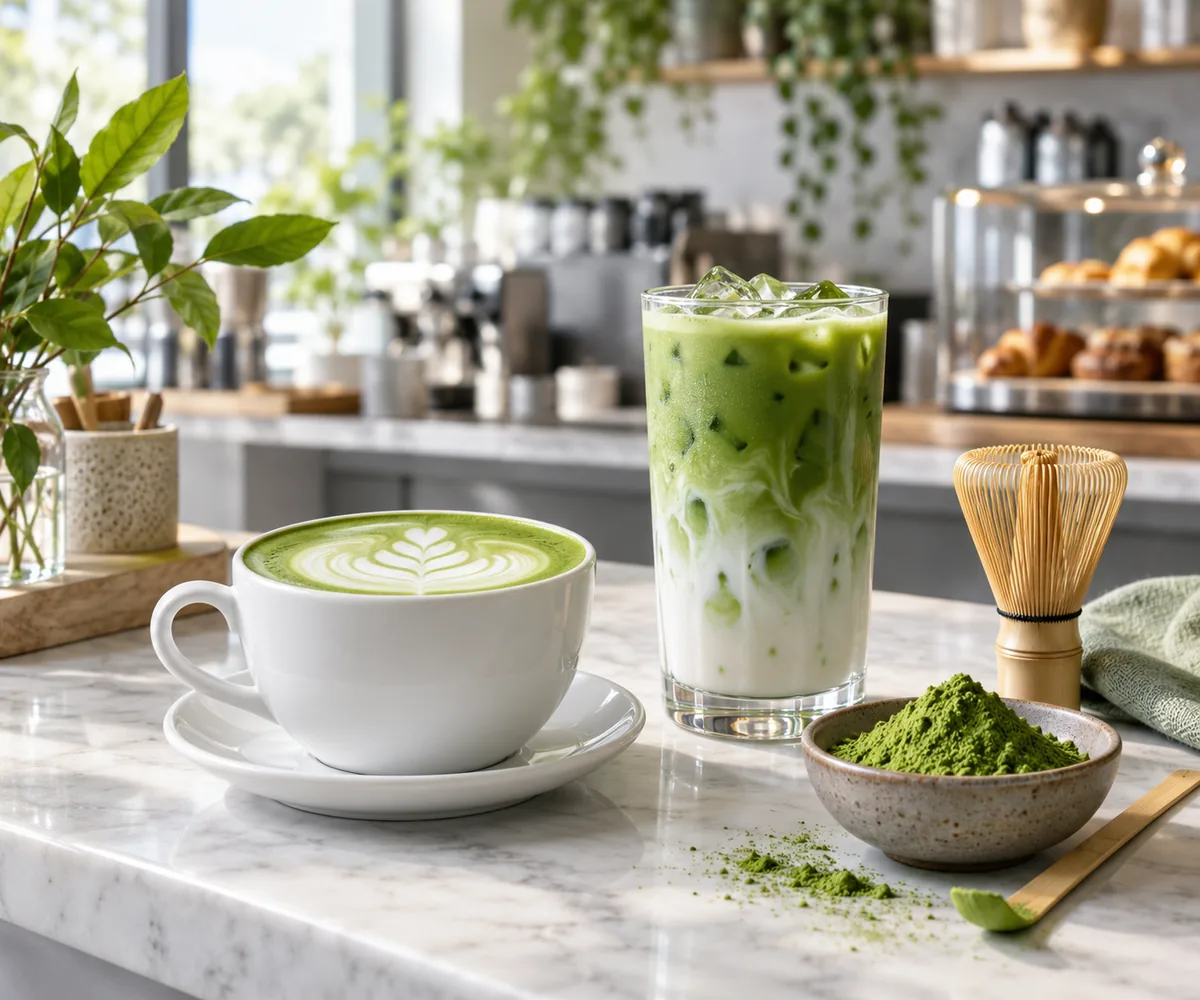
Direct source of premium Chinese matcha.
Compare color and flavor in real café recipes.
Approve powder performance before ordering.
Plan purchasing as café demand grows.
The best matcha powder for lattes is not simply the highest-priced grade. A practical café choice needs a clear green appearance, enjoyable tea flavor in milk and a repeatable cost per drink.
Assess the powder after mixing with dairy milk and your preferred plant milks—not only when dry. Compare green color immediately after preparation and after a short holding period.
Test how quickly the powder disperses into a small water slurry. Consistent weighing, sifting when needed and proper whisking help minimize clumps and gritty texture.
Select a dose that keeps matcha flavor noticeable once milk, ice and syrup are added. Compare your recipe at a fixed number of grams per serving before requesting bulk quotes.
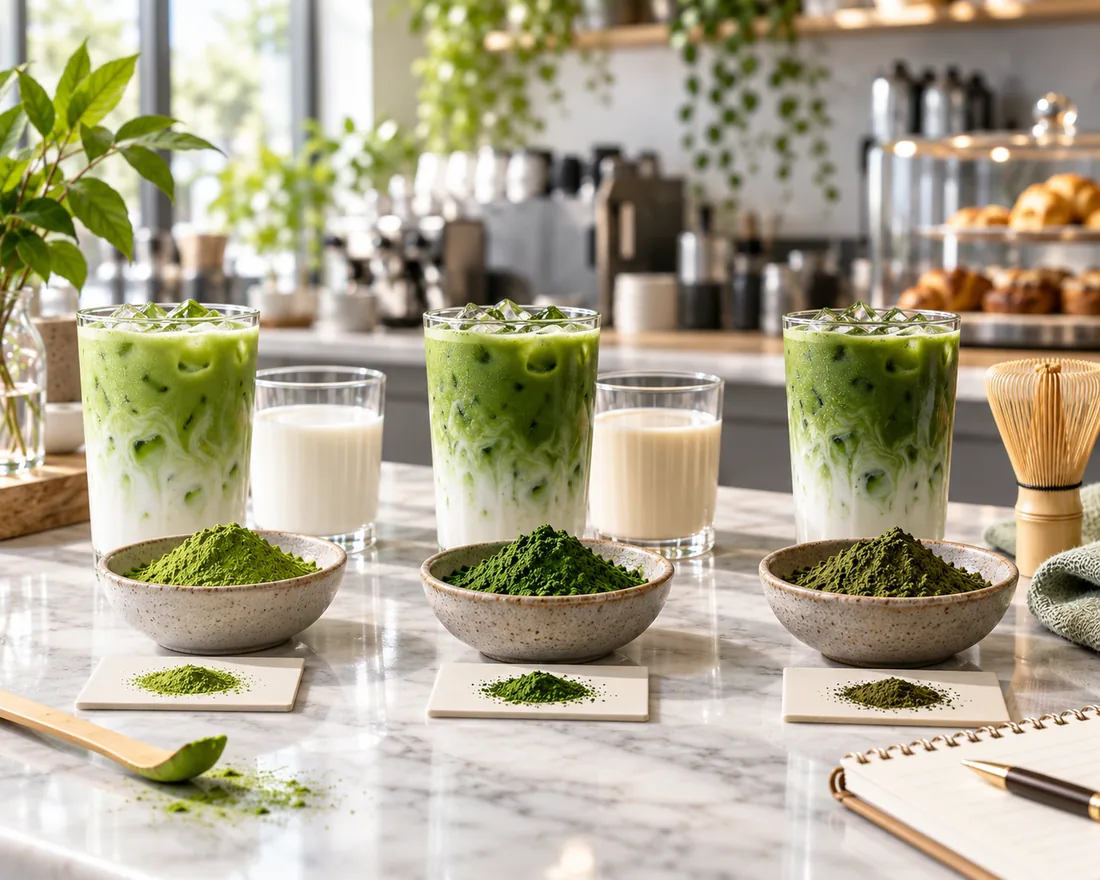
For daily matcha lattes, start with a beverage-oriented premium grade selected for smoothness, green color and flavor strength in milk. A specialty café may also compare a finer ceremonial-style option for a less sweet, tea-forward drink.
Compare Barista Reserve Matcha with the premium grade matcha range as starting points for dairy and oat-milk service.
Include a culinary grade matcha sample where stronger flavors or cost targets make sense; test against your actual recipe.
Compare ceremonial grade matcha for a less sweet specialty item if the tasting experience justifies the premium.
Use these as starting test formulations, not fixed product specifications. Weigh powder and liquid ingredients, then fine-tune sweetness, cup fill and flavor for your own equipment and service style.
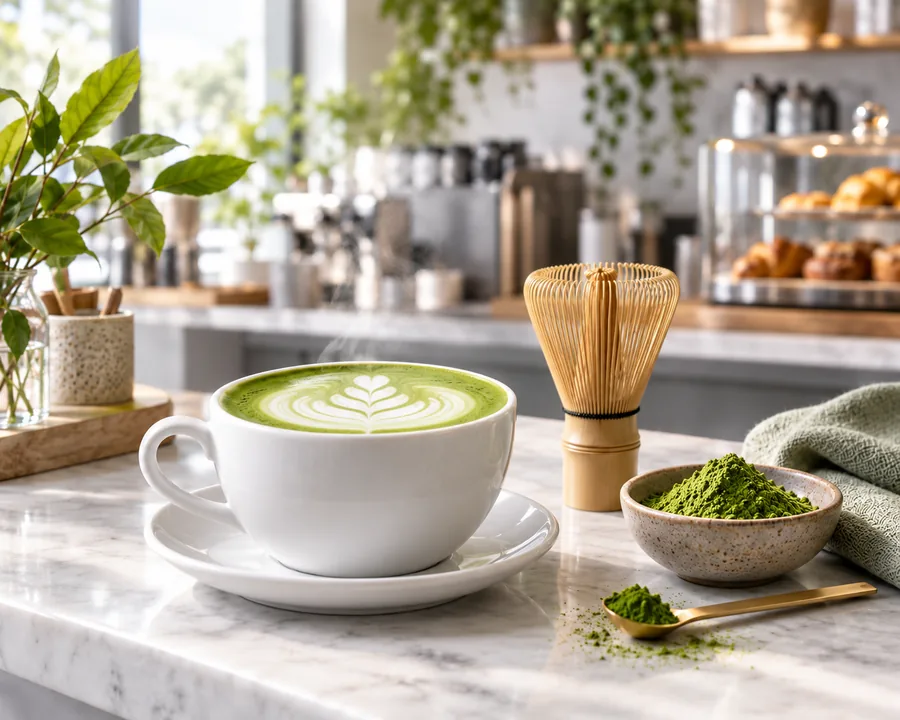
Balanced for a milk-forward café drink. Adjust final milk fill for your cup and desired foam.
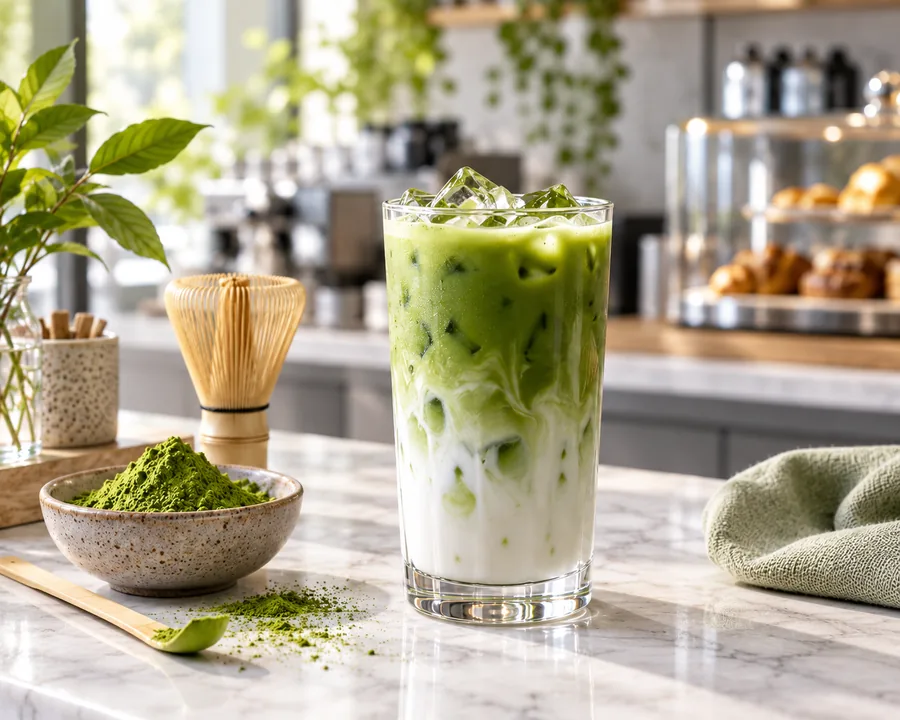
Designed to maintain a visible matcha flavor once cold milk and ice are added.
| Menu cup | Matcha range | Slurry water | How to adjust |
|---|---|---|---|
| 8 oz / small | 2–2.5 g | 30–45 ml | Smaller milk volume; preserve balance |
| 12 oz / regular | 2.5–3.5 g | 40–60 ml | Good baseline for dairy & oat milk tests |
| 16 oz / large | 3–4 g | 50–70 ml | Increase dose to stay visible through milk & ice |
A repeatable bar recipe is often more valuable than an expensive powder alone. Document the matcha weight, water temperature, mixing method and milk volume for every café location.
Use a digital gram scale rather than an inconsistent teaspoon or scoop.
Sift if necessary and use 70–80°C water for smooth dispersion before milk.
Measure milk, syrup and ice; trial oat and dairy milk separately.
Score color, aroma, texture and flavor at service and after brief standing.
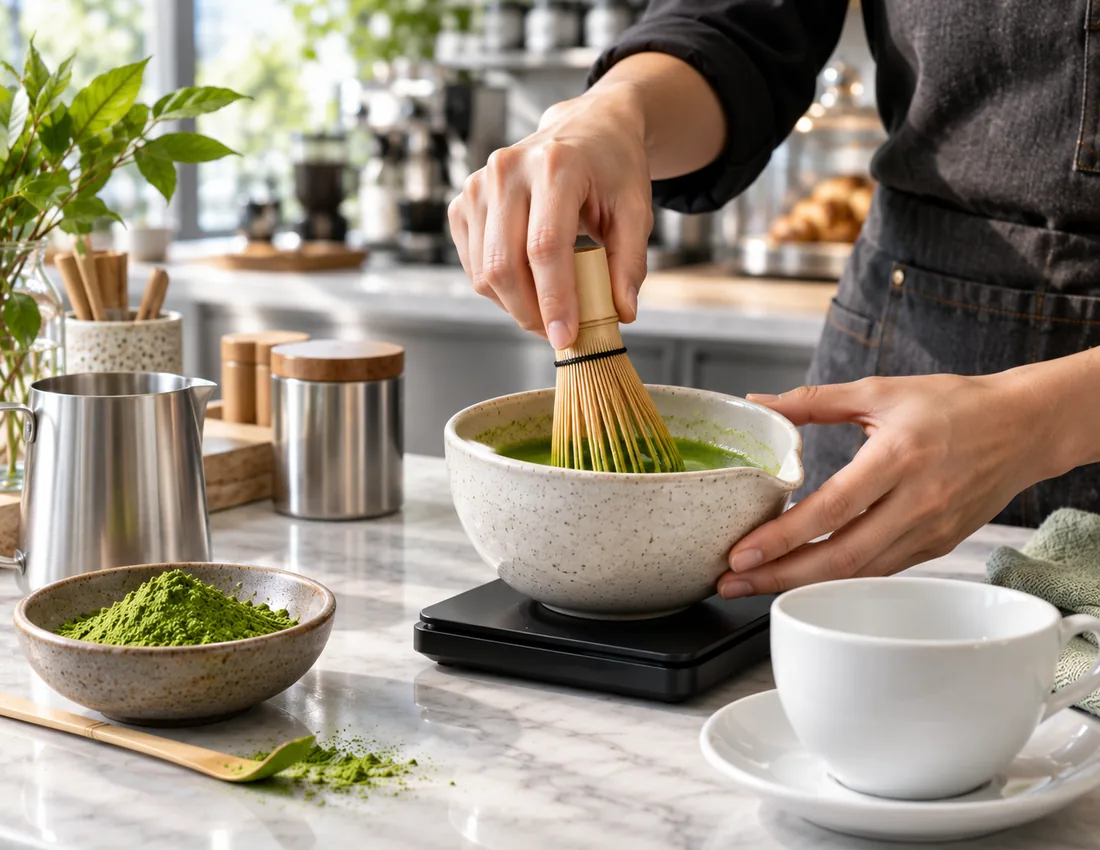
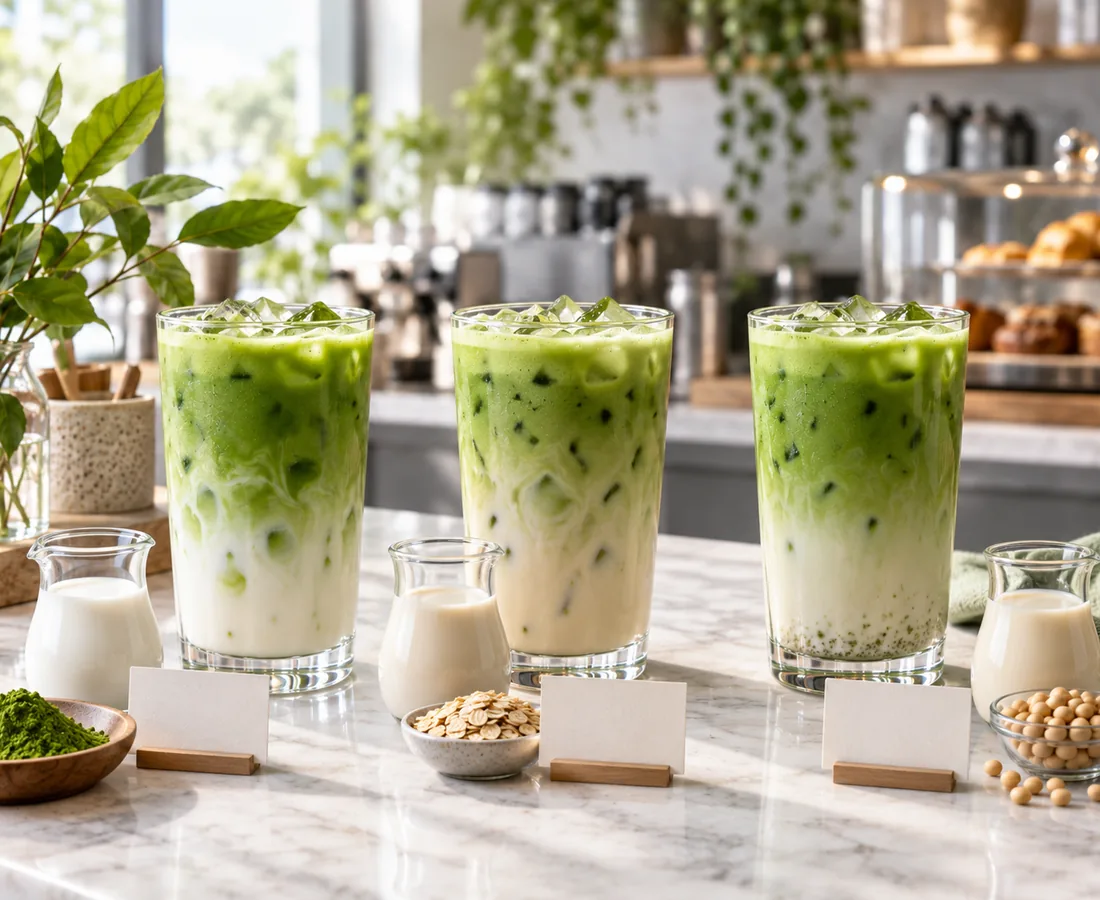
Pure matcha is made of fine tea particles. Some sediment after standing is normal, so evaluate fresh preparation and realistic short waiting times rather than expecting the powder to remain completely dissolved.
Compare matcha grades and adjust powder dose or milk/sweetness ratio.
Sift dry powder when required, whisk it in water first and standardize mixing time.
Review freshness, heat exposure, packaging and storage. Keep powder sealed away from light and moisture.
Re-whisk when necessary and serve promptly; shelf-stable RTD processing needs a different formulation evaluation.
Use a simple café-volume plan before requesting wholesale pricing. This is especially helpful for multi-location businesses deciding between trial quantities and scheduled repeat orders.
Estimate = drinks/day × days/month × grams/latte × (1 + allowance) ÷ 1,000. Actual purchase quantities depend on selected product, packaging, minimum order and reorder schedule.
Start with sample tasting, compare how each candidate performs in your actual latte menu, then agree on specifications and commercial packaging before placing a wholesale order. Lvyinbio supports product selection, initial trials and repeat bulk supply.
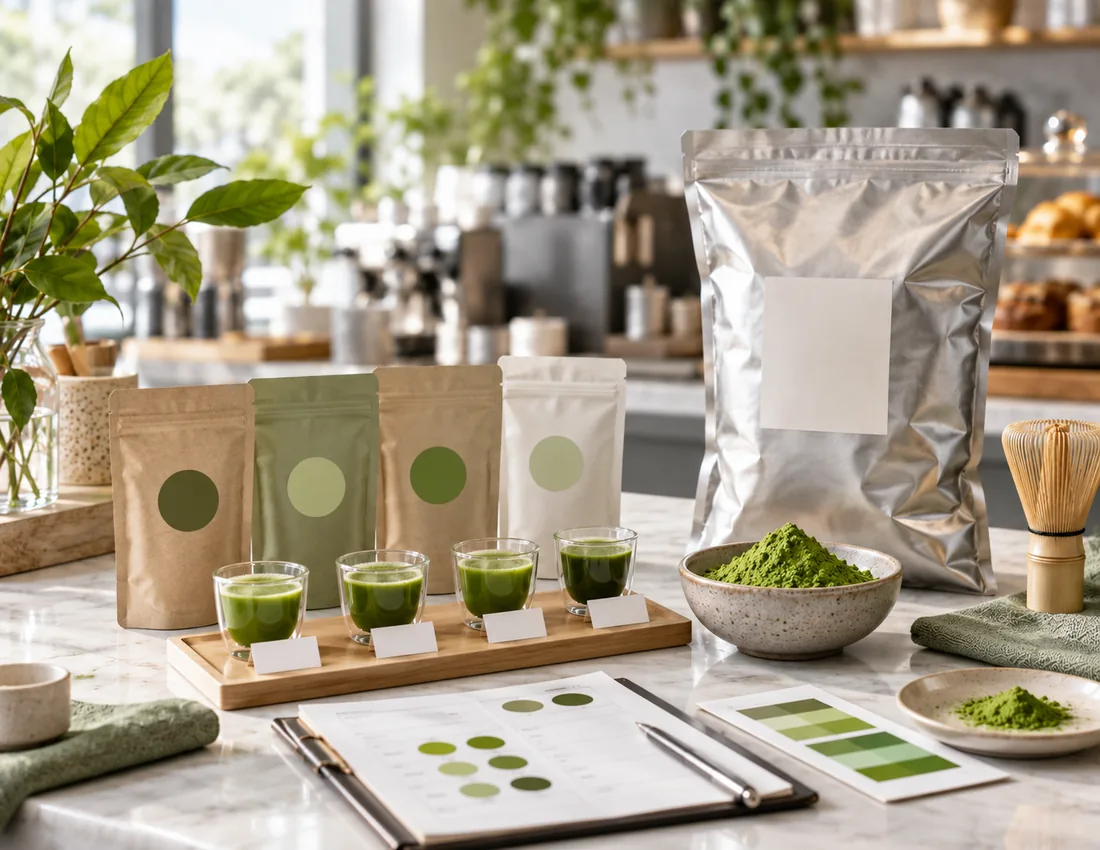
Tell us milk type, target taste, cup sizes and expected volume.
Run hot and iced tasting trials before approving a grade.
Confirm grade, packaging, quotation and available documents.
Review quality, shipping and repeat volume for your locations.
Short answers for coffee shops comparing matcha powder for matcha lattes. For broader purchasing questions, see our wholesale matcha FAQ hub.
Start with a beverage-oriented premium matcha that performs well in your dairy or plant-milk recipe. Compare color, sweetness balance, bitterness, texture and cost per serving. Lvyinbio can recommend Guizhou matcha samples for side-by-side testing.
For initial café testing, try about 2.5–3.5 g per 12 oz menu cup. The ideal dose depends on milk volume, ice, sweetener and the strength of your matcha; validate it using weighed recipes rather than teaspoons.
No. Pure matcha is finely milled tea leaf and forms a suspension instead of fully dissolving. Mixing powder with a little water before adding milk helps reduce clumps. Some settling after standing is normal.
Not automatically one or the other. Premium beverage grades often offer a useful balance of tea flavor and cost for café menus. A ceremonial-style grade may suit a less sweet signature drink; sample testing is the best way to decide.
We support grade matching, sampling, trial-order discussions and ongoing bulk supply. The available formats, MOQ and lead time depend on the chosen powder, order quantity and packaging needs. Send your monthly usage plan for a tailored quotation.
Yes. For eligible projects, we can discuss custom blending and branded packaging such as tins, pouches and sachets. Visit our private label matcha page or include your artwork, market and estimated quantity in your inquiry.
Tell us your country, hot or iced drink recipes, milk preference, preferred matcha intensity and expected monthly volume. We can review grade options, samples, pricing and commercial supply.
Share your planned serving size, drink volume, country and target quantity. The form below is configured in Fluent Forms.