Struggling to decide between Japanese or Chinese matcha for your product line? You're faced with a market full of strong opinions, making it feel like a high-stakes choice. This uncertainty can lead to analysis paralysis, delaying product development and potentially causing you to choose a matcha that hurts your margins or fails to perform in your specific application. The solution is to reframe the question: the "best" matcha isn't about nationality, but about finding the perfect fit for your commercial needs.
The question of whether Japanese or Chinese matcha is "better" is a misleading oversimplification for a B2B buyer. The superior choice depends entirely on the intended commercial application. While high-end Japanese matcha is historically renowned for pure tea (ceremonial use)1, high-quality Chinese matcha often provides a more strategic balance of vibrant color, robust flavor, and cost-effectiveness for commercial applications2 like lattes, beverages, and food manufacturing.
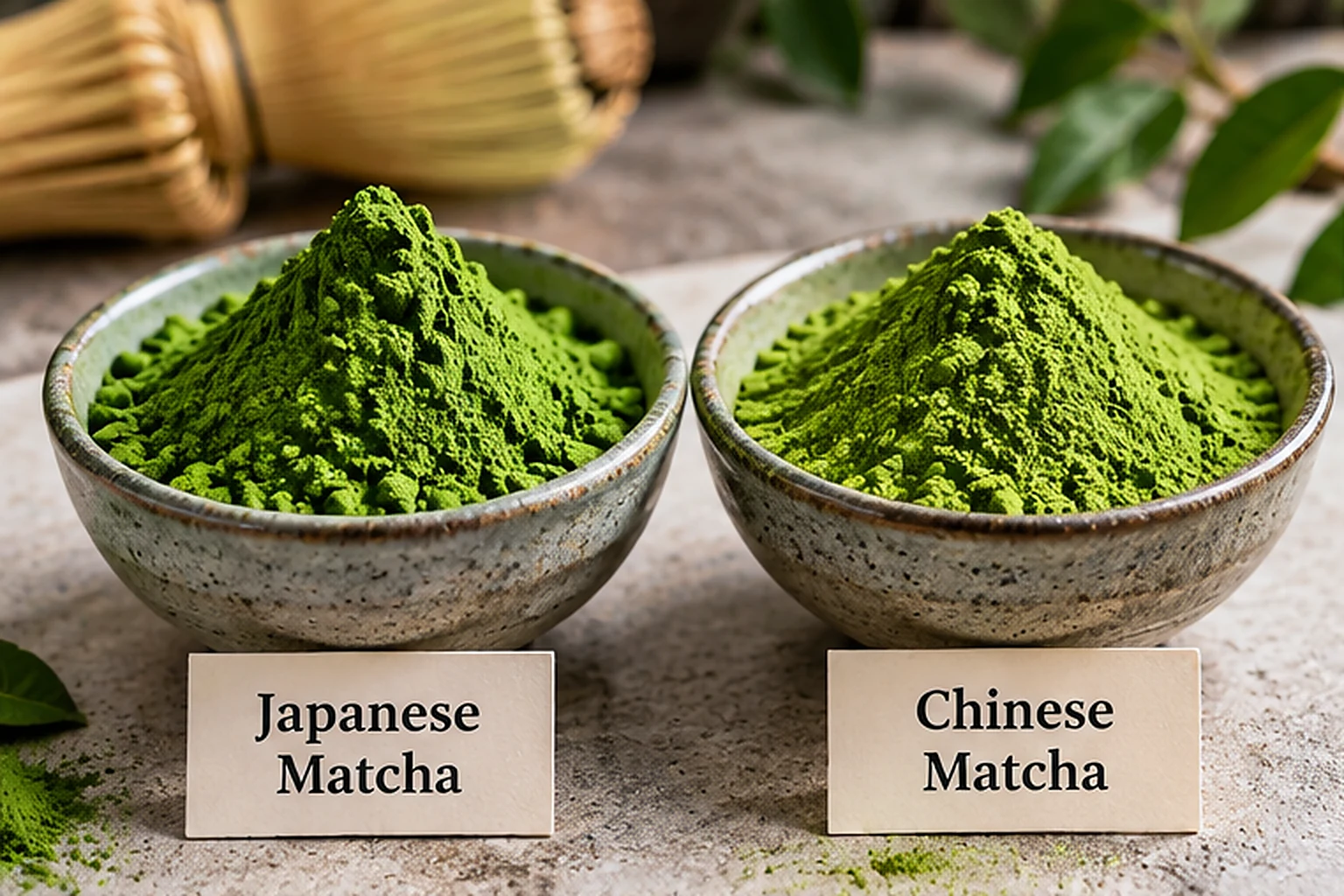
Moving beyond this simple country-versus-country debate is the first step toward making a smarter sourcing decision. This article will break down the factors that truly matter for your business—application, performance, and supplier reliability—to help you choose the right matcha for the right job.
How Does Origin Really Impact Matcha Quality?
Worried that choosing matcha from one country over another will automatically compromise your product's quality? It's easy to get caught up in marketing narratives that champion one origin. The reality is that terroir, cultivation methods, and processing standards matter far more than a national border3.
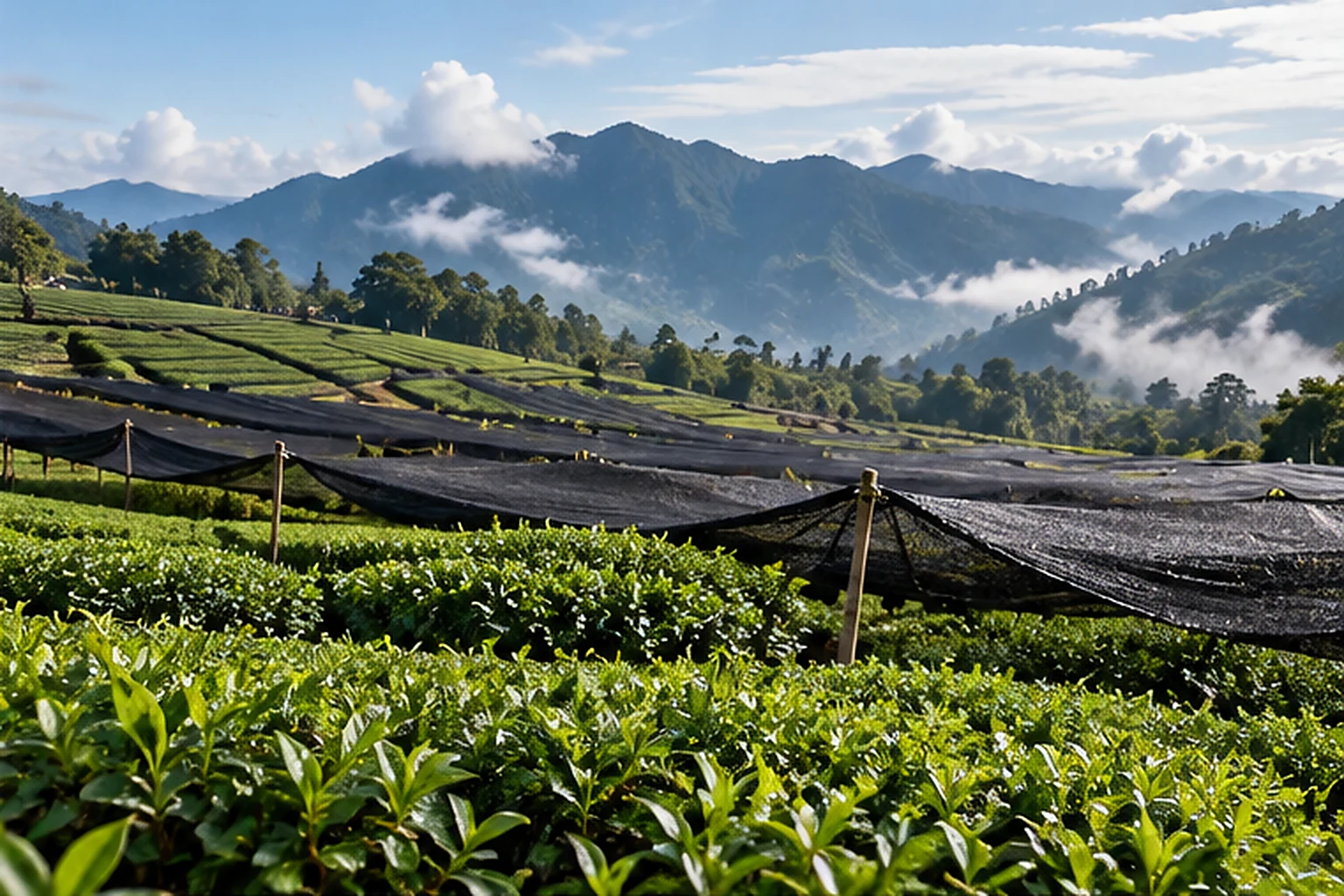
A matcha's quality is fundamentally determined by its specific terroir (the soil, climate, and altitude of its environment), shading techniques, and processing precision. Both Japan and China contain diverse growing regions, each capable of producing a wide spectrum of quality, from exceptional ceremonial grades to highly functional culinary powders.
Dive Deeper: Terroir, Cultivation, and Processing
The "Japanese or Chinese matcha" debate often ignores the nuances that create a great powder in the first place. For a commercial buyer, understanding these factors is key to sourcing a product that meets your specifications.
H3: The Decisive Role of Terroir
Terroir is the unique environmental signature of a growing location. It encompasses everything from soil composition and rainfall patterns to altitude and temperature fluctuations.
- Historic Regions: Japan's Uji region is famous for its terroir4, which produces the delicate, umami-rich flavors prized in ceremonial matcha.
- Emerging Terroirs: Similarly, high-altitude regions in China, such as our home in Guizhou, have a unique terroir characterized by consistent cloud cover and ideal soil5. This environment is perfect for cultivating tea leaves that yield a vibrant green color and a flavor profile that is robust and well-suited for modern beverage applications.
Ultimately, a premium terroir in either country can produce excellent tea. The question is which terroir produces the profile you need.
H3: Cultivation and Shading Are Key
The single most important step in creating matcha is shading the tea plants for several weeks before harvest. This process reduces photosynthesis, forcing the plant to overproduce chlorophyll (creating the bright green color) and L-theanine (the amino acid responsible for the savory umami flavor and calming effects).
The quality and duration of shading, not the country, determine the final grade. Top-tier ceremonial grades receive the longest shading. However, this technique is expertly applied in leading Chinese production facilities to create premium beverage and culinary grades that are optimized for color and flavor stability.
H3: Modern Processing as the Great Equalizer
After harvesting, the leaves are steamed to halt oxidation, dried, de-stemmed, and de-veined, leaving only the pure leaf flesh known as tencha. This tencha is then stone-ground into a fine powder.
While Japan pioneered these methods, modern Chinese matcha producers have invested heavily in state-of-the-art facilities6. Today, top Chinese suppliers use the same—and in some cases, more advanced—equipment and quality control processes to produce matcha with a particle size, color, and consistency that meets global standards. For a buyer, the focus should be on your supplier's specific processing capabilities and quality assurance protocols, not their headquarters' location.
Which Is Better for Commercial Beverages: Japanese or Chinese Matcha?
Are you struggling to create a matcha latte that is both visually appealing and profitable for your cafe or beverage brand? The high cost of some Japanese ceremonial grades can destroy your margins, while low-quality alternatives can turn brown and bitter when mixed with milk, disappointing customers.
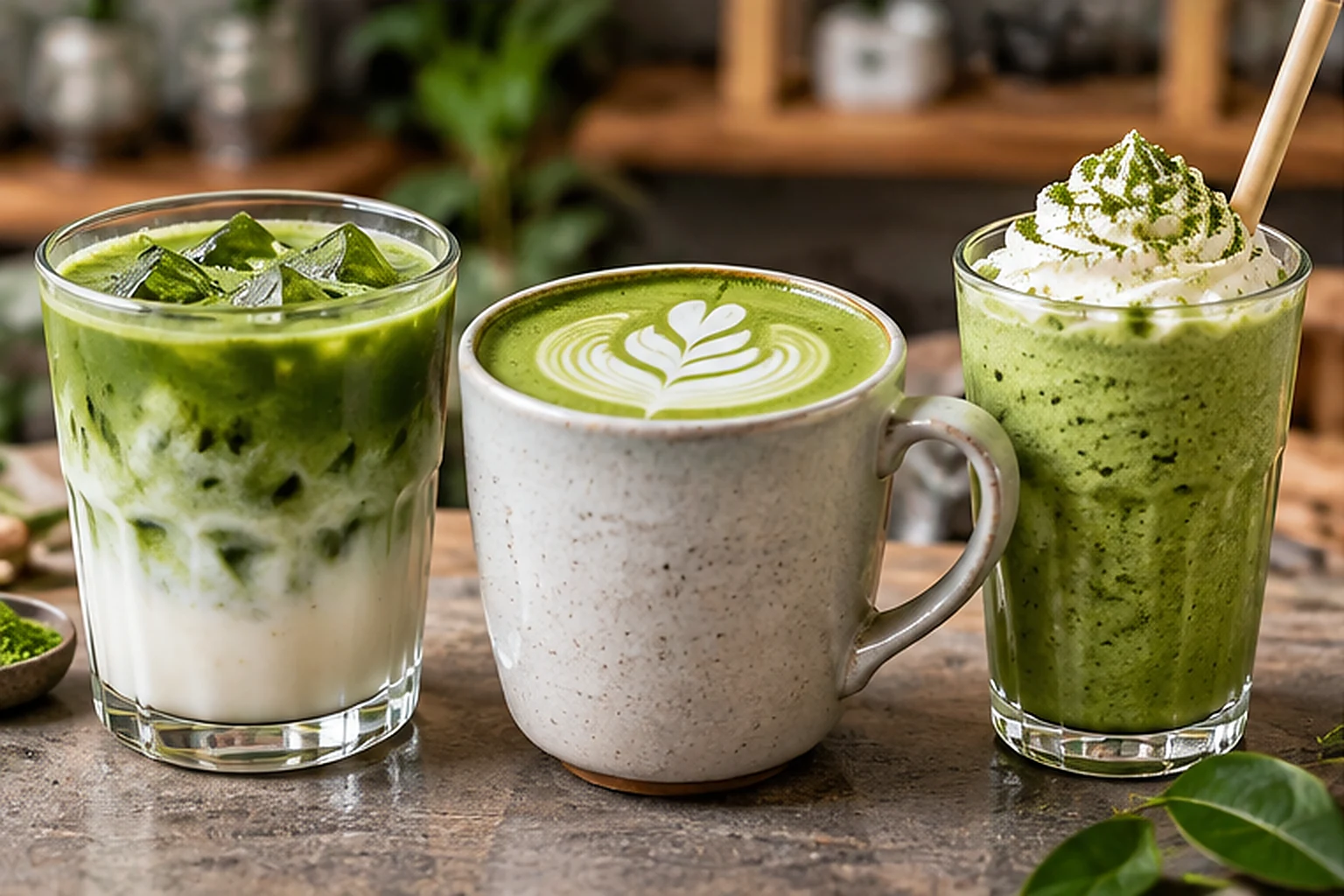
For commercial beverages like lattes, smoothies, and iced teas, a premium-grade Chinese matcha often provides the best overall solution. It is cultivated and processed to deliver a strong, stable green color and a robust flavor profile that stands up to milk and sweeteners, all while offering a more competitive cost-in-use for businesses that need to scale.
Dive Deeper: Choosing Matcha for Lattes and Drinks
From my experience working with cafe chains and beverage developers, one of the most common mistakes is assuming that "ceremonial grade" is always best. This logic applies to pure tea, but not to mixed beverages.
H3: The "Ceremonial Grade" Trap for Lattes
Ceremonial grade matcha is expensive for a reason: it's made from the youngest, most tender leaves that have been shaded for the longest time, resulting in a subtle, delicate, and umami-heavy flavor. It's perfect for a bowl of pure tea prepared with water.
However, those same delicate notes are completely overwhelmed by the fat, protein, and sugar in milk. Using a $500/kg ceremonial matcha in a latte is like using a fine vintage wine in a sangria7—a waste of money and nuance. I often guide new clients through a side-by-side test. They are consistently surprised when a well-made Barista Reserve grade from our Guizhou farms produces a greener, better-tasting latte than the expensive ceremonial grade they thought they needed.
H3: Key Attributes for a Beverage-Grade Matcha
When evaluating matcha for lattes or other drinks, focus on these commercial criteria:
- Color Stability: The drink must look good. The matcha needs to produce a vibrant, appealing green that doesn't oxidize into a murky brown when mixed with liquid8.
- Robust Flavor Profile: Instead of delicate umami, you need a flavor strong enough to cut through other ingredients. A slight, pleasant astringency is actually a benefit here, as it provides a distinct "green tea" taste that customers expect.
- Excellent Mixability: The powder must be fine enough to dissolve easily in both hot and cold liquids, leaving no sediment or gritty texture.
- Cost-in-Use: The price per gram is critical. A beverage-focused matcha must deliver on the sensory attributes while allowing for a healthy profit margin on the final drink.
H3: Commercial Matcha Grade Comparison
This table illustrates the trade-offs a beverage brand manager or cafe owner should consider.
| Feature | Ceremonial Grade (Often Japanese) | Barista / Premium Grade (e.g., Chinese) |
|---|---|---|
| Best For | Pure tea, traditional preparation | Lattes, smoothies, iced teas, milkshakes |
| Flavor Profile | Delicate, high umami, low bitterness | Robust, balanced, holds up to milk & sugar |
| Color in Milk | Can appear less vibrant | Deep, stable green in liquid mixtures |
| Cost-in-Use | High; often commercially prohibitive | Moderate; optimized for profitability |
The choice between Japanese or Chinese matcha for beverages becomes clear: you need a product engineered for the application.
What About Baking and Food Manufacturing?
Have your matcha-infused baked goods turned a disappointing brownish-green and lost their signature flavor in the oven? Using the wrong type of matcha in culinary applications is a common and costly mistake that leads to inconsistent, unappealing products.
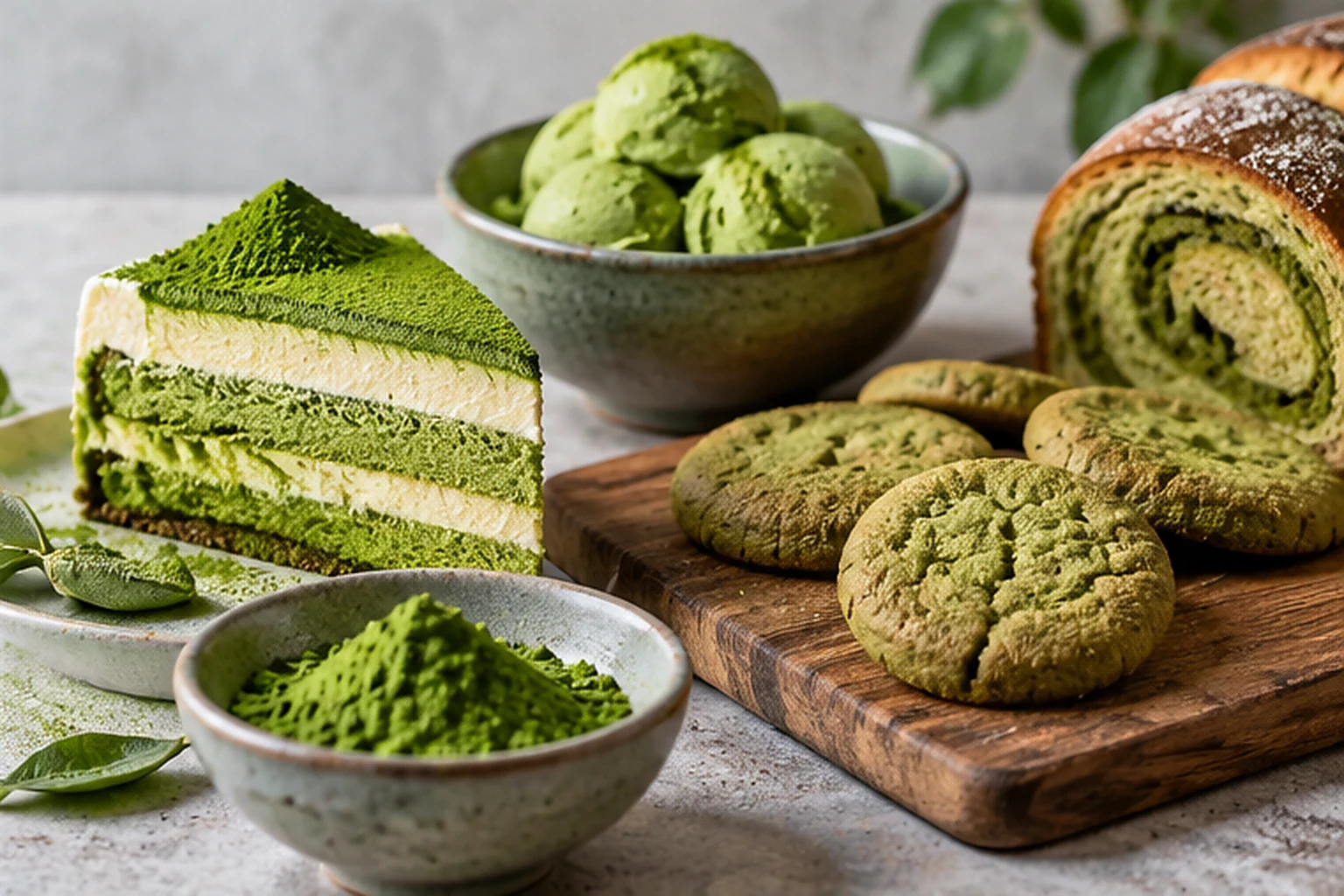
For baking, ice cream, chocolate, and other food manufacturing, a high-quality culinary-grade matcha, often sourced from China for its scale and cost-effectiveness, is the superior choice. This grade is specifically produced to offer intense color retention under heat, a strong flavor that survives the production process, and an accessible price point for bulk purchasing.
Dive Deeper: Sourcing Matcha for Culinary Applications
The chemical changes that occur during baking or food processing are harsh. Heat, fat, and sugar will degrade the delicate compounds found in drinking-grade matcha. A successful food product requires a matcha that is built to withstand these challenges.
H3: Why Heat and Processing Are the Enemy of the Wrong Matcha
The very compounds that make ceremonial matcha prized—like the delicate L-theanine—are not stable under high heat. When you use an expensive drinking-grade matcha in a cookie or cake recipe, you are essentially paying a premium for qualities that will be destroyed in the oven. The result is a baked good with a faint, muddy color and a barely perceptible tea flavor.
H3: What to Look for in a True Culinary Matcha
When sourcing for manufacturing, your checklist should be different. The debate is not about Japanese or Chinese matcha in the abstract, but about finding a powder with these specific industrial properties:
- Intense Color & Stability: The primary requirement. The matcha must be vibrant enough to color the final product effectively and formulated to resist browning during baking or pasteurization.
- Strong, Assertive Flavor: The matcha flavor needs to be bold and even slightly astringent to ensure it isn't completely masked by sugar, flour, and butter9. A delicate flavor profile will simply disappear.
- Fine and Consistent Particle Size: The powder must be micro-fine to incorporate smoothly into batters, doughs, and chocolate without creating a gritty texture.
- Batch-to-Batch Consistency: This is non-negotiable for food manufacturers. A reliable supplier must guarantee that the color and flavor of the matcha you receive in January is identical to the batch you receive in June. This requires sophisticated blending and quality control.
- Favorable Bulk Pricing: The cost must be viable for large-scale production.
At Lvyinbio, our culinary grades are developed in close consultation with food scientists and manufacturers to meet these exact needs, ensuring a reliable and cost-effective ingredient for your product line.
Is the Supplier More Important Than the Japanese or Chinese Matcha Origin?
You've found a matcha sample you like, but can the supplier deliver it consistently, at scale, and with the proper documentation? A fantastic product sample is worthless if the first bulk order is of lower quality, shipments are delayed, or the supplier cannot support your business's growth.
For any B2B buyer, the supplier partnership is often more critical than the matcha's country of origin. A reliable partner guarantees batch-to-batch consistency, a stable supply chain, regulatory compliance, and value-added services like private labeling. These factors are far more crucial for long-term commercial success than a simple flag on the product label.
Dive Deeper: Evaluating the Supplier Partnership
When your brand's reputation is on the line, your supplier becomes an extension of your team. The question moves from "Which is better, Japanese or Chinese matcha?" to "Who is the right long-term partner for my business?"
H3: The Consistency and Quality Control Challenge
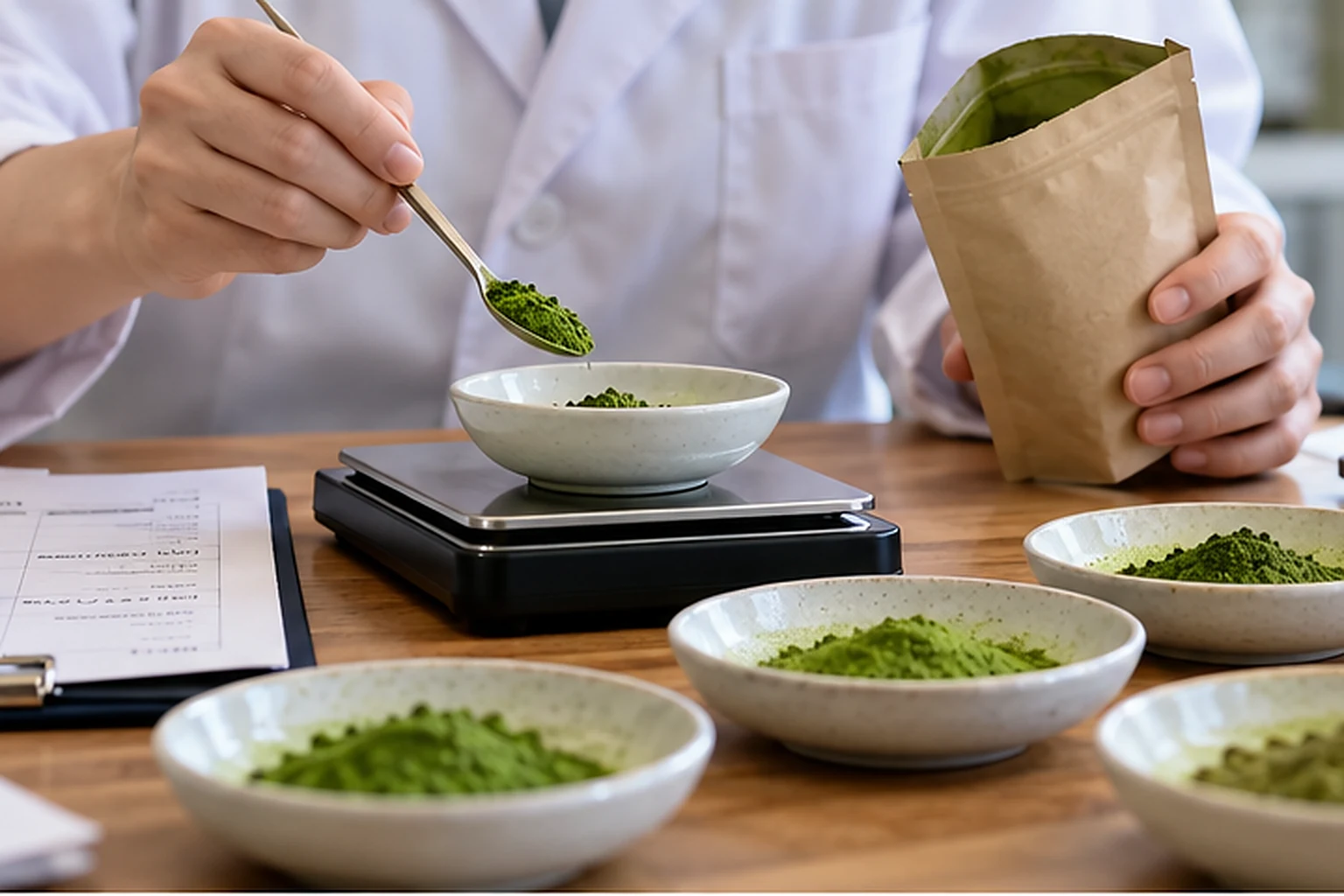
Matcha is an agricultural product, meaning natural variations exist from harvest to harvest10. A top-tier supplier mitigates this risk through rigorous quality control and expert blending. They test every batch for color, flavor, and particle size, then blend different batches to create a final product that perfectly matches the master specification sheet. This ensures the matcha you use in year three is the same as the one you approved in your initial sample.
H3: Beyond the Powder: Essential Value-Added Services
A true B2B partner does more than just ship boxes. They provide critical support that helps you succeed:
- Application Consulting: We frequently work with clients to test different matcha grades in their specific recipes—whether it's for a latte, a protein bar, or a cake—to identify the perfect fit for performance and cost.
- OEM & Private Label Support: For brands wanting to launch their own matcha line, a good supplier acts as a consultant. We help you navigate decisions on grade selection, packaging formats, and branding to create a retail-ready product.
- Regulatory & Documentation: A professional supplier provides all necessary documentation upfront, including Certificates of Analysis (COA), specification sheets, and information relevant to your import market's food safety standards.
H3: Supply Chain Stability and Scalability
Your business plans to grow. Can your supplier grow with you? A crucial consideration is their production capacity and supply chain resilience. Can they handle your order increasing from 100 kg to 1,000 kg without a drop in quality or a delay in shipping? Often, large-scale Chinese producers can offer greater scalability and supply chain security for a growing international brand11.
Frequently Asked Questions
What is the main difference between Japanese and Chinese matcha?
Historically, Japan perfected ceremonial grade for tea ceremonies, focusing on delicate, savory umami flavors. Modern, high-quality Chinese matcha often excels at providing a wider range of grades with strong color and robust flavor profiles, offering excellent cost-performance for commercial uses like lattes and baking, where flavor stability is key.
Is Chinese matcha lower quality?
This is a common misconception. As with any agricultural product, quality varies widely by region, farm, and producer. Leading Chinese production regions like Guizhou now produce world-class matcha that meets global standards. The key for a buyer is to match the specific grade to your application rather than generalizing based on the country.
Why is some matcha so expensive?
The highest-priced matcha is typically ceremonial grade, which is made from the youngest, most tender tea leaves from the first harvest after a long shading period. This labor-intensive cultivation and harvesting process yields very little powder from each plant, driving up its cost significantly.
Can I use ceremonial grade matcha for a latte?
While you can, it's generally not the best or most cost-effective choice. The delicate, savory umami flavors of ceremonial matcha tend to get lost when mixed with milk and sweeteners. A high-quality barista-grade matcha is specifically designed to provide a better color and a more robust flavor profile in beverages, usually at a much lower cost-per-serving.
Conclusion
Ultimately, the debate over whether Japanese or Chinese matcha is superior is the wrong question for a business owner, product developer, or purchasing manager. The right question is, "Which specific matcha grade, from which reliable supplier, provides the ideal combination of flavor, color, consistency, and cost for my unique commercial application?" From a delicate pure tea to a vibrant green latte or a mass-produced confection, the "best" choice is the one that performs flawlessly in your product and supports your business goals. Choosing a dependable partner who understands these trade-offs is just as crucial as the powder itself, as they ensure you get the right product, consistently and at scale, for years to come.
If you are looking for a reliable partner to help you navigate these choices and find the perfect matcha for your brand, we are here to help. Contact us to discuss your specific needs and request samples for commercial evaluation.
"Matcha", https://en.wikipedia.org/wiki/Matcha. Japanese matcha has been integral to traditional tea ceremonies, particularly in the Uji region, where cultivation techniques have been refined over centuries.¹ Evidence role: historical_context; source type: encyclopedia. Supports: Japanese matcha's historical association with ceremonial tea use.. Scope note: The source may focus on ceremonial use and not address broader commercial applications. ↩
"What is matcha? Benefits, tips and recipes", https://insights.ehl.edu/what-is-matcha. Studies on Chinese matcha production highlight its vibrant color and robust flavor, making it a cost-effective choice for beverages and food manufacturing.² Evidence role: general_support; source type: research. Supports: The suitability of Chinese matcha for commercial applications due to its color, flavor, and cost-effectiveness.. Scope note: The findings may vary by region and producer within China. ↩
"A History of Pu'er Tea", https://www.ice.edu/blog/a-history-of-puer-tea. Agricultural research emphasizes that soil composition, shading techniques, and processing precision are critical determinants of tea quality, transcending national borders.³ Evidence role: mechanism; source type: education. Supports: The role of terroir, cultivation, and processing in determining matcha quality.. Scope note: The source may not directly compare Japanese and Chinese matcha. ↩
"Uji tea", https://en.wikipedia.org/wiki/Uji_tea. The Uji region in Japan is historically recognized for its ideal climate and soil conditions, which contribute to the production of high-quality matcha with delicate umami flavors.⁴ Evidence role: historical_context; source type: encyclopedia. Supports: The reputation of Uji's terroir for producing high-quality matcha.. Scope note: The source may focus on ceremonial matcha rather than commercial grades. ↩
"Multidimensional Quality Assessment of Guizhou Teas ...", https://pubmed.ncbi.nlm.nih.gov/42818996/. Research on Guizhou's high-altitude tea farms highlights consistent cloud cover and nutrient-rich soil as factors contributing to vibrant matcha color and robust flavor.⁵ Evidence role: mechanism; source type: research. Supports: The suitability of Guizhou's terroir for matcha cultivation.. Scope note: The findings may not apply to all regions within Guizhou. ↩
"Tea: From Historical Documents to Modern Technology - PMC", https://pmc.ncbi.nlm.nih.gov/articles/PMC10096166/. Reports from tea industry institutions confirm that leading Chinese matcha producers have adopted state-of-the-art equipment to meet international quality standards.⁶ Evidence role: general_support; source type: institution. Supports: The investment of Chinese matcha producers in advanced production facilities.. Scope note: The source may focus on specific producers rather than the entire industry. ↩
"Best Matcha Grade for Latte, Bakery & RTD Products", https://matchasourcing.com/best-matcha-grade-for-latte-bakery-and-ready-to-drink-products/. Sensory studies indicate that ceremonial matcha's subtle umami flavors are often masked in milk-based drinks, making barista-grade matcha a more cost-effective choice.⁸ Evidence role: case_reference; source type: research. Supports: The unsuitability of ceremonial matcha for milk-based beverages.. Scope note: The findings may depend on specific recipes and preparation methods. ↩
"Matcha", https://en.wikipedia.org/wiki/Matcha. Research on matcha chemistry highlights the role of chlorophyll and antioxidants in maintaining vibrant color and resisting oxidation in liquid mixtures.⁹ Evidence role: mechanism; source type: research. Supports: The importance of oxidation resistance for matcha used in beverages.. Scope note: The source may not address specific matcha grades or brands. ↩
"Culinary Grade Matcha - Matcha Sourcing", https://matchasourcing.com/product-category/culinary-grade-matcha/. Studies on matcha in food applications show that bold, astringent flavors are more likely to retain their profile during baking and processing.¹⁰ Evidence role: mechanism; source type: research. Supports: The need for bold flavors in culinary matcha to survive baking processes.. Scope note: The findings may vary based on specific recipes and baking conditions. ↩
"Variations of main quality components of matcha from different ...", https://pmc.ncbi.nlm.nih.gov/articles/PMC10034323/. Agricultural studies explain that factors like weather, soil conditions, and harvest timing contribute to natural variations in matcha quality.¹¹ Evidence role: mechanism; source type: education. Supports: The impact of agricultural factors on matcha quality variability.. Scope note: The source may not address specific mitigation strategies used by suppliers. ↩
"Analysis of the high-quality development path of China's tea ...", https://pmc.ncbi.nlm.nih.gov/articles/PMC11556720/. Industry reports highlight the capacity of leading Chinese matcha producers to scale production and maintain supply chain reliability for international markets.¹² Evidence role: general_support; source type: institution. Supports: The scalability and supply chain security offered by large-scale Chinese matcha producers.. Scope note: The source may focus on specific producers rather than the entire industry. ↩