Adding matcha to your café menu seems like a clear win1, but the process of sourcing it can be surprisingly difficult2. You’re worried about picking the wrong grade, overpaying for quality you don’t need, or receiving an inconsistent product that disappoints your customers. The key is to stop looking for the "best" matcha and instead find the right wholesale matcha supplier who can help you manage these risks effectively.
To choose the right wholesale matcha supplier, first define your primary menu application (e.g., lattes, pure tea, or baking). Next, evaluate potential partners not by their marketing grade names, but on their willingness to provide consultative advice and samples that you can test in your specific recipes. A great supplier acts as a sourcing partner, helping you balance flavor, color, performance, and cost to prevent expensive purchasing mistakes.
Now that you have the core principle, let's explore the practical steps. This isn't just about a simple checklist; it's about learning how to ask the right questions and conduct a meaningful evaluation to de-risk your purchase and secure a reliable partner for your business.
Why Is Defining Your Application the First Step?
You see "Ceremonial Grade" on a supplier's website and assume it's the best option for everything on your menu. But using that same high-end matcha in a sweetened latte can be a costly mistake that doesn't even produce a better-tasting drink. How do you avoid this common pitfall?
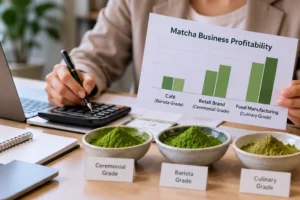
Defining your application—whether it's for matcha lattes, baked goods, or pure tea service—is the most critical first step. Each use case has a unique set of requirements for flavor profile, color vibrancy, texture, and, most importantly, cost per serving.3 The "best" matcha for one is often a poor choice for another.
H3: The Matcha Latte Dilemma
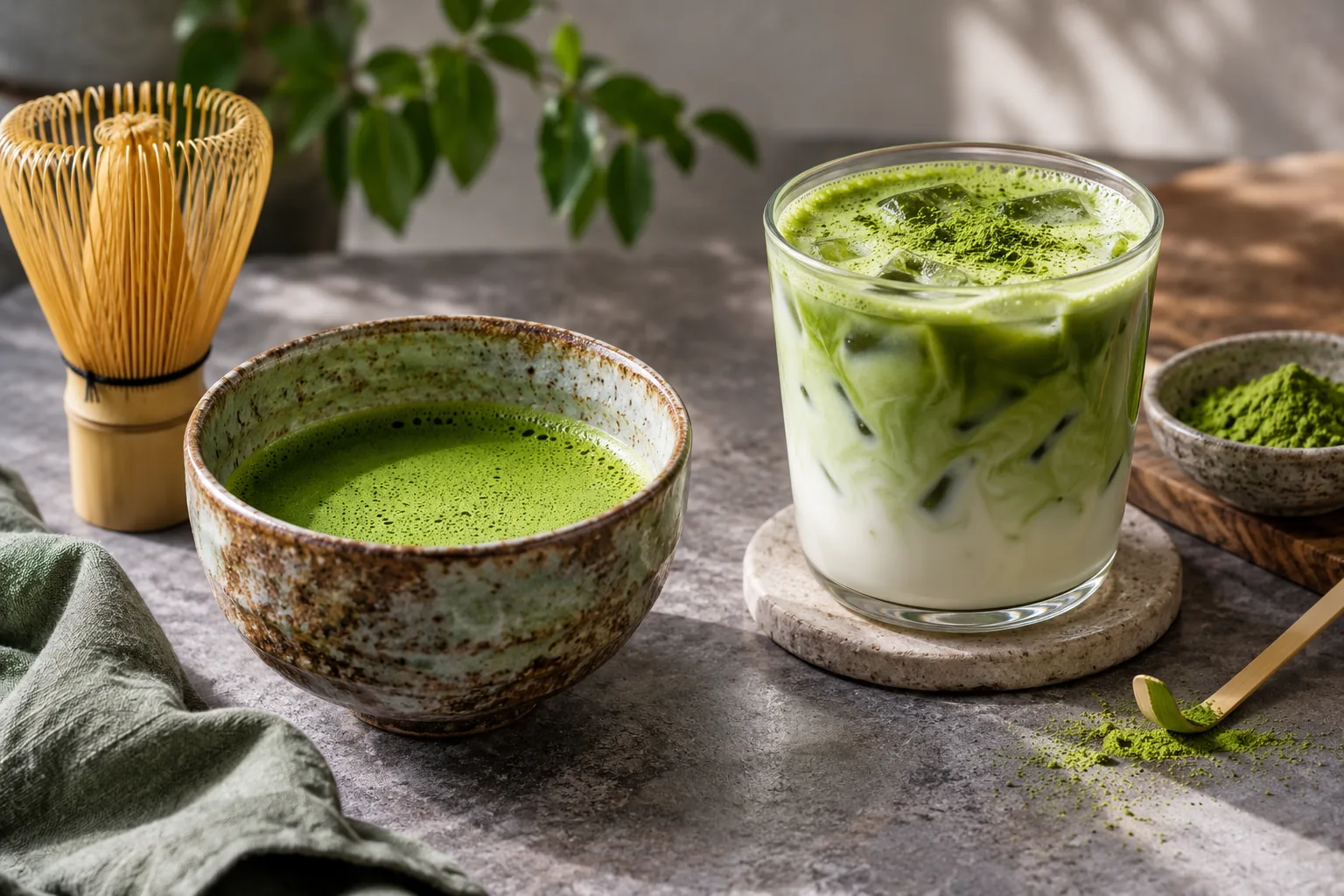
A frequent question I get from new café clients is, "Should I use your Imperial Ceremonial grade for my lattes to be the best?" My answer is almost always no, and it's a perfect example of why application matters so much.
Many buyers assume that the highest grade equals the best customer experience. But for a latte, the reality is more nuanced. The delicate, subtle, and highly prized umami notes of a top-tier ceremonial matcha are easily lost when mixed with milk (dairy or plant-based) and sweeteners. You end up paying a premium for complexity that your customer will never taste.
A much better choice is often a high-quality Barista or Premium Grade matcha. This type of matcha is specifically cultivated and processed to have a more assertive, slightly more bitter flavor profile that is robust enough to cut through the richness of milk. It also tends to have a vibrant green color that holds up beautifully in a latte, creating the visual appeal customers expect. Most importantly, it is significantly more cost-effective, directly improving your profit margin on every cup sold.
H3: Pure Tea Service vs. Culinary Creations
The logic changes entirely if you plan to offer traditional, pure matcha tea service. For this application, Ceremonial Grade is exactly what you need. Customers ordering pure matcha are paying for a nuanced sensory experience. They expect the smooth, savory umami, the naturally sweet finish, and the lack of bitterness that defines a high-quality ceremonial product. Here, the investment in a top grade directly translates to customer satisfaction and justifies a premium price point.
For baking and other culinary creations, the priorities shift again. When you're making matcha cookies, cakes, or ice cream, your primary concerns are:
- Heat Stability: Will the matcha retain its green color after being baked or cooked?
- Flavor Strength: Is the flavor robust enough to not get lost among flour, sugar, and butter?
- Cost: Is it affordable enough to use in the larger quantities a recipe demands?
Culinary Grade matcha is designed for this exact purpose. While it may be more bitter if consumed on its own, its strong flavor profile excels in recipes. Using an expensive ceremonial grade in a cake batter would be an immense waste of both money and its delicate flavor.
| Application | Key Priority | Recommended Matcha Type | Why It's the Right Fit |
|---|---|---|---|
| Matcha Lattes | Color vibrancy, flavor with milk, cost-per-serving | Premium / Barista Grade | Balances assertive flavor with strong color at a commercially viable price. |
| Pure Tea Service | Umami, smoothness, subtle sweetness, aroma | Ceremonial Grade | Delivers the complex, delicate experience that justifies a premium price. |
| Baking & Desserts | Heat stability, strong flavor, bulk cost | Culinary Grade | Holds its color and flavor during cooking; cost-effective for recipe formulation. |
How Can You Evaluate a Wholesale Matcha Supplier Beyond Grade Names?
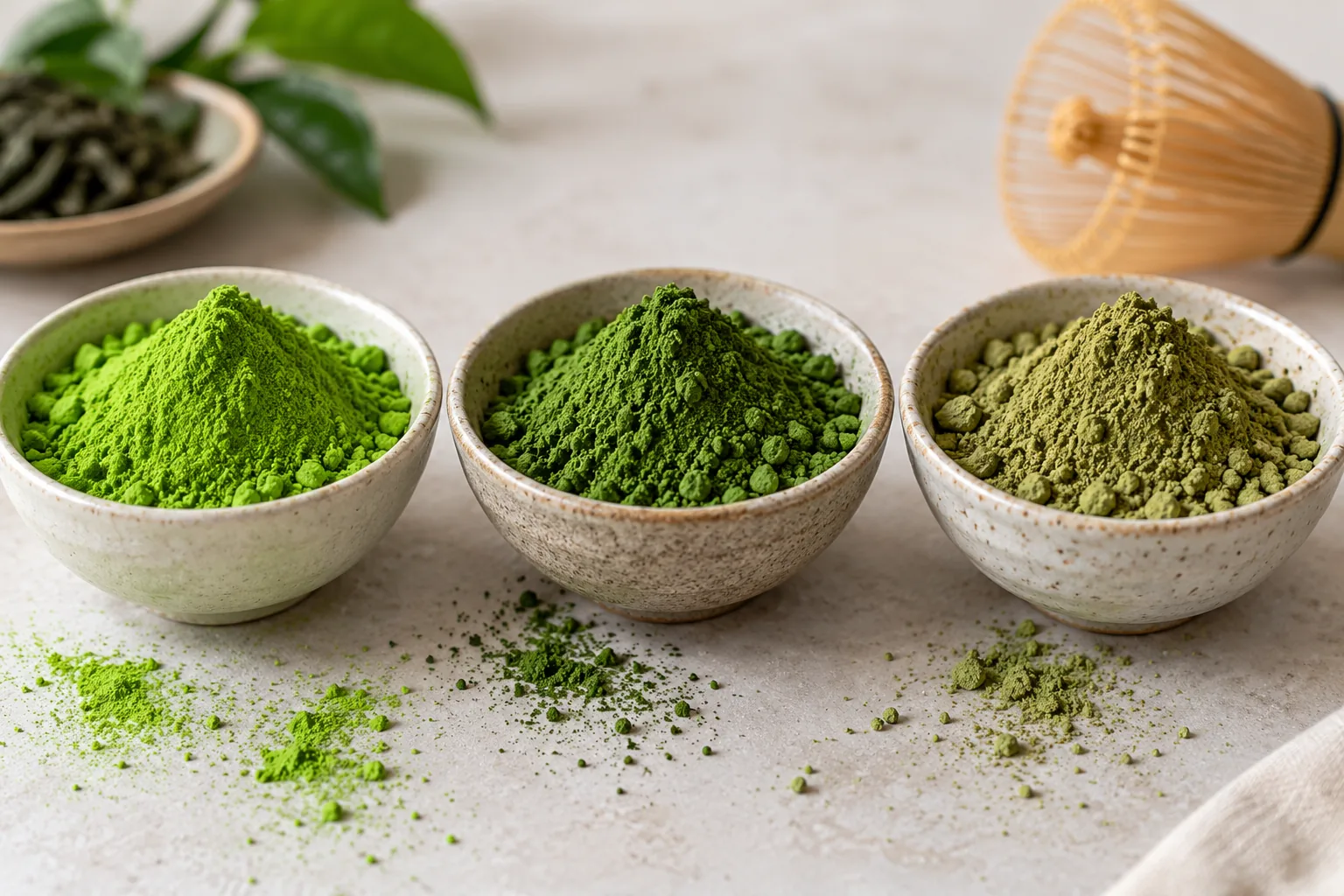
Nearly every supplier website you visit will categorize their products with familiar names: Ceremonial, Premium, Culinary. The problem is that these terms are not standardized across the industry. "Ceremonial Grade" from one supplier might be equivalent to another's "Premium Grade." How do you cut through the marketing jargon to truly compare products?
You can effectively evaluate a wholesale matcha supplier by asking performance-based questions specific to your café's needs and by analyzing their sampling process. A partner invested in your success will focus on how their product performs in your recipes, not just on a generic spec sheet.
H3: From Vague Grades to Specific, Performance-Based Questions
Instead of simply asking, "Can you tell me about your ceremonial grade?" you need to get specific. Frame your questions around the business challenges you are trying to solve. This forces the supplier to move beyond marketing claims and provide genuine, actionable advice.
Here are some examples of powerful, performance-based questions:
- "I'm developing a signature oat milk matcha latte. Which of your grades provides the best color stability and a flavor profile that won't be overpowered by the sweetness of the oat milk?"
- "We need a matcha for baking into croissants. It must retain a noticeable green color after baking and have a strong enough flavor to be present in the final product. What do you recommend and why?"
- "We plan to serve both pure matcha and lattes. Could you suggest two different grades that offer a clear quality distinction for our customers but remain cost-effective for us across both applications?"
H3: What Their Answers Reveal About Them as a Partner
The way a potential supplier responds to these questions is incredibly telling. You are testing their product knowledge, their understanding of your business, and their willingness to act as a consultant.
- A Good Answer: A great potential partner will likely respond with more questions. "That's a great question. What brand of oat milk are you using, as some are creamier than others? What is your target cost-per-serving for the latte? Based on that, I'd suggest you test a sample of our Barista Reserve and our Cafe Standard side-by-side. The Barista Reserve has a more vivid color, but the Cafe Standard might give you the flavor balance you need at a lower cost." This response shows they are thinking like a partner, not just a salesperson.
- A Bad Answer: "Our Imperial Ceremonial is the best; it's very high quality and will make a great latte." This is a lazy, generic answer that completely ignores the context of your question. It indicates they are trying to upsell you to their most expensive product, regardless of whether it's the right fit. This is a major red flag.
- An Evasive Answer: "All of our grades are good for lattes." This non-answer suggests they either don't understand the nuances of their own products or they simply don't care about helping you succeed. A supplier who cannot give you a specific recommendation is not a supplier you can rely on for expert guidance.
What Makes a Supplier's Sampling Process a True Test of Partnership?
Getting samples seems straightforward, but it often results in a dozen tiny bags of green powder on your counter with no clear method for comparison. How do you transform sampling from a confusing chore into a decisive evaluation tool for selecting your wholesale matcha supplier?
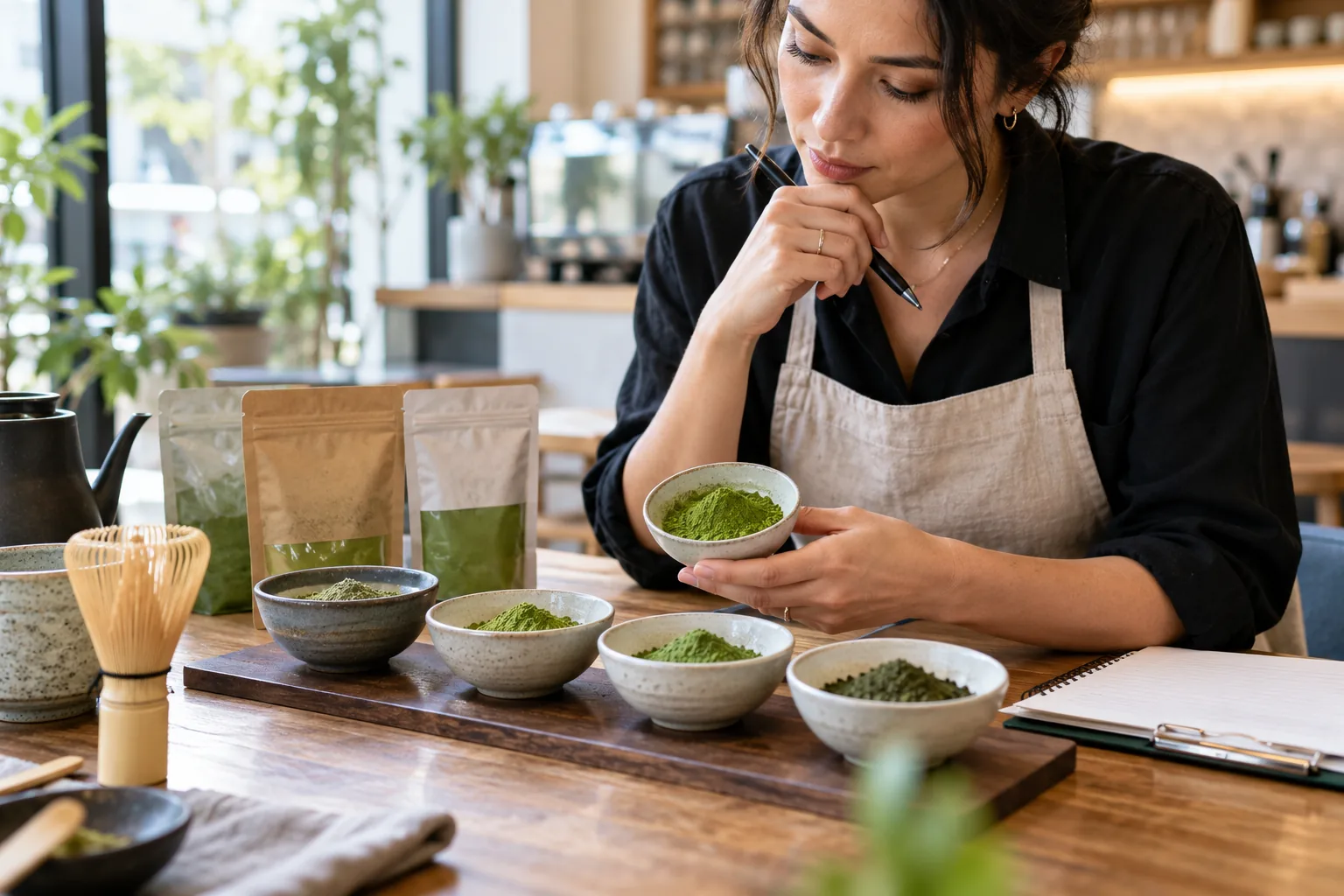
A great sampling process is a guided consultation, not just a product delivery. A valuable supplier will help you select the right samples based on your goals, provide clear guidance for testing, and follow up to help you interpret the results in the context of your business.
H3: The Goal Isn't Free Matcha, It's Risk Reduction
Remember that sampling is the single most important step in de-risking your first bulk purchase. You are testing not just the powder itself, but the supplier's expertise, honesty, and reliability.
When I talk to potential clients, I encourage them: don't just ask me for "a sample of ceremonial grade." Instead, tell me what you're trying to achieve. The more I know about your menu, your target customer, and your desired price point, the better I can guide your sample selection. This collaborative approach prevents you from wasting time and money testing products that were never a good fit to begin with.
H3: A Blueprint for Effective Sample Testing
To make your evaluation meaningful, you need a structured process.
- The Pre-Sample Consultation: A good supplier will insist on a brief conversation to understand your needs before shipping anything.
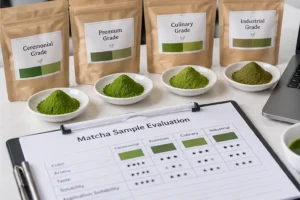
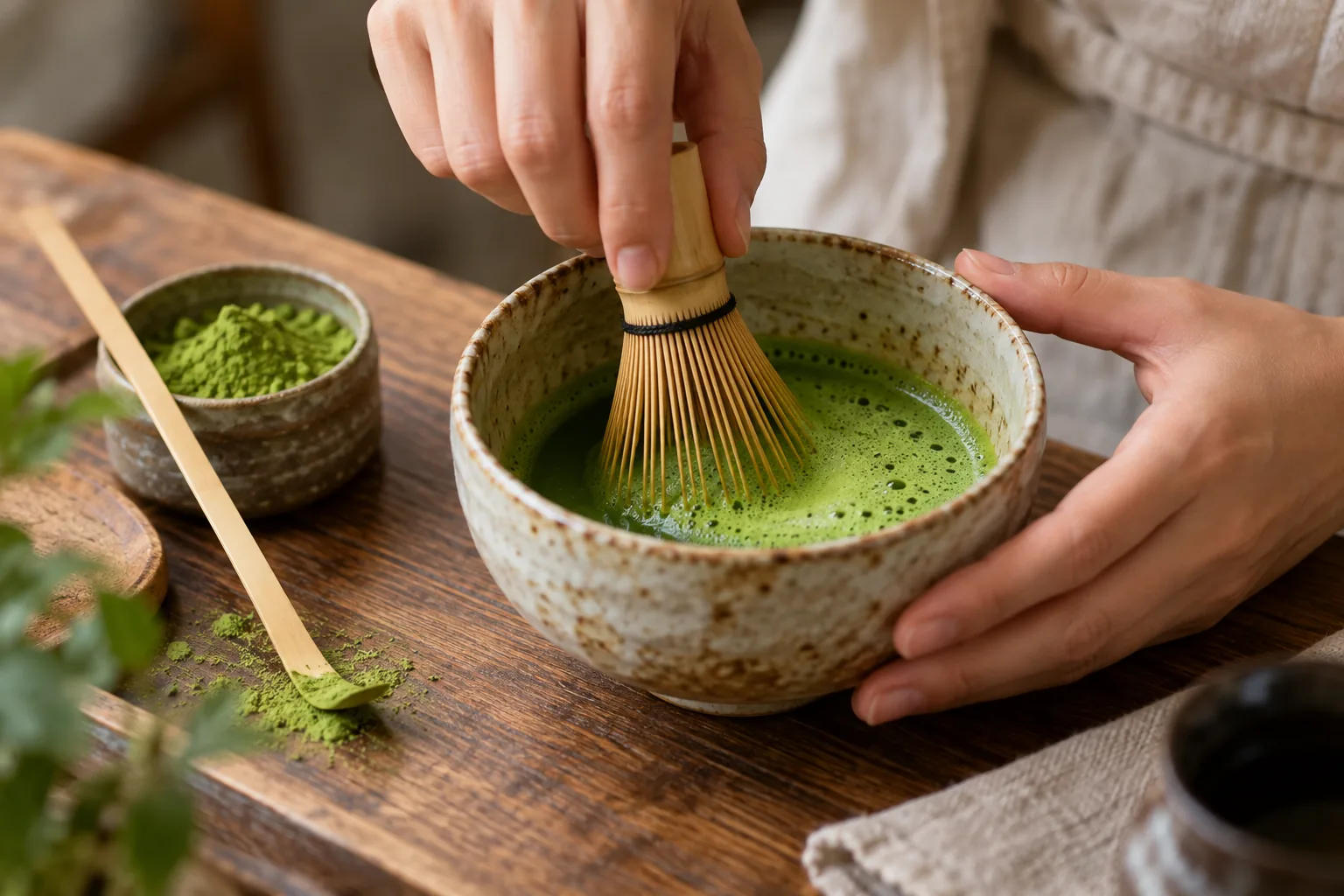
- Controlled, Side-by-Side Testing: Once the samples arrive, don't test them on different days. Prepare them at the same time, under the exact same conditions. Use the same amount of matcha powder, the same water volume and temperature, the same type and amount of milk, and the same sweetener.
- Evaluate Key Performance Indicators (KPIs) for a Café:
- Color: How vibrant is the green, both as a dry powder and when mixed? Does it turn a murky or yellowish color when you add milk?
- Taste Profile: Prepare it with just hot water first. Is it overwhelmingly bitter, or does it have pleasant, savory notes? Then, prepare it in your latte recipe. Does the flavor stand up to the other ingredients?
- Mixability & Texture: Does it dissolve easily, or does it clump? When whisked or frothed, does it create a stable, fine foam? Is the final drink smooth or gritty?
- Cost-Effectiveness: For the samples that meet your quality standards, calculate the cost-per-gram and, ultimately, your final cost-per-serving. The "best" option is the one that sits at the intersection of acceptable quality and optimal cost.
H3: Analyzing the Post-Sample Follow-Up
The supplier's job isn't over when the samples are delivered. A true partner will proactively follow up with specific questions, such as, "How did the Barista Reserve compare to the Cafe Standard in your latte test? Did you notice the color difference we discussed?" This shows they are invested in your results.
If a supplier either doesn't follow up at all, or their only question is, "Are you ready to place an order?", it reveals a purely transactional mindset. They are not interested in your success, only in their sale.
Frequently Asked Questions
How much should I expect to pay for wholesale matcha?
Prices vary widely based on grade, origin, and order volume.4 Broadly, culinary grades might range from $20-$40 per kilogram, while high-end ceremonial grades can easily exceed $100-$150 per kilogram. Instead of focusing on the bulk price, calculate your cost-per-serving for your specific recipe to understand the true financial impact.
What is the minimum order quantity (MOQ) for a wholesale matcha supplier?
MOQs differ significantly between suppliers. Some, like us, may offer quantities as low as 1-5 kg to support smaller independent cafés. Others who focus on large-scale industrial distribution might have minimums of 20 kg, 50 kg, or more. It's essential to clarify this early in your discussions to ensure they are a fit for your business's scale.
Should I be concerned about matcha from China versus Japan?
Both China and Japan are major producers of high-quality matcha.5 The country of origin is less important than the supplier's commitment to quality control, farming practices, and processing standards.6 A reputable wholesale matcha supplier from either region can provide an excellent product. Always request product specifications and, most importantly, trust your own evaluation of the samples.
How important is batch-to-batch consistency?
For a café or restaurant, it is absolutely critical. Your customers expect their favorite matcha latte to taste and look the same every time they order it. A key question to ask any potential supplier is about their process for ensuring consistency between different production lots. A reliable partner will have robust quality control measures in place and should be able to speak to them confidently.
Conclusion
Choosing the right wholesale matcha supplier for your café is far less about finding a single "best" product and much more about finding a strategic partner for your business. The journey begins with a clear definition of your menu application, which allows you to move beyond vague grade names. By asking specific, performance-based questions and using a structured sampling process, you can validate a product's quality, performance, and cost-effectiveness for your unique needs. A supplier who acts as a consultant—guiding you through this process to reduce your risk—is the clearest indicator of a valuable, long-term partnership7 that will support your growth.
If you're looking for a partner to help you navigate these crucial sourcing decisions, we specialize in supplying cafés, restaurants, and beverage brands with the right matcha for their specific goals. Contact us to discuss your menu, and we can help you select the perfect samples for testing.
"Matcha Powder for Latte Cafes & Milk-Based Drinks", https://matchasourcing.com/matcha-for-latte-cafes/. A 2023 market report indicates that matcha has seen a significant rise in popularity among café consumers, driven by its perceived health benefits and versatility in beverages and desserts. Evidence role: statistic; source type: research. Supports: Matcha's growing popularity and its potential profitability for cafés.. Scope note: The data may not apply universally to all geographic regions or café types. ↩
"Overlooked Points When Sourcing Matcha from Overseas", https://matchasourcing.com/common-overlooked-points-when-sourcing-matcha-from-overseas/. Educational resources highlight that sourcing matcha can be complex due to variations in grading standards, inconsistent quality, and the need for reliable suppliers. Evidence role: mechanism; source type: education. Supports: Challenges in sourcing matcha, such as grade inconsistencies and supplier reliability.. Scope note: The challenges may vary depending on the supplier and region. ↩
"A Comparative Multianalytical Approach to the ... - PMC", https://pmc.ncbi.nlm.nih.gov/articles/PMC12157965/. Experts agree that matcha's flavor, color, and texture are critical factors in its suitability for specific applications, such as lattes, pure tea, or baking. Evidence role: expert_consensus; source type: research. Supports: The importance of flavor, color, texture, and cost in determining matcha suitability for various applications.. Scope note: The emphasis on these attributes may vary depending on consumer preferences and regional trends. ↩
"Matcha Culinary Green Grade (price per ounce)", https://sensuousbean.com/product/matcha-culinary-green-grade-price-per-ounce/. Market research shows that matcha prices can range from $20 per kilogram for culinary grades to over $150 per kilogram for ceremonial grades, influenced by origin and bulk order size. Evidence role: statistic; source type: research. Supports: The variability in matcha prices based on grade, origin, and order volume.. Scope note: Prices may fluctuate based on market conditions and supplier practices. ↩
"Matcha", https://en.wikipedia.org/wiki/Matcha. Encyclopedic entries confirm that Japan and China are leading producers of matcha, with Japan specializing in ceremonial grades and China expanding into diverse applications. Evidence role: historical_context; source type: encyclopedia. Supports: China and Japan's roles as major producers of matcha.. Scope note: Quality standards may differ between the two countries. ↩
"Exploring the Influence of Origin, Harvest Time, and ... - PMC", https://pmc.ncbi.nlm.nih.gov/articles/PMC11048880/. Research indicates that supplier quality control and farming practices significantly impact matcha quality, often outweighing the influence of country of origin. Evidence role: mechanism; source type: research. Supports: The importance of supplier practices in determining matcha quality.. Scope note: The relative importance of these factors may vary by application and consumer preferences. ↩
"Benefits of a Consultative Sales Approach", https://cowenpartners.com/benefits-of-a-consultative-sales-approach/. Educational resources highlight that consultative suppliers help businesses optimize product selection and reduce purchasing risks. Evidence role: expert_consensus; source type: education. Supports: The value of consultative supplier relationships in reducing risk and improving outcomes.. Scope note: The effectiveness of consultative suppliers may depend on their expertise and engagement level. ↩