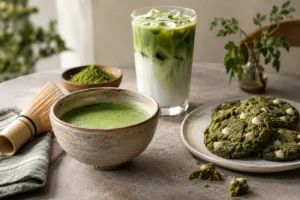
Feeling overwhelmed by the complexity of sourcing matcha from overseas? You're not alone. The fear of choosing the wrong supplier can be paralyzing1, as a single misstep can lead to wasted inventory, unhappy customers, and a damaged brand reputation. The key to successful overseas matcha sourcing isn't about finding one "best" supplier, but about mastering a process of risk management to find the right product for your specific business.
The most significant hidden risks in overseas matcha sourcing2 are: selecting the wrong grade for your specific application (e.g., using expensive ceremonial grade for a latte), overlooking critical commercial quality issues like batch-to-batch inconsistency, trusting vague marketing terms like "premium" without verification, and misinterpreting a supplier's communication style as a measure of their capability.
Now that we’ve identified these core risks, let's break down how you, as an importer or brand owner, can navigate them. The journey begins by challenging the most common assumption we see buyers make every single day.
Is Asking for "Ceremonial Grade" Always the Right Move in Overseas Matcha Sourcing?
You're launching a new product and want to signal the highest quality, so you start your search by asking suppliers for "ceremonial grade" matcha. It seems logical. But what if that premium quality gets lost in your final product, or worse, works against it?
No, "ceremonial grade" is not always the right choice, especially for commercial applications like lattes, smoothies, or baked goods. The delicate, savory umami flavor that defines ceremonial matcha is easily overpowered by milk, sugar, and other ingredients, meaning you're paying a premium for features your customers will never taste.
Dive Deeper: The Application-Grade Mismatch Risk
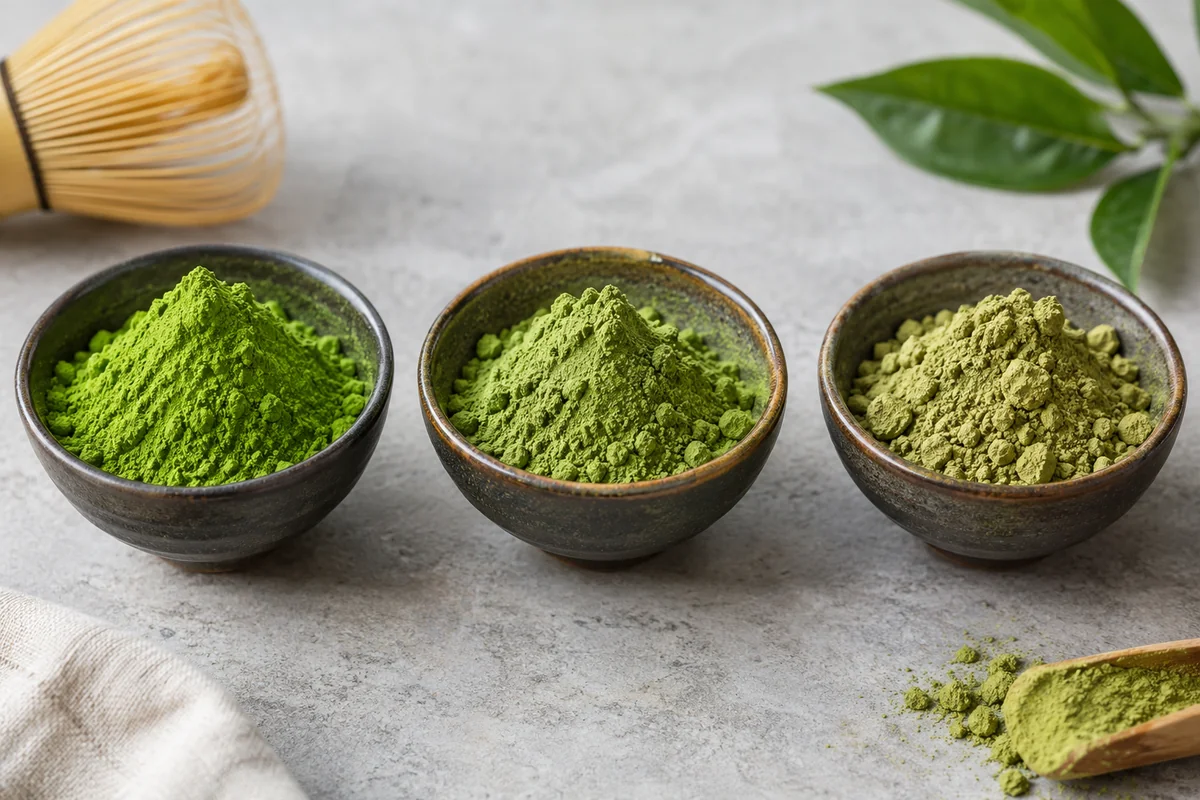
The single biggest—and most expensive—mistake we see in overseas matcha sourcing is the application-grade mismatch. Many buyers believe "ceremonial" is a universal synonym for "best," but in the world of matcha, "best" is always relative to the end-use.
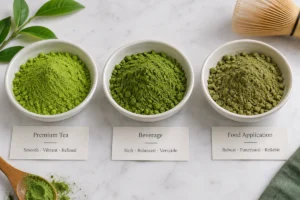
- Ceremonial Grade: Its value lies in its nuanced, delicate flavor profile, smooth texture, and vibrant green color when whisked with hot water. It is intended for pure tea consumption, where these subtle characteristics can be appreciated.
- Premium / Cafe Grade: This category is specifically formulated for beverages like lattes. It has a more robust flavor profile designed to stand up to milk and sweeteners, and a color that remains appealing when diluted.
- Culinary Grade: This grade is all about performance in food production. It has an even stronger, more assertive flavor meant to survive the heat of an oven and provide a distinct matcha taste and color in cakes, cookies, and ice cream.
The Latte Problem: Paying for Nothing
A common question we get from new coffee shop owners is about using ceremonial grade for their lattes. While it sounds impressive on a menu, it's often a poor business decision. The subtle vegetal notes and rich umami of a high-end ceremonial powder are completely lost once you add steamed milk (especially oat or soy) and syrup.
A well-formulated Cafe or Barista grade will give you a much better result—a strong matcha flavor and a beautiful green color—at a more commercially viable price point. You're not paying for delicate notes that disappear; you're paying for the robust qualities that make a great latte.
The Baking Challenge: Color and Flavor Stability
The risk is even greater in baking. Heat is the enemy of matcha's delicate color and flavor. Using an expensive ceremonial grade in a cookie recipe is a recipe for disappointment. The high heat of the oven can degrade the chlorophyll, turning your beautiful green powder into a dull, brownish-yellow, and the subtle flavors will simply vanish. A quality culinary grade is designed with a more resilient flavor and color profile to withstand processing, ensuring your final product looks and tastes like matcha.
Here’s a simple breakdown for your sourcing decisions:
| Matcha Grade | Best Application | Key Characteristics | Common Sourcing Mistake |
|---|---|---|---|
| Ceremonial | Pure Tea, Water Whisking | Delicate umami, vibrant green, smooth | Using for lattes or baking (overpriced, weak flavor) |
| Premium/Cafe | Lattes, Smoothies, Iced Teas | Strong flavor profile, good color in milk | Using a culinary grade that's too weak or bitter |
| Culinary | Baking, Ice Cream, Confections | Assertive flavor, heat stability, cost-effective | Using a ceremonial grade that results in poor color/flavor |
What Does "Quality Control" Really Mean for Overseas Matcha Sourcing?
You’ve received a lab report showing the matcha is free of pesticides and heavy metals. You breathe a sigh of relief, thinking your quality control is handled. But what happens if the next shipment looks and tastes completely different, ruining your signature product and your brand's reputation?
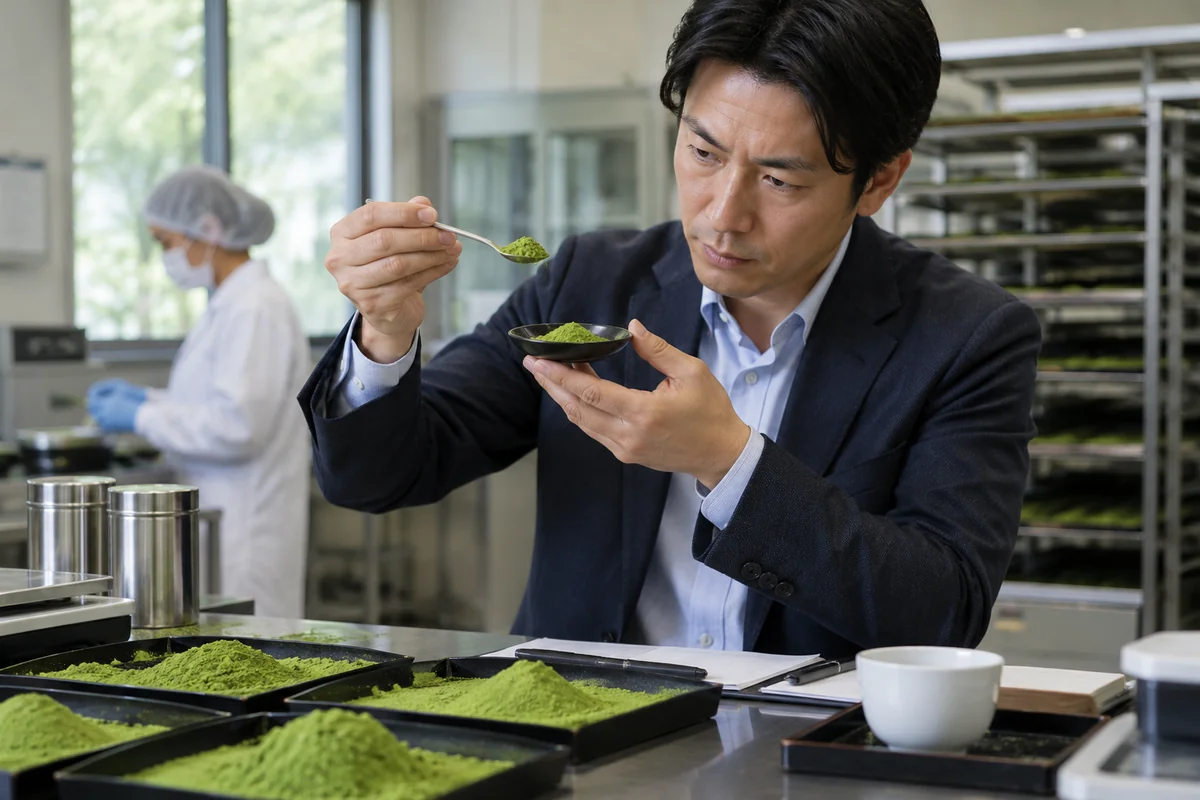
For a B2B importer, effective quality control in overseas matcha sourcing extends far beyond basic safety tests. It means ensuring uncompromising batch-to-batch consistency in color, taste, and particle size, and rigorously verifying that the powder performs correctly and reliably in your specific recipe, time after time.

Dive Deeper: Beyond the Certificate of Analysis (CoA)
A Certificate of Analysis (CoA) that tests for pesticides3, heavy metals, and microbiological contaminants is a non-negotiable starting point. It is the ticket to entry for any serious supplier. However, a clean CoA does not guarantee commercial quality. It tells you the product is safe, but it doesn't tell you if it's right.
The commercial risks that can truly damage your business are often more subtle:
- Color Variation: Will the matcha for your private label brand have the same vibrant green in six months as it does today?
- Flavor Profile Shift: Will your lattes suddenly become more bitter or astringent with a new batch?
- Texture & Mixability: Will the powder start clumping in your production line, causing delays and inconsistent products?
The Hidden Risk of Inconsistency
For a growing brand, batch-to-batch inconsistency is a silent killer4. I once spoke with a beverage company that had to recall a product run because the matcha from a new shipment was noticeably duller in color than their previous one. Their customers noticed immediately. This is the primary fear for the cafe chains and private label brands we work with. Your customers expect the same experience every time, and that consistency starts deep within your supply chain.
To protect yourself, you must proactively verify a supplier's consistency:
- Ask About Their Process: Inquire directly about how they ensure batch consistency. Do they use tools like a colorimeter to measure color values numerically? Do they conduct regular sensory panel testing? Do they blend different harvests to achieve a stable year-round profile?
- Request a Specification Sheet: Work with your supplier to create a detailed product specification sheet that defines the acceptable ranges for key parameters like color (e.g., Lab* values), particle size (mesh), and sensory notes. This document becomes your contractual quality standard.
- Test It Yourself: The ultimate quality control happens in your own facility. Always test a pre-shipment sample from the exact batch you are about to receive against a retained control sample from your first approved batch. This is your final quality gate.
How Can Importers See Through Vague Supplier Marketing Claims?
Every supplier website you visit is filled with promises of "premium," "superior," and "hand-picked" matcha. But these terms are not regulated or standardized across the industry. So how do you separate a truly reliable partner from a clever marketer in your overseas matcha sourcing journey?
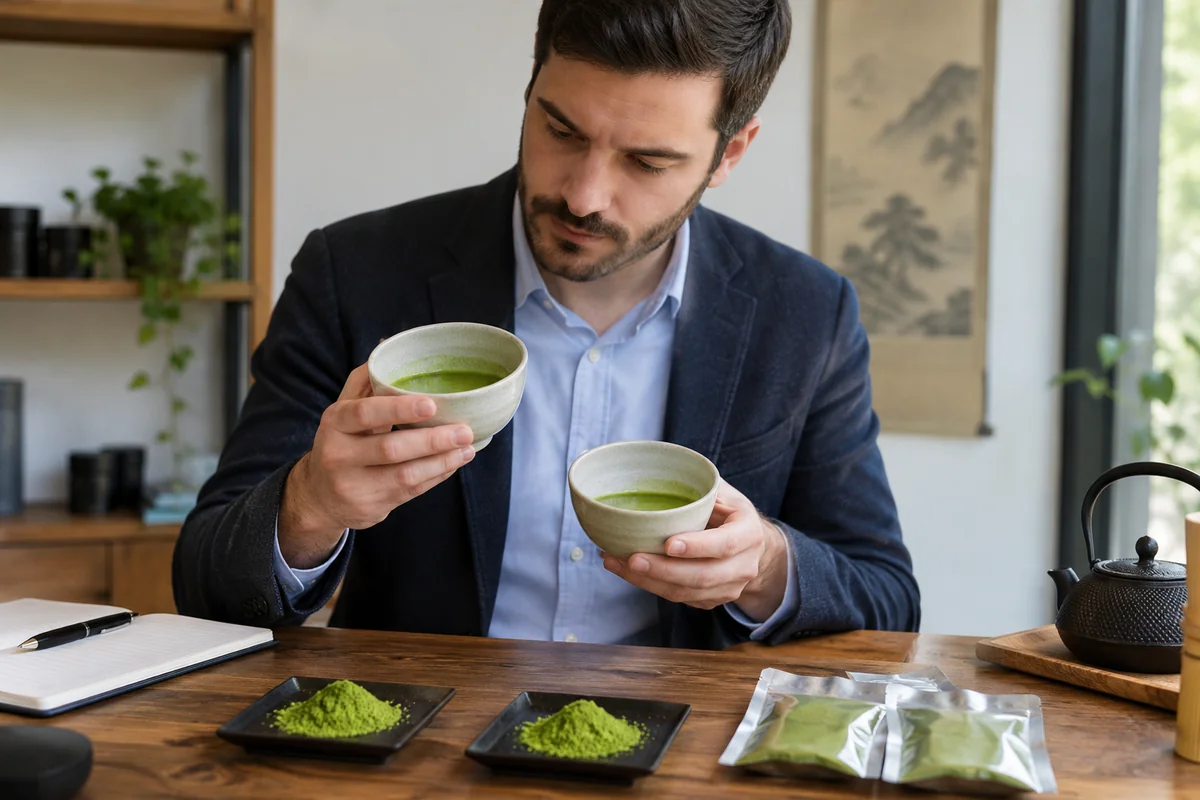
You can cut through the noise by moving past subjective marketing language and asking for objective evidence tailored to your specific business needs. Instead of asking, "Is your matcha premium?", you should be asking, "Can you provide a sample from this lot so I can test its performance in my oat milk latte recipe and compare its color against my current supply?"
Dive Deeper: Deconstructing "Premium" and "Ceremonial"
Let's be clear: terms like "premium," "ceremonial," and even grade numbers (e.g., "A-Grade") have no universal, legally-enforced definition in the matcha industry. One supplier's "Imperial Ceremonial" might be another's "Barista Reserve."
I recently spoke with a founder who was launching a private label matcha brand. He was completely confused after receiving five different "ceremonial grade" samples from five different suppliers—they all varied dramatically in color, aroma, and taste. This experience is incredibly common and highlights why you cannot rely on marketing labels alone. Your evaluation process must be more rigorous.
From Vague Questions to Specific Inquiries
The power to get clear answers lies in the questions you ask. Shift your inquiries from subjective quality to objective performance.
Don't Ask:
- "Do you have high-quality matcha?"
- "Is your matcha good for lattes?"
- "Is this ceremonial grade?"
Ask This Instead:
- "I am developing a matcha-infused white chocolate. I need a culinary grade with a particle size under 10 microns to ensure a smooth mouthfeel. Which of your products meet this spec, and can you provide its colorimeter data?"
- "I'm looking for a matcha for our cafe's iced lattes. We need a grade that mixes easily in cold liquids without clumping and provides a strong, balanced flavor that isn't too astringent. Which do you recommend we sample?"
- "We are sourcing for a retail tea product. We need a matcha with a high L-theanine content for a prominent umami flavor. Can you provide specifications and a sample from your top ceremonial lot for us to evaluate?"
This approach forces the supplier to move beyond marketing and provide concrete, verifiable information that is directly relevant to your business case. A good supplier will welcome these questions. A weak one will evade them.
Why Is the Sourcing Process Itself a Test of the Supplier?
You send out ten inquiries for a price on bulk matcha. A few suppliers reply instantly with a generic price list attached. Others reply a bit later, but their email is full of questions about your business. It might seem like the first group is more efficient, but are they the better long-term partner?
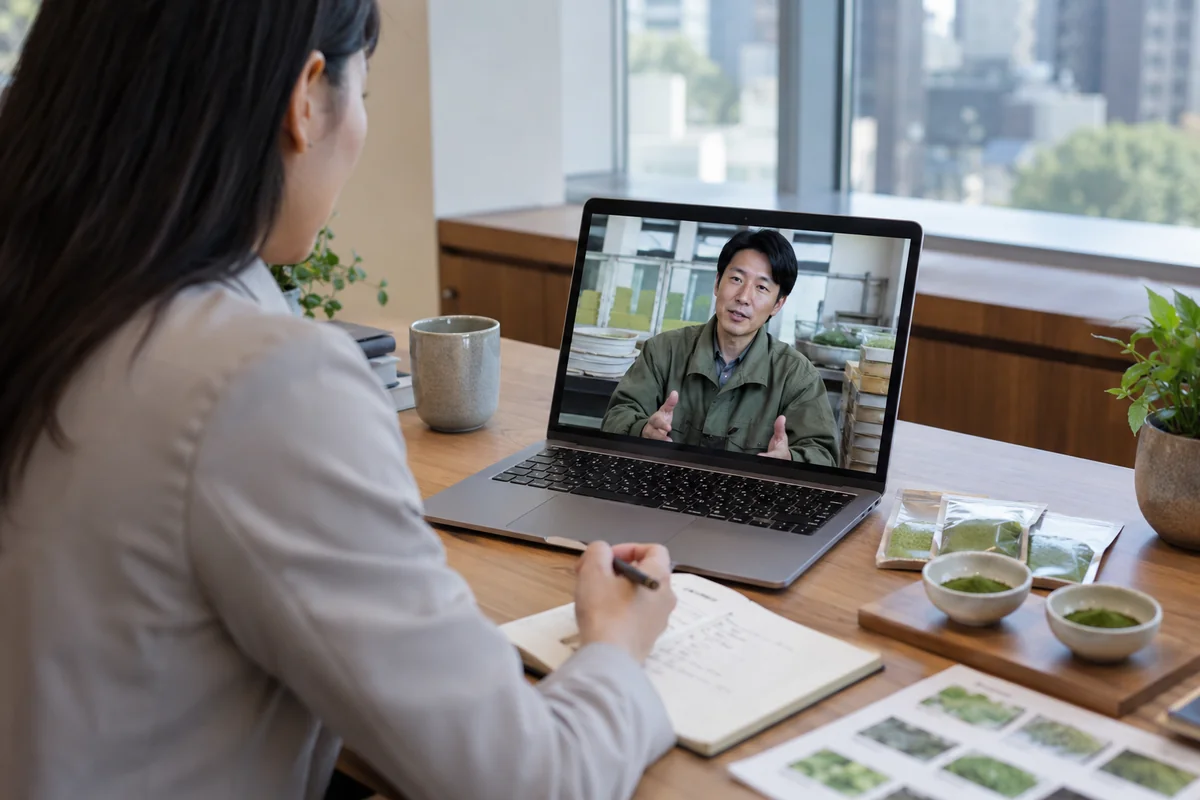
The way a potential supplier engages with you during the initial sourcing process is one of the most powerful predictors of their future reliability. A partner genuinely invested in your success will ask clarifying questions about your application5 and goals, while a purely transactional seller will just send a price list and hope for an order.
Dive Deeper: The Red Flag of the Instant Price List
Think of it from a risk perspective. A supplier who sends a price list without asking6 what you're creating, who your customers are, or what your quality standards are is not trying to be your partner. They are playing a numbers game, aiming to make a quick, transactional sale.
This approach puts all the risk on you. They are not helping you mitigate the risk of choosing the wrong grade, which, as we've discussed, can be a costly error. In our experience, these transactional relationships are often the ones that lead to problems with quality control and consistency down the line.
The Green Flag: The Consultative Approach
A great potential partner acts less like a salesperson and more like a sourcing consultant. The most successful and long-lasting partnerships we've built always begin with a dialogue. When a new potential client reaches out, we see it as our responsibility to ask questions to help them succeed:
- "Could you tell us more about the final product you're creating?"
- "Who is your target customer, and what experience are you trying to provide?"
- "What is your target cost per serving or per unit?"
- "Have you worked with matcha before? What challenges have you faced with previous suppliers?"
This isn't about creating barriers; it's about collaborative risk management. By understanding your goals, a knowledgeable supplier can guide you to a grade that delivers the best possible performance for the most effective cost. Their communication clarity, technical questions, and willingness to guide you are strong indicators of how they will behave when a real issue arises with a shipment six months from now.
Frequently Asked Questions
What's the biggest mistake new importers make in overseas matcha sourcing?
The most common mistake is focusing only on the grade name (like "ceremonial") or the price per kilo, rather than the matcha's performance in their specific application. The "best" matcha is the one that works perfectly for your latte, cake, or tea ceremony, and a good supplier helps you find it through consultation and testing.
How important is the country of origin (e.g., China vs. Japan) for quality?
While different regions have distinct terroir and production traditions, a reliable supplier and a rigorous verification process are more critical than origin alone. Quality is ultimately defined by measurable specifications, batch consistency, and suitability for your product. Always evaluate the supplier and the product, not just the origin label.
How do I ensure batch-to-batch consistency from an overseas supplier?
Establish a clear product specification sheet with your supplier that details acceptable ranges for color, flavor, and texture. Before committing to a large order, ask about their internal quality control processes for maintaining consistency. A good long-term partner will be transparent and may even provide data to support their claims.
Is a lab report for pesticides enough to guarantee quality?
A clear lab report is a critical first step for safety and market compliance. However, it does not guarantee commercial quality. You must also evaluate factors like color stability, flavor profile in your recipe, particle size, and batch consistency to ensure the product meets your brand's unique standards.
Conclusion
Ultimately, successful overseas matcha sourcing is a discipline of risk management. It requires you to shift your focus from chasing vague labels7 and low prices to a methodical process of verification. The key is to match the right grade to your specific application8, verify commercial quality through rigorous hands-on testing, and, most importantly, choose a supplier who acts as a consultative partner9, not just a vendor. By asking targeted questions and testing samples in your real-world recipes, you can effectively de-risk the entire process and build a resilient, high-quality supply chain for your brand.
If you are looking for a partner to help you navigate these complexities and find the perfect matcha for your business needs, let's discuss your project. We can help you select, test, and source the right grade to ensure your success.
"Supply Chain Risks and Mitigation Strategies - Purdue Business", https://business.purdue.edu/master-of-business/online-masters-in-business-administration/posts/supply-chain-risks-mitigation-strategies.php. Research on global supply chain management highlights that supplier mismanagement can result in financial losses, customer dissatisfaction, and reputational harm, particularly in industries with high product quality expectations. Evidence role: general_support; source type: research. Supports: Choosing the wrong supplier can lead to significant business risks, including financial losses and reputational damage.. ↩
"Managing Relationships with Suppliers and Vendors You Use", https://www.apu.apus.edu/area-of-study/business-and-management/resources/managing-relationships-with-suppliers-and-vendors-you-use/. Studies on international food sourcing emphasize the challenges of quality control, grade selection, and communication barriers, which can lead to mismatched expectations and product inconsistencies. Evidence role: general_support; source type: research. Supports: There are several hidden risks in overseas matcha sourcing, including quality inconsistencies and misaligned expectations due to vague marketing terms.. ↩
"The Benefits and Risks of Consuming Brewed Tea - PMC - NIH", https://pmc.ncbi.nlm.nih.gov/articles/PMC3821942/. Government guidelines on food safety emphasize the importance of Certificates of Analysis for verifying the absence of harmful contaminants like pesticides and heavy metals. Evidence role: statistic; source type: government. Supports: A Certificate of Analysis is essential for ensuring safety and compliance in food imports, including matcha.. ↩
"A review of supply chain quality management practices ... - PMC", https://pmc.ncbi.nlm.nih.gov/articles/PMC10632417/. Studies on food supply chains highlight that inconsistency in product quality can lead to customer dissatisfaction and reputational damage, particularly in premium product categories. Evidence role: general_support; source type: research. Supports: Batch-to-batch inconsistency can significantly affect product quality and customer trust in food-related businesses.. ↩
"Managing Relationships with Suppliers and Vendors You Use", https://www.apu.apus.edu/area-of-study/business-and-management/resources/managing-relationships-with-suppliers-and-vendors-you-use/. Educational materials on supplier management highlight that consultative approaches, including asking detailed questions, are indicative of a supplier's commitment to quality and alignment with buyer needs. Evidence role: expert_consensus; source type: education. Supports: Suppliers who ask clarifying questions are generally more invested in building a reliable and mutually beneficial partnership.. ↩
"The Impact of Supplier Reliability Tracking on Customer ...", https://www.academia.edu/7253778/The_Impact_of_Supplier_Reliability_Tracking_on_Customer_Demand_Model_and_Estimation_Methodology. Research on supplier relationships suggests that consultative engagement during the sourcing process is a strong indicator of long-term reliability and alignment with buyer needs. Evidence role: expert_consensus; source type: research. Supports: Suppliers who engage in consultative practices are more likely to be reliable long-term partners.. ↩
"Values-Based Food Supply Chain Case Studies", https://cias.wisc.edu/food-systems/local-regional-food-systems/aotm-case-studies/. Educational resources on food sourcing emphasize the importance of verification processes to ensure product quality and mitigate risks associated with vague labeling. Evidence role: general_support; source type: education. Supports: A methodical verification process is critical for successful matcha sourcing, as it ensures product quality and suitability.. ↩
"A Comparative Multianalytical Approach to the ... - PMC", https://pmc.ncbi.nlm.nih.gov/articles/PMC12157965/. Educational guides on matcha usage explain that different grades of matcha are formulated for specific applications, such as beverages or baking, to optimize flavor and appearance. Evidence role: general_support; source type: education. Supports: Matching the right matcha grade to its intended application is essential for achieving optimal product performance.. ↩
"Values-Based Food Supply Chain Case Studies", https://cias.wisc.edu/food-systems/local-regional-food-systems/aotm-case-studies/. Research on supply chain management indicates that consultative supplier relationships foster better communication, alignment, and long-term reliability, which are critical for maintaining high-quality supply chains. Evidence role: expert_consensus; source type: research. Supports: Consultative supplier relationships contribute to supply chain resilience and product quality.. ↩